Guest contributor N.C. Stevens delves into the story of mezcal potosino.
From the state capital of San Luis Potosí to neighboring Zacatecas, the highway cuts through a textbook stretch of Mexico’s Altiplano or Central Plateau. The landscape is a thirsty panorama of true desert in some places and wiry shrubland in others. Drought-tolerant species erupt from an otherwise rocky expanse. Grasses, cacti of all shapes and sizes, mesquite, Peruvian pepper trees, and waxy green agave dot the landscape. This northwestern stretch of the state of San Luis Potosí is home to the state’s largely forgotten mezcal industry. Most of the towns along the otherwise lonely highway to Zacatecas were once home to robust mezcal operations.
In most glosses of Mexico’s regional drinks, San Luis Potosí is more often associated with its signature cactus wine, colonche, than its mezcal. Unlike the Oaxacan towns of Santa Catarina Minas and Santiago Matatlán, we are not necessarily reminded of mezcal by the names of San Luis Potosí’s Altiplano municipalities: Soledad de Graciano Sánchez, Mexquitic de Carmona, Ahualulco, Villa de Arriaga, Villa de Reyes, Santa María del Río, Villa de Guadalupe, Charcas, or Venado.
COMERCAM’s 2026 report on the industry confirms that the state, which is included in the Denomination of Origin for Mezcal, is hardly a major producer. San Luis Potosí only contributed 1.21 percent of all mezcal distilled in 2025. But the state’s modern production belies the significance of its longstanding contribution to the national heritage of mezcal, both economically and organoleptically.
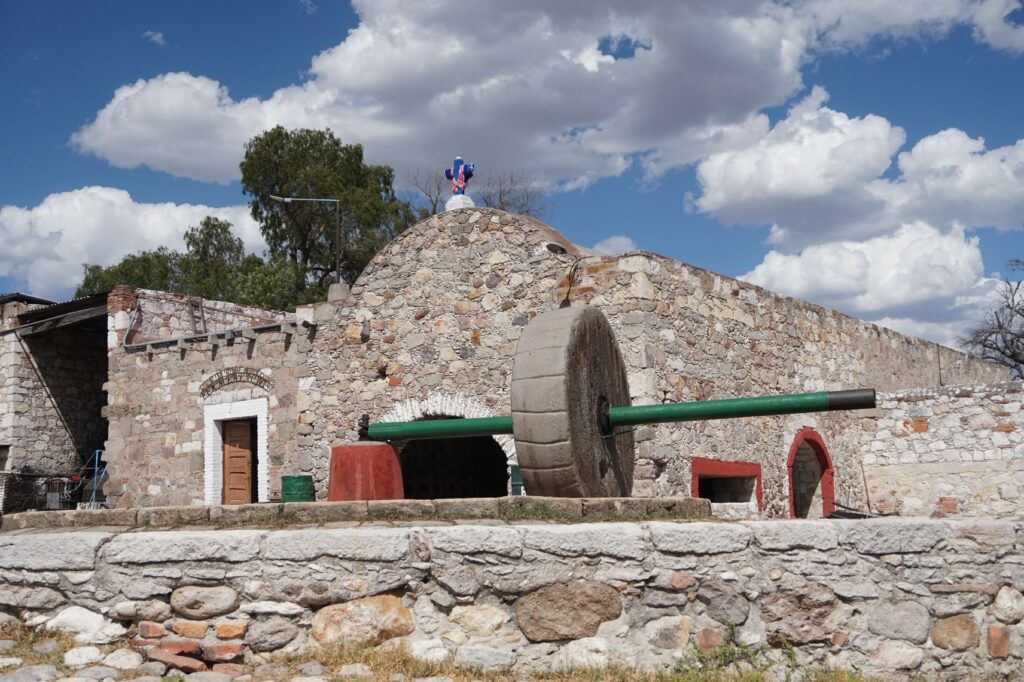
San Luis used to be one of the largest mezcal producers in Mexico. Spirits from San Luis Potosí appear next to those from Jalisco in advertisements and menus from the late 19th century. This changed in the wake of the Mexican Revolution–the state’s industry slowly collapsed as long-promised land reform broke up existing haciendas. The collapse of vast agave plantations would manifest itself not only in the retreat of mezcal potosino, but also in the structural collapse of pulque production, which had reached its apogee during the Porfiriato.
Ancestral and traditional beverages were replaced by rum, brandy, and beer for much of the 1900s, but are poking back up in recent decades. Just as pulque has surged in grungy urban circles since the early 2000s, it appears mezcal potosino is beginning to make a comeback. A handful of local producers are pushing to revamp the state’s forgotten agave heritage by producing in the footprint of the haciendas that once flooded Altiplano markets with local liquor.
The taste of Agave salmiana
The majority of commercial mezcal production today occurs outside of Mexico’s Central Plateau for good reason. The arid landscape here is inhospitable to most large scale agriculture. The region has historically relied on mining and cattle ranching as core economic activities. But the local agave known as maguey verde of the species Agave salmiana thrives in the sometimes harsh conditions.
“I believe that what is unique—though not ‘exceptional’ according to official international criteria—is the historic relationship involving the agave, the semi-desert landscape, the industrial architecture, and the long-standing manufacturing tradition. It is worth noting here that Agave salmiana grows abundantly in the wild,” explains Dr. Moisés Gámez, research professor at El Colegio de San Luis and an expert on the region’s economic history.
Nearly all San Luis Potosí mezcal is distilled from this species and few other states exploit it for mezcal. The data points to salmiana mezcal being nearly synonymous with mezcal potosino: 1.33 percent of mezcal produced in 2025 was made from A. salmiana, nearly the same percent as mezcal produced by San Luis Potosí.
“The conditions of this semi-desert make the environment hostile for other varieties to grow here,” argues José Eduardo Lomelí, Founder and Director of Mezcal Júrame, which is made in the municipality of Ahualulco, a historic production region. “Salmiana is the species that has adapted to the intense sun, the contrast between high daytime and low nighttime temperatures, the scant rainfall, and the limestone soil. It is not that we chose this species; it chose us.”
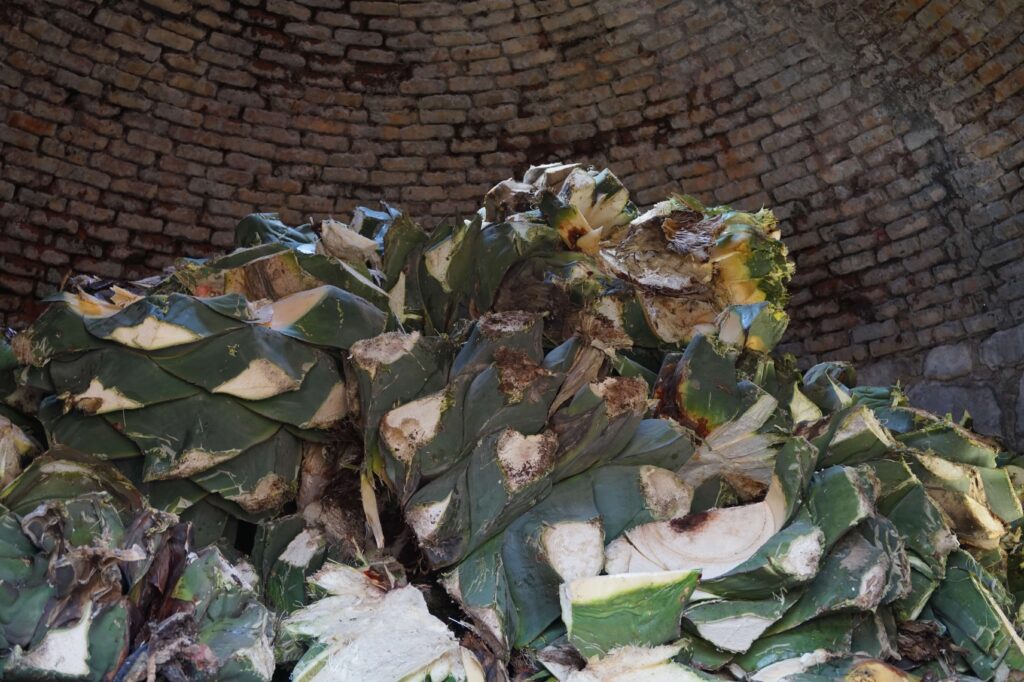
In essence, San Luis’s environmental conditions and natural endowment of wild agave means that mezcal potosino is a distinct style of the spirit–clean and bright, herbaceous and tangy, even piney–with high minerality. “The result is not simply ‘another mezcal,’” says Iván Robles, co-Founder and CFO of Derrumbes, “but an expression of a very different Mexican landscape—one that is not often or easily associated with an agave spirit.” The brand’s collection of mezcals from the different states within the Denomination of Origin includes a Potosino offering distilled by Maestro Mezcalero Manuel Pérez.
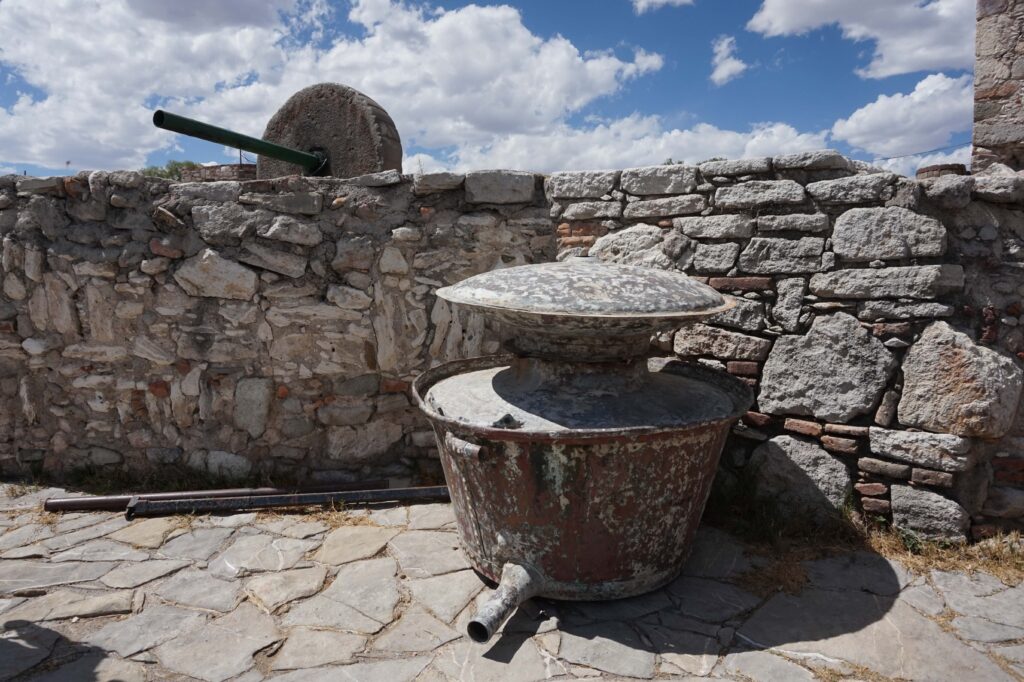
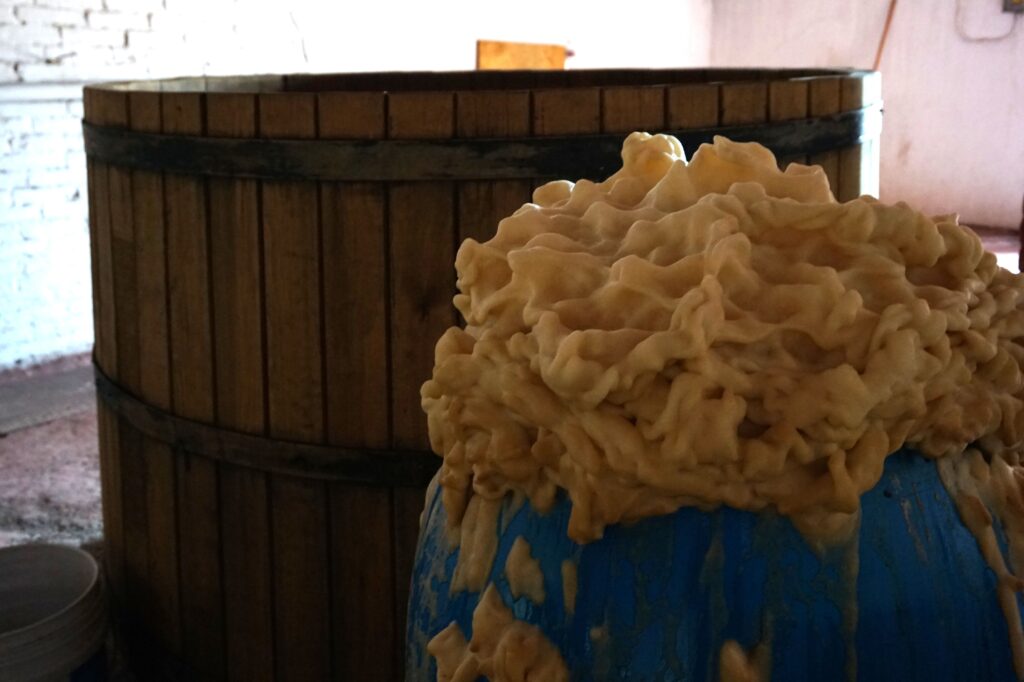
San Luis’s 19th century industrial history still has sway over mezcal production today. Robles notes that Derrumbes aims “to capture what we call the ‘historical taste’—how a community has been making mezcal through generations and how that tradition expresses itself in the glass.” Part of what sets the potosino style apart is the production process, which typically favors steam over wood fired ovens. While some smaller producers in the state, like Palmar Segundo and Campanilla, do roast their salmiana in the ground, Lomelí argues that steam-cooking “allows the plant’s own characteristics to take center stage, such as aromas of grass, flowers, and the raw or cooked agave leaf.” Robles’s tasting notes count herbal, mineral, and lactic profiles, “with notes that can remind us of jalapeño, green pepper, earth, stone, blue cheese, and yogurt.”
The state also inherits an entirely different production model. This isn’t as apparent on the international market, where potosino mezcals are more likely to be artisanal and craft products. But historically, San Luis Potosí was in the business of the larger scale commercial production, which was sold domestically.
Dr. Gámez tells me: “Production grew significantly from the 19th century onward; by the middle of the century, Jalisco and San Luis Potosí were noted as leading producers, with the latter supplying mining markets such as Guanajuato and Zacatecas. Historically San Luis Potosí was a more important and extensive mezcal area than what is known today.”
By the 1880s, it was also connected to its neighbors with a modern rail system, the Ferrocarril Central Mexicano. But the states received different products. In February, 1896, El Progreso de México, a weekly publication devoted to agriculture and commerce, explained that “In some factories, the vino has an even lower alcohol content [37 degrees] and is transported to the state of Zacatecas, where this inferior vino is consumed. Almost all of the 46-degree wine is consumed in the state of Guanajuato, with a small portion going to San Luis.”
On February 29th, 1908, the newspaper El Diario reported, “There are countless agricultural enterprises currently operating in San Luis. The wine industry is also experiencing significant growth, with a considerable number of facilities producing mezcal. The maguey plant is one of the most abundant crops in San Luis.”
Certain sources even trace the region’s mezcal back to the years of Mexican Independence. The story goes that a Spanish man named Pantaleón Ipiña bought La Parada Hacienda in 1820 and found plenty of agave on the surrounding land. Lomelí, who produces Júrame in the same community as the ex-hacienda, recounts that mezcal produced on his property was being sold commercially by 1830.
One of earliest records describing the techniques of the state’s mezcal production, written by the doctor and composer Aniceto Ortega in the mid 19th century, even differentiated between Potosino producers of a vino de chorrera and vino de campanilla, seeming to describe the Arab style still for the former and the FIlipino style still for the latter. Chorrera, which means a “gush” or “torrent”, describes the output of a typical alembic still that cools alcoholic vapors in a metal coil immersed in cool water. Campanilla, on the other hand, means “bell,” and refers to a form of distillation that uses the convex side of a bowl filled with water to condense spirituous alcohol. The same edition of El Progreso de México explains, “All the wine produced by the established factories is known as vino de chorrera to distinguish it from the vino de campanilla—prepared by the poor in small quantities using even more rudimentary methods.”
While small-scale production clearly existed, the bulk of mezcal was made at haciendas to supplement income from livestock. It helped that Agave salmiana could grow where grapes, wheat, and other cash crops would not.
Robles qualifies the convenience of A. salmiana’s prevalence. “Producing mezcal is not easy in any state, but San Luis Potosí presents particular challenges. We work with enormous agaves that require significant effort to harvest, yet Agave salmiana has a very low sugar content and, consequently, a very low yield in mezcal production. This means that a tremendous amount of agave must be harvested to produce relatively small quantities of mezcal. At the same time, the climate can be extremely hot and extremely cold, making the entire process even more demanding for the people.”
A modern push for potosino mezcal
Even as mezcal’s growth trajectory slows for the first time in a decade, San Luis Potosí’s share of production (while modest) has continued to increase for several years. Now brands like Clase Azul, Derrumbes, and De Leyendas have turned to release potosino expressions among their broader portfolios. Other local brands, including Mezcal Laguna Seca, Mezcal Patatús, and Júrame, exclusively represent San Luis Potosí and distill in the towns where haciendas produced mezcal in the 1800s. As a whole, they are pushing to reintroduce consumers to mezcal from the state, spotlighting not only the Altiplano region but also Agave salmiana.
Lomelí tells me that broader trends in mezcal around Mexico have fueled the resurgence. “By 1994, mezcal had obtained the Denomination of Origin status—which included our state—yet it was still viewed as a cheap regional spirit, little appreciated by consumers and carrying a stigma of low cost and poor quality. It became conceivable that a product crafted with a focus on quality and traditional methods could be well-received by a more discerning market. Today’s market and consumer perceptions differ entirely from those of thirty years ago. The focus now is on quality and originality.”
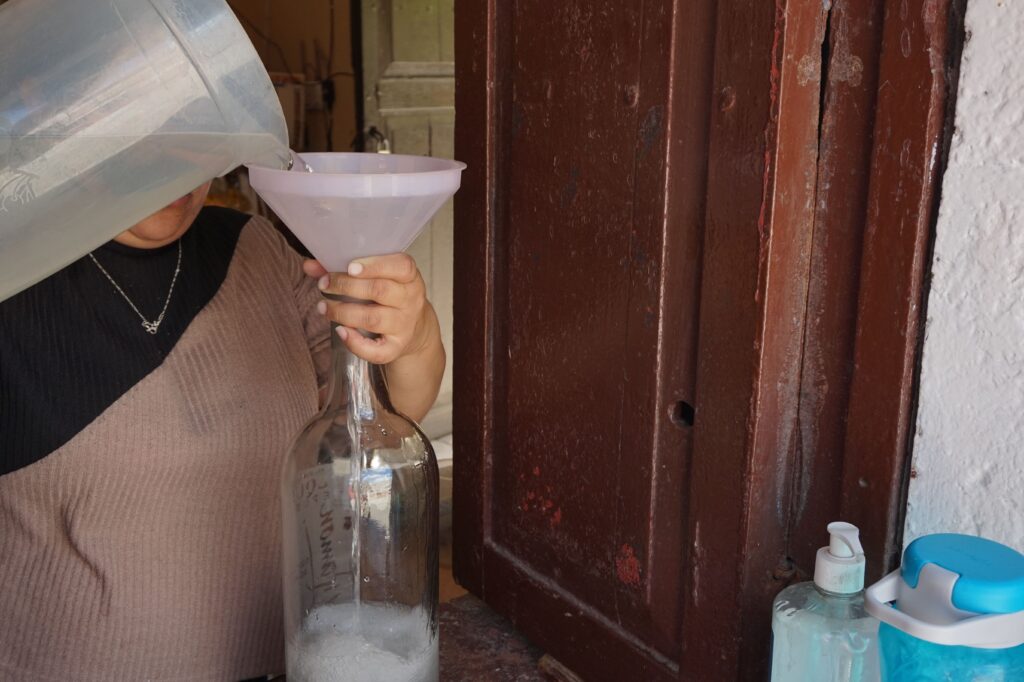
Lomelí’s grandfather owned a bar and liquor store and his father worked in alcohol distribution, so it was only natural for him to launch his own brand of mezcal in 1996. His goal continues to be local, preserving the communities that sprang up around 19th century distilleries–with the hope for a new viable age of mezcal production.
For their part, Derrumbes has partnered with the family that has operated the historic Laguna Seca distillery since 2014. “San Luis Potosí and the Altiplano have a long history of mezcal production, closely connected to the hacienda system and the use of wild Agave salmiana,” Robles explains. “The historic Laguna Seca distillery is one example of this heritage, reflecting how mezcal production was part of the economic and agricultural life of the region.”
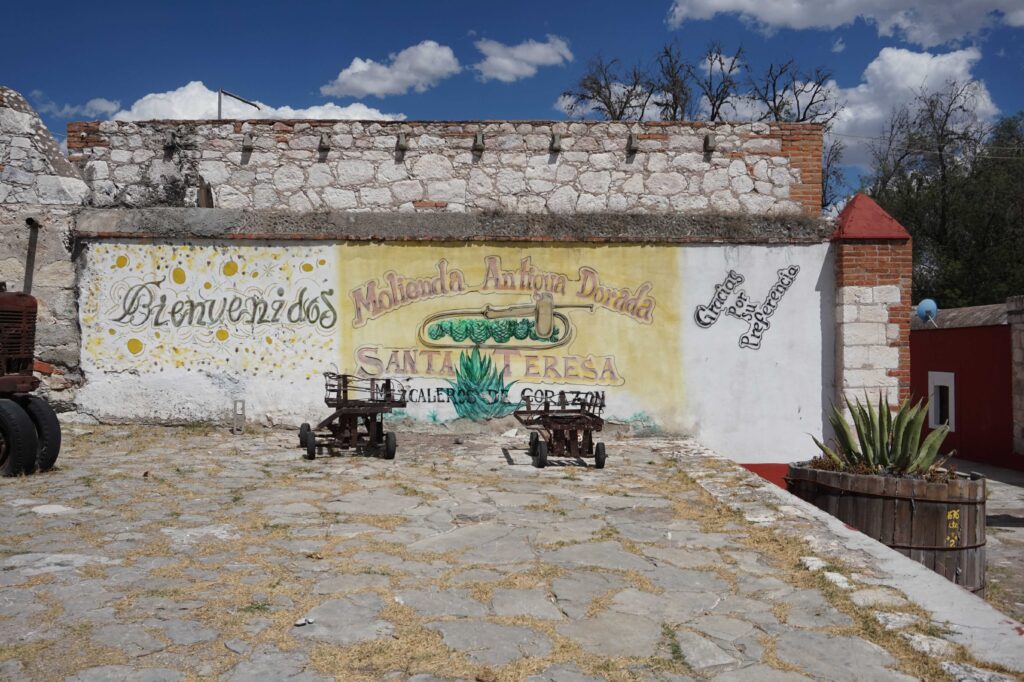
Local Potosinos can still drive to Santa Teresa and buy unbranded spirits for scandalously low prices, but these new endeavors are refining the branding, marketing, and messaging behind the state’s salmiana spirit. Gámez concludes, “Potosí mezcal can be viewed as both industrial and culinary heritage—part of a broader heritage of spirits; the paradox is that its recent commercial profile remains relatively modest compared to that of other mezcal-producing states, despite a production history spanning more than two centuries.”
When I ask Júrame’s Lomelí what the future of mezcal potosino holds, he tells me, “Mezcal from San Luis Potosí accounts for just one percent of the Mezcal Designation of Origin. While it is indeed gaining a foothold in the market, production will remain limited; the aim is not mass production, but rather to position itself as a specialty product—one of exclusivity and for connoisseurs.”
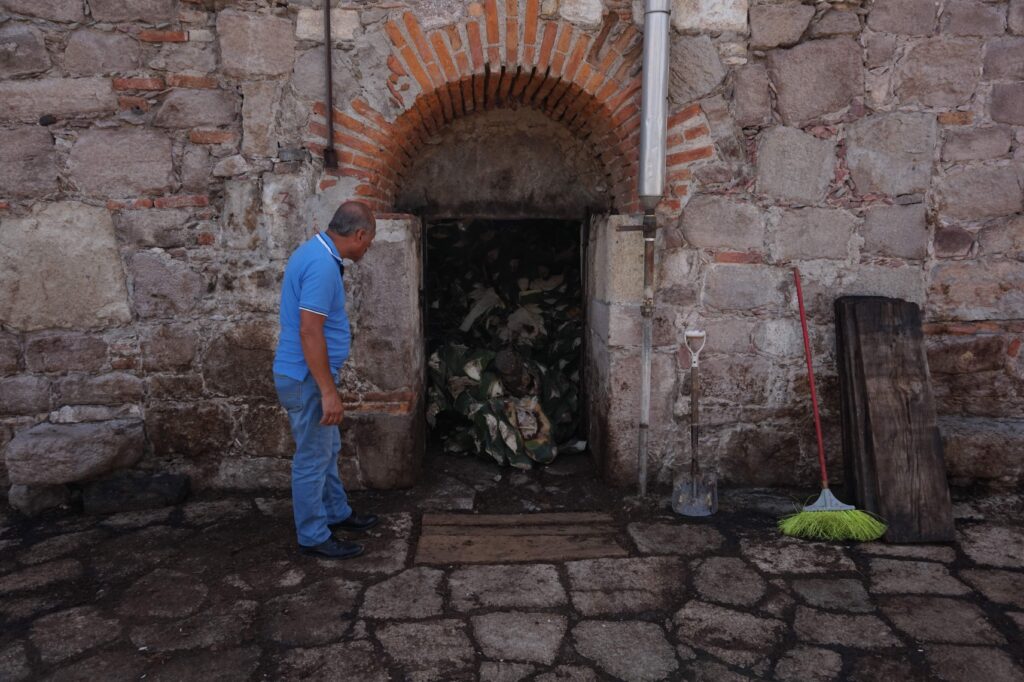
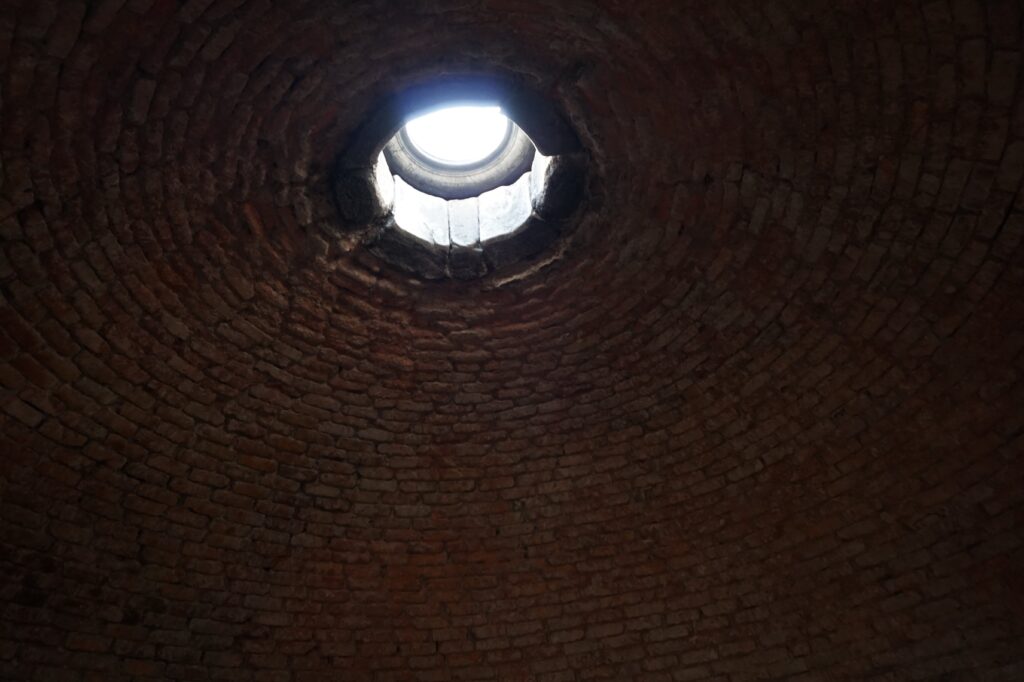
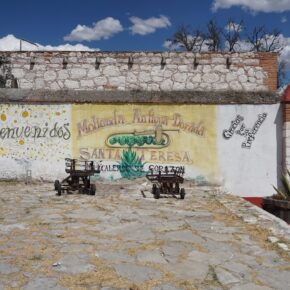
Today, it is worth visiting the old haciendas in the northwest of the state. Santa Teresa, for example, offers the spectacle of massive stone kilns that are loaded with Salmiana piñas via an oculus in the roof–as the doors are bricked up for cooking. The tahona there is tractor driven with clever gravity drainage to the fermentation room. It’s designed for scale.
In some ways, the revival of ex-hacienda distilleries in the state is a reminder that mezcal from San Luis is not always like that from other states. These larger distilleries are not trying to make an ancestral product, rather a historical one. Still, for those of us interested in tasting mezcal in all its expressions, mezcal potosino presents a truly intriguing case. Not only does A. salmiana offer a taste of the Altiplano, but these potosino distilleries are also a lifeline for the communities that still exist around them. “The only way to preserve the community is by producing mezcal,” Lomelí concludes, “The moment we stop doing so, living there loses all meaning.”
N.C. Stevens is the author of The Complete Guide to Mexican Beverages: from Atole to Zambumbia.






Leave a Comment