As of 2026, close to 6.5 million Mexican women run their own businesses–nearly three out of ten women in the country are entrepreneurs. And yet almost none get to just be entrepreneurs. They get to be female entrepreneurs, a label that follows them the way “the first woman to…” follows every first. I keep waiting for the day that the prefix disappears. Labels like that simplify the image of women and their capacities. Creativity and leadership do not depend on gender, so recognition shouldn’t either.
I’ve spent the last six years trying to figure out the best path to succeed as an entrepreneur. I went through a serious business breakup. I learned the frameworks and followed the roadmap, five steps in the right order to achieve my goals. I also did the opposite: started with what I had and let my experience set the path. Neither gave me the whole picture, and what I understand now is that entrepreneurship, at the end of the day, serves the systems we already live in. The barriers of entry barely move to anyone, least of all for someone working without a safety net.
Entrepreneurship should not be a story you survive. It can be one you choose, carefully, awake, with people around you instead of against you. But that takes an actual community, something beyond the theory and the roadmap: interactions and relationships that take time to build. The immediacy of social media makes all of it look effortless, and the entrepreneur’s experience gets reduced to a one-minute reel of a very aesthetic “behind-the-scenes” story. It is the stereotype around the concept that makes it look unreachable, turning inspiration into frustration and making competition seem fierce and community scarce.
Hillhamn Salome is a thirty-year-old Mexican master distiller who runs Flor de Luna, a microdistillery in Mexico City. She is the granddaughter of Palestinian immigrants, and she has spent eleven years building her name. She makes her own liquors and also develops profiles and labels for other brands. Her work includes Alma, Luma Vodka, and Xila, plus her biggest and most well-known collaboration, Condesa Gin. What draws me to her is that she made her way into the industry as a young creator and is recognized for her creativity and ability to propose something new.
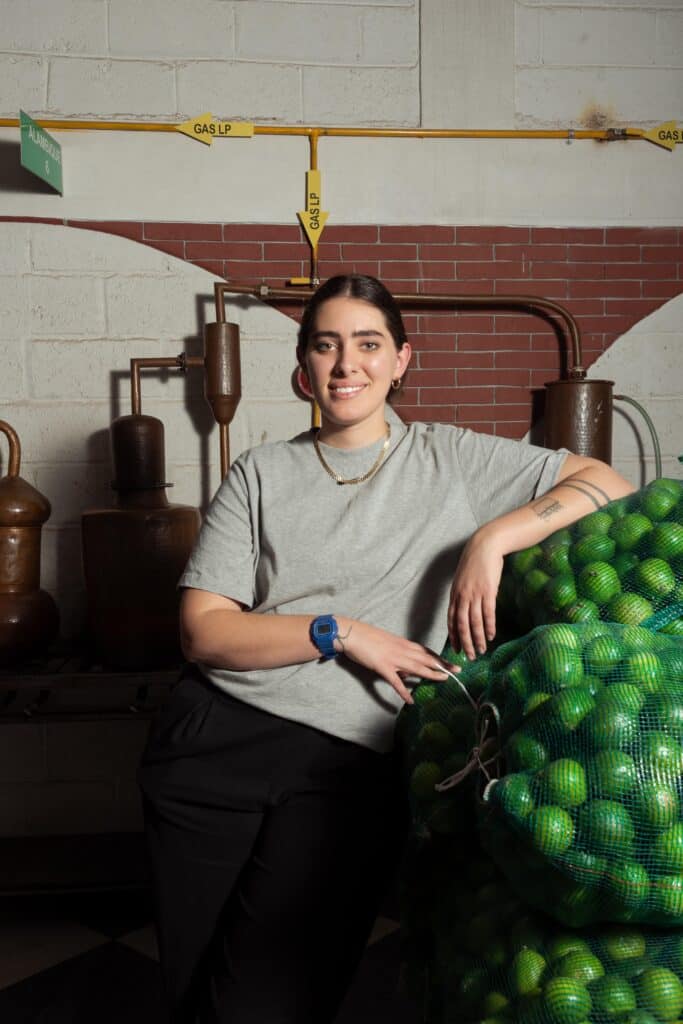
Salome never followed anyone’s roadmap, and she kept going anyway, through the falls and stumbles that come with that. She turned that story into the purpose of her company. On the Flor de Luna website she puts it this way “We believe in doing things differently. In mixing intuition with technique. Flor de Luna was not born from following the rules but rewriting them.”
This piece is going to talk about her being a woman in the spirits industry, probably more than I would like if the goal is for that prefix to stop mattering. But for now her gender is still what explains the walls she had to overcome to be believed. What follows is her account, in her own words.
How did you get into the world of spirits? What drew you to this industry?
I started when I was nineteen years old–I wanted to be a marine biologist. In the end that didn’t work out, and I had to figure out what I actually wanted to do. I got a job in a restaurant in Mexico City and during my time there I fell in love with everything happening behind the bar: the different brands, the categories, how things were actually made. It didn’t matter what your position was, you had to know every brand, every ingredient. That’s how I got interested, and I decided I wanted to launch my own brand without knowing anything.
I am actually terrible at chemistry but I started doing macerations using different distillates as a base, and began selling that to friends until I realized it wasn’t sustainable.
I understood it was time to actually learn how to distill and it took time to find the right teachers. Distilling classes with Edgar and Abel Villanueva at the Instituto Mexicano de Destilacion Artesanal. And then I was self taught from there. In 2017 I won my first gold medal with Xila at the SIP awards. In 2018, I partnered with the owners of Condesa Gin, one of the first Mexican gins in the national market.
I am thirty now and I finished business school. In 2021 we started commercializing Condesa Gin. The US is now our biggest market for all of our products even bigger than Mexico.
Was there a moment, a person, or an experience that changed the way you understood spirits?
I am constantly meeting new people and trying new things, and that keeps expanding my perspective and experience. I know people in the industry who pass along tips or ideas, and that helps me. But I think what really changed my path was the bar where I started. The bar manager was a woman and I saw what it means to be a woman in this industry, getting undermined constantly at work. The challenge of working in an environment full of men. That experience made me realize bartending itself was never really for me.
When I went out to sell my own product I ran into the same wall: a lack of credibility, even though I had every permit in order, with international validation of my product. What is someone your age doing running this? Tell your dad to give you something else to do. Even women in the industry asked me if I had a man behind me. Because of that experience, it is a priority for me to work with mostly women and give them equal opportunity. More than 90 percent of the staff at Flor de Luna are women. If I had to choose between hiring a man with ten years of professional experience in the corporate world of spirits and a woman without experience, I would choose the latter. This is because I would like to give her the opportunity, teach her and see her grow inside the company. I truly believe that doesn’t happen often.
What’s been the easiest and the hardest part of making your way in this industry?
Being validated as a woman is the hardest but it also makes it easy sometimes because it helps the narrative of the projects we collaborate with–there are just a few like us. In Mexico, people tell me they don’t care about the artisanal side because they are looking for price, and they assume that employing mostly women is just about marketing. But being a woman and having a female team has opened the doors with the right people mostly in the US, where it has even been easier for me to have a market.
What did you learn along the way that you didn’t expect to learn when you started?
That working with women is complicated. It can be romanticized. I thought it would be easier in terms of building community and collaboration but not necessarily. In the end they are also people. and I realized that not everything is always peace and love. We try to incorporate women in all our supply chain but it is not as easy. For mezcal we did have a maestra mezcalera, but because of her age, it’s her sons who are the ones actually making it now. It’s a reminder that it’s not always up to us to keep it as intentional as we’d want.
Could you walk us through, in practical and operational terms, what it took to build this project — from financing and finding a space to actually running a distillery?
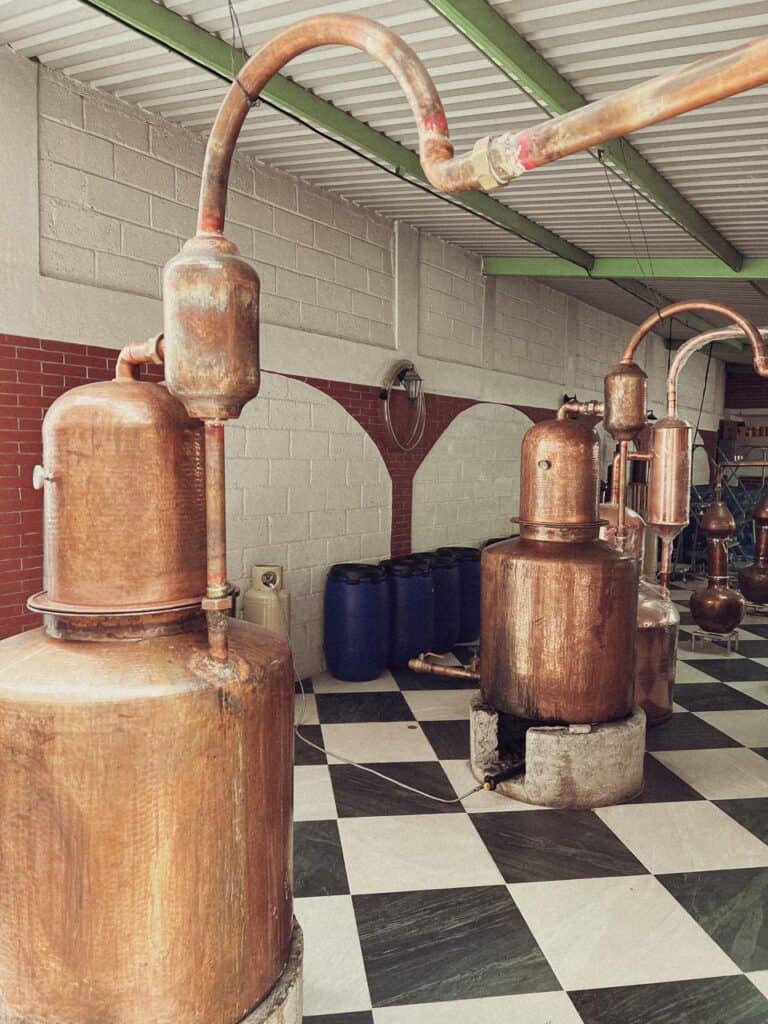
It all started with savings, my dad lent me money and I started with 100, 000 pesos. We are an independent brand so everything it generates gets reinvested. It cost a lot to make the lap. I had the distillery set up in my parent’s kitchen, one they weren’t using. Thanks to Condesa Gin’s production, I was able to move into an actual space. I started in an office, until we could make the jump once Condesa Gin began to grow. Full pallets sixteen steps to load our truck, I did not struggle more than usual with the process in Mexico. The hardest part has been having a trustworthy team, with a lot of mistakes along the way. Sometimes the temptation to go too fast gets the better for us: sponsoring,giving away products. There are a lot of challenges as an independent brand. Growth is slower because of the lack of resources.
What was the biggest challenge in getting it off the ground, and how did you solve it?
In this industry, if you don’t have control, you can end up abusing alcohol from your early twenties. I ended up with poor health, fatty liver, and weight gain–until I made myself responsible for my own health, which pulled my attention away from the company. Life told me it was time. I stopped drinking four years ago, and that’s when the company turned a corner, the pandemic hit, and I started exporting more. To this day I don’t drink unless it is necessary.
What decisions were particularly hard to make early on?
Not drinking. That was a hard decision, especially on work trips, when we collaborate with bars around the country and abroad.
Was there anything you had to learn “on the fly” because no one had taught you how to do it?
Pretty much everything. I am not good at chemistry, but the people who taught me combined theory with something more empirical, a sort of learning by doing methodology. This year I got to formulate with someone who worked at Casa Lumbre, she taught me a different method and we had to change a process that used to be more empirical.
What part of the project is usually invisible to someone who only sees the finished bottle?
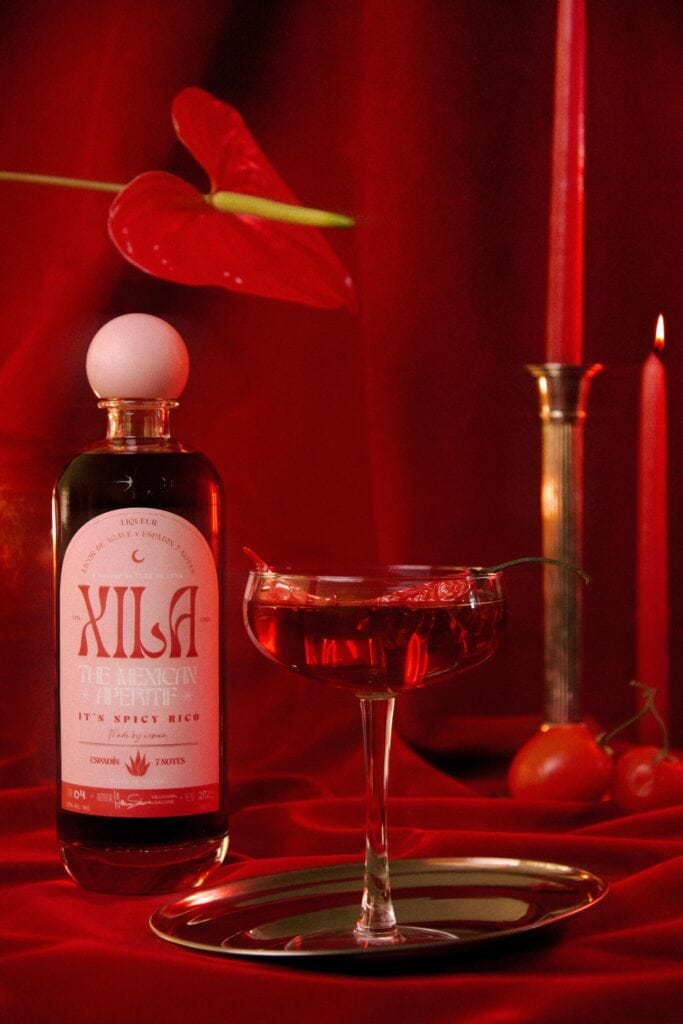
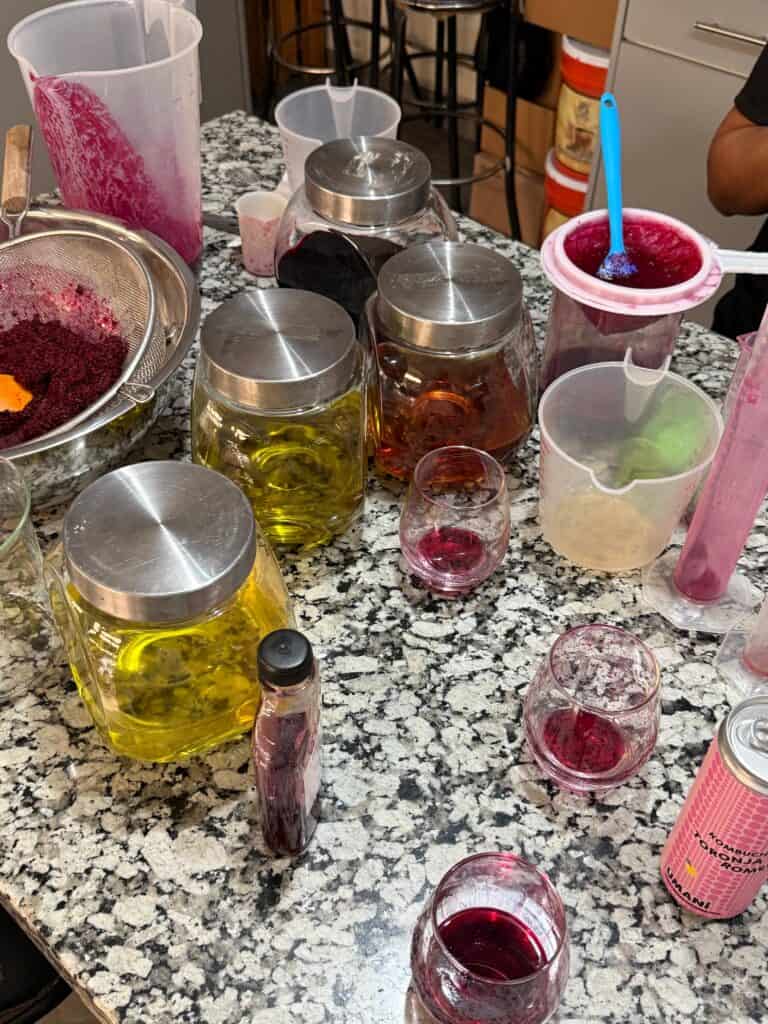
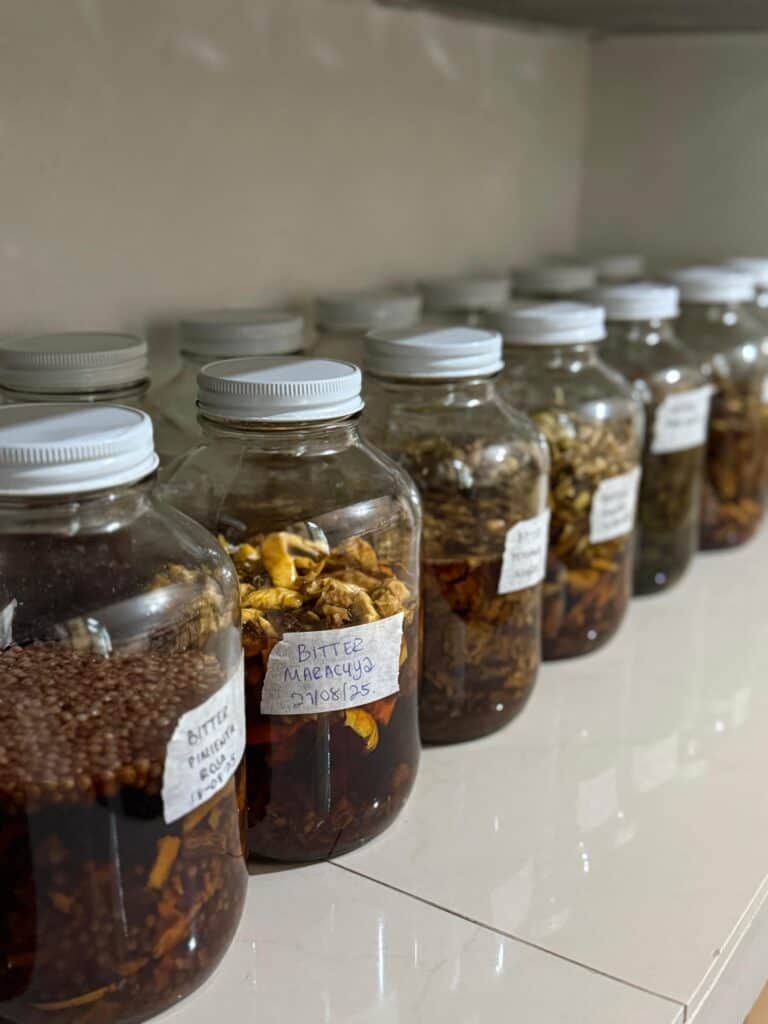
With Xila, people don’t realize the sheer amount of time and hand labor involved. It is a liquor made with seven ingredients that are all counted by hand, not by weight but piece by piece: lavender, hibiscus, and clove, among others.
The same is with Condesa Gin, we have the classic green label that contains palo santo crushed with tweezers, every bottle passing through more than eight hands, constantly being checked. Alma limoncello is an artisan product in which the main ingredient, lemons, about 800 kilos are peeled by hand.
Do you work with small producers? Do you source organic?
We source as local and as clean as possible — organic certification is expensive and hard to get right. The botanicals come from a family of sisters who work at the Sonora market in CDMX; the fresh fruit comes from a family business in Veracruz. Working with them lets us negotiate pricing together, as much as that’s possible.
How did Xila come about, and what does it represent within your path?
I was doing macerations, about eighteen flavors, and my best seller was a mezcal macerated with caramelized pineapple and ancho chile, to bring together sweet and spicy. That was my prototype, a mezcal at 40% ABV, and it came out as an abocado mezcal. I worked with a book with recipes from the 1800s that had no exact quantities. A year and a half of testing, learning how to macerate, at what proof. Making a one liter batch is one thing and a ten thousand liter batch is another. I had to run about 150 trials. This year, Xila won double gold medal in an aperitifs competition and it is a finalist for Best in Class in San Francisco. Exporting was not the original plan, but after attending a business trade meeting at Promexico, a US buyer picked our product to start exporting. That is how we sent our first pallet to New York in 2018. This was about 672 bottles. We now are present in 9 different markets.
What role do the women on your team play? What’s it been like building a project where women are central?
I started with brand ambassadors who were also able to sell products. Over time I kept finding more women. Jessica López is around her thirties as well and she started knowing nothing. Now she runs all of the production department. My commercial director, Yanelli, started working part time. When I caught the former director stealing her sales commissions I decided it was time for her to grow and let the other person go. She now runs the area with a team of four people. It is about finding people who share your same values.
How has the spirits industry changed since you started, until today?
Mexico’s variety goes well beyond agave, but I see it in international markets where the only thing people look for is mezcal, tequila and now, raicilla. In Asia specifically, that’s still all they look for. In the US it is easier. We started distributing to Japan and it took them a while to adjust to a spirit that’s actually spicy. A lot has changed behind the bar, we see more women in important positions at brands, bars, and restaurants. Though there’s still some of the same problems I dealt with before that made me leave.
What are your plans in the short term and what would you like to do in your work ten years from now?
We are about to launch a vermouth made with wine made in the State of Queretaro and another Xila aperitif made with sugar cane rum. I want to position myself and grow as a non agave distillery, while keeping the product artisanal. I want to use better formulations, hire more people, and be more efficient to basically improve our yields and turnaround time. That is the current focus: giving people work and generating more of it.
What would you say to a young woman with the same aspirations you had when you started?
Do it. There is the experience of knowing how people like and enjoy our products, that our work from years is being used in cocktails–even if it costs a lot of sweat, it is amazing to see how excited people get trying something you made. What I want is to have a team that stays excited and motivated. Jessi is now the master distiller of a fourth expression of Xila. The recognition of her work doesn’t end with having her name on the label but also with her having part of the profits, that is the satisfaction of creating these spaces to really nurture a change in people and the industry. This is how I have been able to get to where we are right now–the company grows at the same time as its people.












Leave a Comment