Welcome to Single Ingredient, a new series that explores Mesoamerican and contemporary Mexican ingredients and their usage behind the bar. Every month, we’ll feature one ingredient and a related drink recipe, as part of our ongoing goal to showcase notable Mexican beverage programming worldwide. In honor of Día de los Muertos and its ofrendas, we’re kicking things off with a post on leche quemada.
In the canon of Mexican confections, leche quemada, or “burnt milk,” reigns supreme. While the recipe may vary depending upon the region and usage, it’s typically made from caramelized cow’s milk, sugar, and baking soda.
Variations on caramelized milk sweets can be found throughout Latin America, with some variation on name, ingredients, milk type, and format depending upon the region or country. Argentina, Uruguay, and Paraguay have dulce de leche, while Colombia and Venezuela make arequipe, which in Brazil goes by doce de leite. Manjar/manjar blanco are more granular, less caramelized versions popular in Ecuador, Bolivia, and Chile, while Peruvian natilla is made with goat’s milk. Cajeta is a goat’s milk spread or confection from Celaya, Guanajuato, that dates to the 16th century.
Within Mexico, cajeta is but one cooked Mexican milk specialty.
According to Edmond Bojalil, whose website, Recetas Mexas, is dedicated to the preservation of traditional Mexican cookery, cajeta is but one cooked Mexican milk specialty. He writes, “leche quemada is the base for many regional sweets of Central Mexico [and includes the] glorias of Linares, jamoncillos of Puebla and Queretaro, and dulce de leche cortada in Zacatecas…it is the quintessence of Mexican milk confectionary.”
Leche quemada and its ilk are versatile and can be consumed straight up with a spoon or drizzled atop ice cream or other desserts, used as a filling for cookies, cakes, or panqueques, or fashioned into a dense, fudgy confection.
Leche quemada also has a role during Dia de los Muertos, when the confections are traditionally placed on ofrendas to honor departed loved ones. Burned milk is also a popular ice cream flavor throughout Oaxaca: nieve de leche quemada is typically accompanied by a scoop of vibrant magenta sorbet made from tuna, the fruit of the nopal cactus.
Bojalil states that leche quemada’s origins can be traced to “medieval Iberian convent tradition, arriving in New Spain in the 16th century.” The sweet evolved regionally to become a “part of mestizo Mexican confectionary alongside its Argentine, Brazilian and European (Spanish and Portuguese) relatives.” The mixture is traditionally cooked in a copper pot, or paila, (for better heat conduction) and must be stirred constantly for several before it yields a decadent caramel.
That labor-intensive ethos is what led Diego Langarica, beverage director of Philadelphia’s Amá, to develop a cocktail built on utililzing leche quemada. The restaurant, which opened in 2025, showcases Mesoamerican and mestizaje ingredients through both executive chef Frankie Ramirez’s and Langarica’s respective menus.
“We wanted to represent old, super traditional recipes of Mexico, like an abuela would make,” says Langarica, a native of Miami who was raised outside of Madrid.
While leche quemada was new to Langarica, his similar cultural and culinary philosophy and knowledge of milk-based Iberian desserts like crema Catalana gave him a reference point that dovetailed with his passion for Mexican foodways. So too did his culinary background; his father and some of his paternal relatives are chefs, and Langarica also got his start working in kitchens. That food-forward approach informs all his drinks, which include riffs on mole negro, rajas con crema, and aquachile.
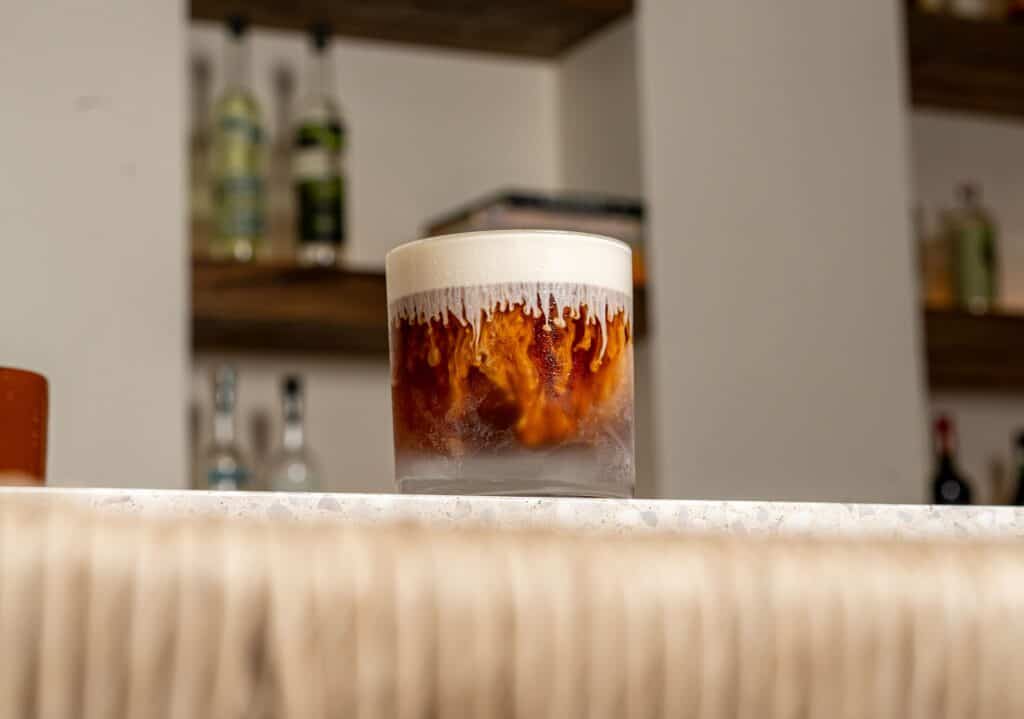
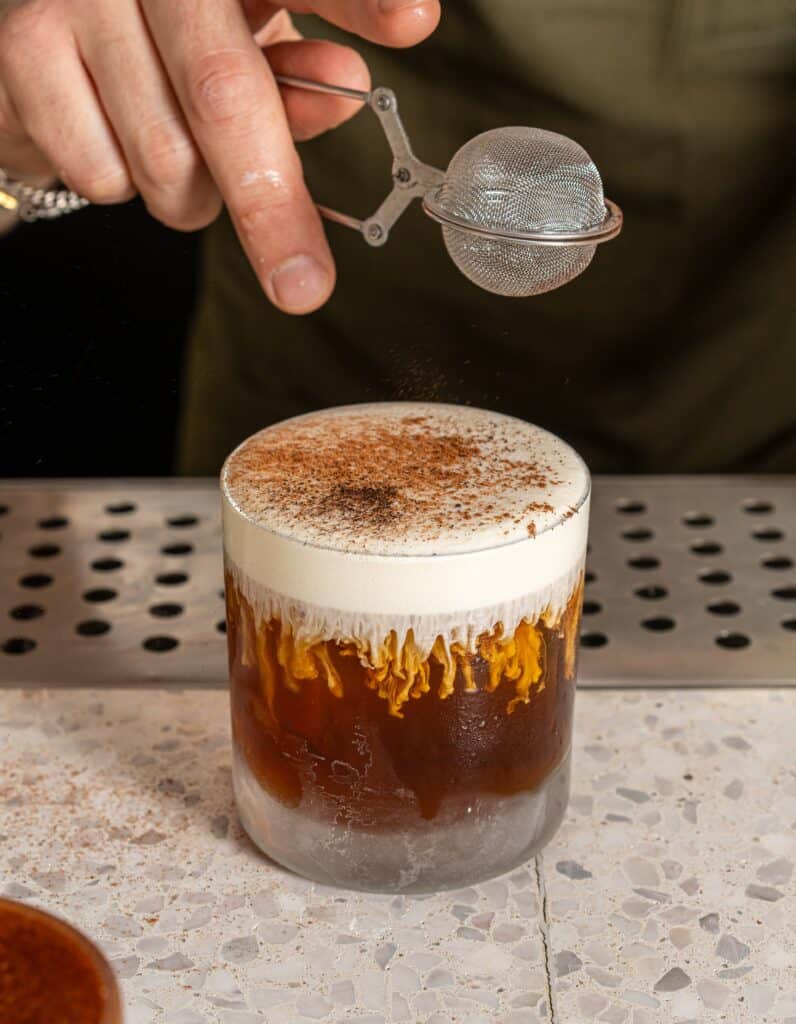
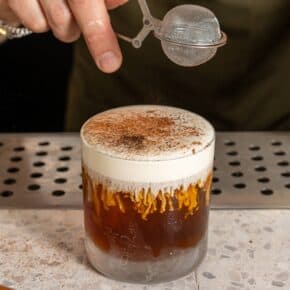
For his Canelo, Langarica uses a cold leche quemada foam atop a base of aged rum, rhubarb amaro, genever, and cacao liqueur, which is enhanced by a spiced café de olla syrup. The resulting beverage, served over a single oversized ice cube, is complex and layered, with the caramelized notes of the leche quemada foam tying the drink together.
Critically, Langarica uses Tempus Fugit crème de cacao for its bitter, earthy notes and density. “So many brands taste too artificial,” he says, adding that the juniper-forward genever also delivers “yeasty, bready notes that work with the leche quemada foam to create a pastry-like profile.”
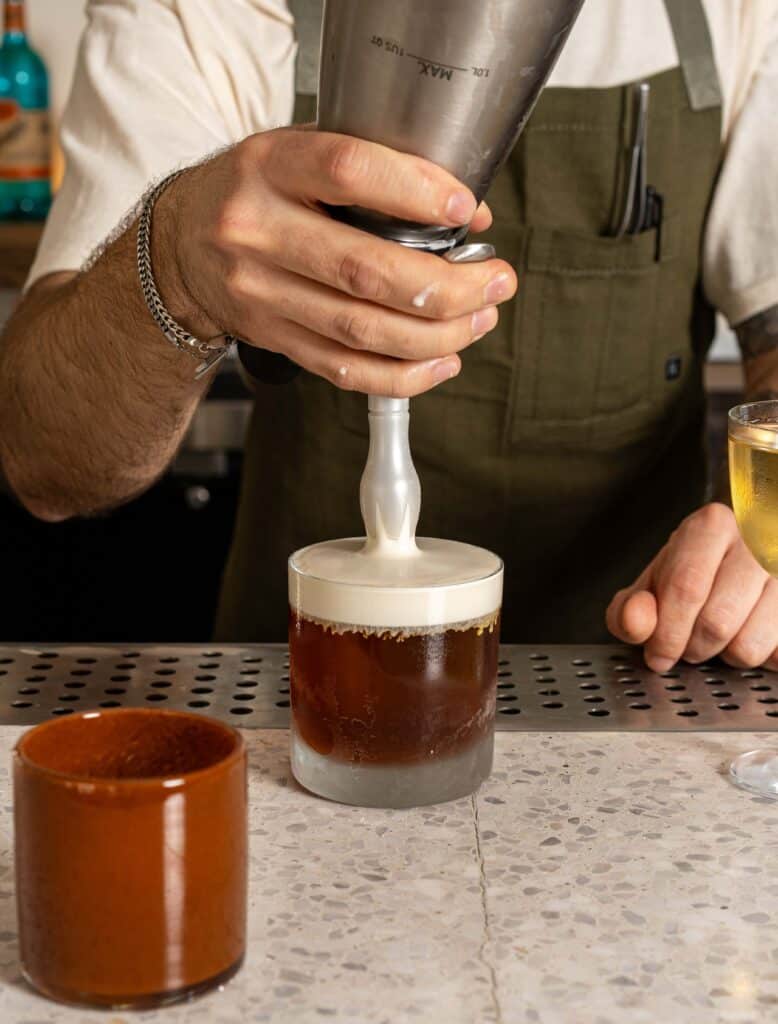
While the cocktail requires advance prep, the café de olla syrup (made with instant Nescafe in a nod to contemporary culture) can be used in other alcoholic and zero-proof drinks as well as desserts; Langarica recommends using leftover leche quemada dolloped atop Irish coffee, hot chocolate or champurrado.
“I don’t find leche quemada a challenging ingredient for use in a bar program,” he says. “It’s so simple, but I found it interesting that I hadn’t seen it used before in a cocktail. What we do here is about transformation of flavor while honoring the ingredient.”
Canelo Leche Quemada Cocktail Recipe
1 ¼ ounce El Dorado 5 Year Old
½ ounce Amaro Rabarbaro
½ ounce Genever
¼ ounce cacao liqueur (Langarica uses Tempus Fugit)
½ ounce café de olla syrup (recipe follows)
2 dashes mole bitters
2 dashes Angostura bitters
Garnish: leche quemada (recipe follows), powdered cinnamon
Place all ingredients in ice filled mixing glass and stir. Pour over a single oversized ice cube in rocks glass. Garnish with leche quemada and powdered cinnamon.
Café de olla syrup
2 cups water
2 cups sugar
3 teaspoons Nescafé instant coffee
Peel of half of an orange
5 whole cloves
3 piece star anise
1 stick canela
Bring water to a boil, then lower heat and add sugar, Nescafe, orange peel, and spices. Stir until sugar dissolves and turn off heat. Let syrup sit for 30 minutes, then strain and store in airtight container in refrigerator for up to two weeks.
Leche quemada
½ cup heavy cream plus half cup set aside
2 cups whole milk
1 ½ tablespoons simple syrup (1:1 sugar to water ratio)
¾ teaspoon pure vanilla extract
For the simple syrup and vanilla in the leche quemada: for the 8% total weight simple syrup, you can use about 18 g of simple syrup. For the vanilla extract, it is 1/8 ounce.
Place ½ cup heavy cream in a medium saucepan over medium heat. Allow cream to caramelize to a light brown color, stirring very occasionally. When cream is caramelized, add remaining ½ cup of heavy cream and two cups of milk and bring to a boil. Remove from heat and allow leche quemada to cool before storing in the same saucepan in refrigerator for 24 hours. To use, strain and add 1 ½ tablespoons simple syrup and the vanilla extract. Place leche quemada in a standard cream whipper canister, shake, and use as directed to add float to top of cocktail.












Leave a Comment