This is a brief story on how an almost forgotten cactus wine taught me that microbes have better memories than people.
When I started my PhD at the National Autonomous University of Mexico (UNAM) in Mexico, I thought I could take on the whole world in a sip. I signed up for every seminar, every workshop, every field trip, every opportunity that came my way. I was convinced I could do it all. I was young, full of energy, and riding the excitement of being accepted into this prestigious university. Back home in Mexico, we have an expression for that kind of reckless optimism: “sin miedo al éxito,” roughly go for success and don’t be afraid of it. It’s the sort of thing people say right before attempting something that is either wonderfully ambitious or spectacularly foolish. In my case, it turned out to be both.
My connection with fermented beverages began in childhood. I grew up watching my grandfather drink pulque after long days working as a campesino in the chinampas. Whenever he picked me up from school, I would patiently wait in the car, knowing that before heading home he would stop at his favorite pulquería, two blocks away from our house in Xochimilco. That was my first encounter with a world I barely understood.
During my first year as a doctoral student, I became enthusiastic about Mexico’s fermented beverages. As I immersed myself study, I was astonished by how little I actually knew about the remarkable diversity of Mexico’s fermentation traditions. Not only pulque, but every forgotten fermentation still quietly bubbling away in villages scattered across the country.
My plan was absurdly ambitious. After getting my hands on Henry Bruman’s Alcohol in Ancient Mexico, I convinced myself that I could study every fermented beverage described in its pages. My doctoral committee listened patiently before delivering the verdict every graduate student eventually hears.
“Your project is much too broad, you need to reduce your ambitions.”
I remember walking out of the room feeling defeated. I was embarrassed; every member of my doctoral committee had just pointed out countless changes that needed to be addressed. My mentor noticed how discouraged I was and caught up with me in the hallway. Then he asked a simple question: “What was that drink you mentioned? That one that is produced with the fermentation of red cactus prickly pear fruits?”
“Colonche.”
“Go find it.”
That single sentence changed the next several years of my life. I spent months driving across central Mexico asking strangers what became the most repeated question of my early doctoral years.
“Have you ever heard of colonche?”
Most people hadn’t. Some thought I meant another drink. “Pulque de tuna, that’s what you mean?”
Others just laughed.
I began to feel so frustrated. I was spending my lab’s research funds trying to find the focus of my project, but I wasn’t getting anywhere. It was taking much longer than I had expected.
After several hundred kilometers, I began to wonder whether colonche existed mostly in old ethnographies. Perhaps it belonged alongside the waters of the Fountain of Youth, a drink that everyone had heard about, but no one could actually find. I started to suspect that I wasn’t chasing a beverage at all, but an idea. Maybe colonche had simply become a wonderfully respectable excuse for an ambitious PhD student to spend months driving across rural Mexico.
Then, just as my carefully designed research plan was beginning to fall apart, life stepped in with a better one. I stopped at a roadside stand in the tiny village of La Chirimoya because, as it turns out, the smell of freshly made “gorditas” is stronger than scientific discipline. While waiting for my order, I asked what had become my favorite question to ask complete strangers:
“Excuse me… have you ever heard of a drink called colonche?”
The young woman behind the counter smiled.
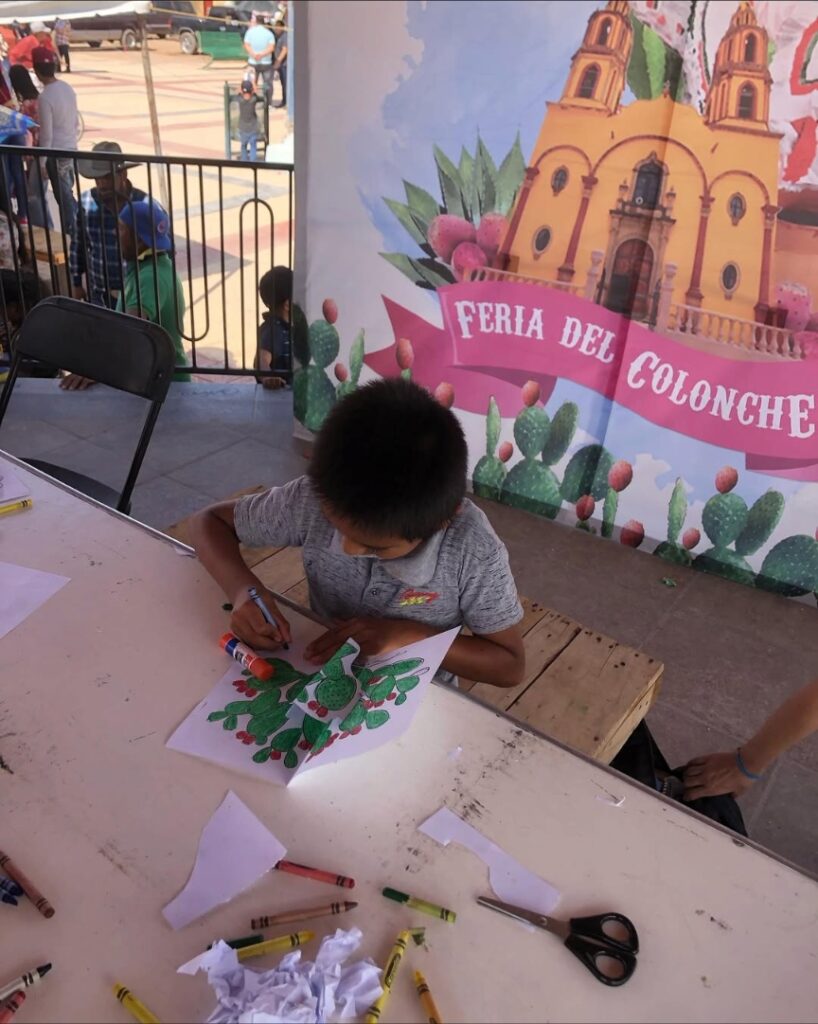
“My best friend organizes the Colonche Festival.”
Sometimes entire research projects depend less on methodology than on ordering lunch at exactly the right place. Looking back, I’d like to think it wasn’t luck at all. Perhaps my gut microbiota already knew where the story was heading and simply decided it was time for lunch. She told me that the festival takes place in Laguna de Guadalupe, a small community in the Mexican highlands in the State of Guanajuato, where prickly pear cacti dominate the landscape.
I arrived in May, eager to learn everything about colonche, only to discover that I had come several months too early: the festival takes place on September 1st. Apparently, the cacti had never received the timeline for my PhD. They were still flowering. Nature, as every field biologist eventually discovers, follows its own timeline and has absolutely no interest in ours.
The hills were covered with spectacular yellow and orange blossoms. Wonderful for pollinators. Terrible for anyone hoping to ferment cactus fruits. So, I waited.
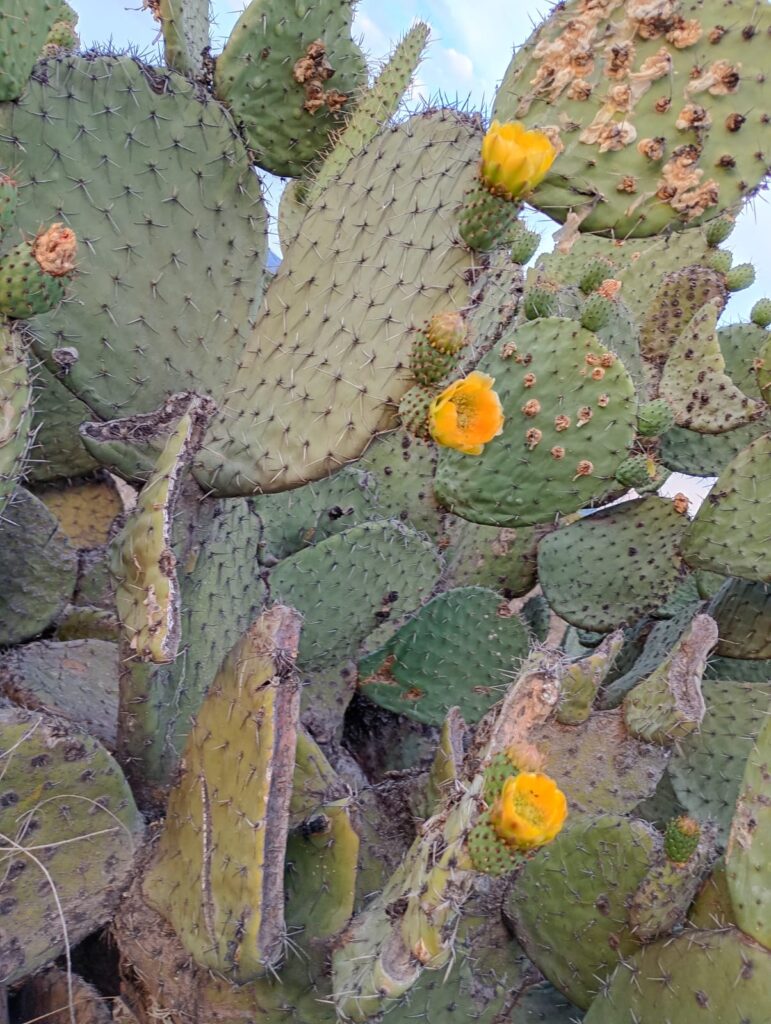
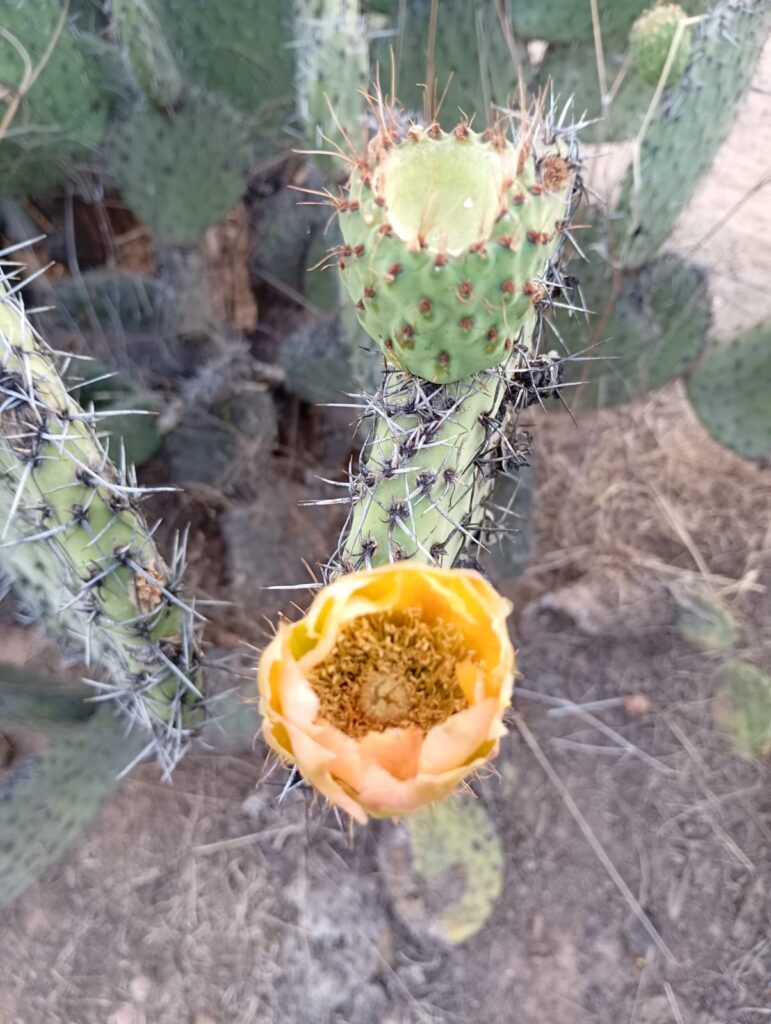
When I returned in September, the landscape had undergone a quiet transformation. Millions of crimson fruits now rested on endless green cactus pads. Because I knew nothing about this part of the country, I assumed it would look much like the wine regions I had visited elsewhere in Mexico, with endless vineyards feeding the production of wine. If deserts had vineyards, I thought, this had to be one of them. The only difference was that every grape came armed with spines.
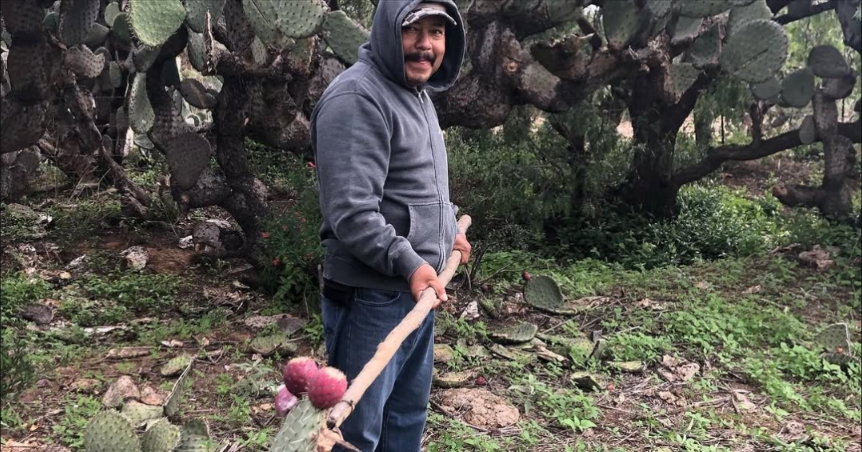
That was also when I met Martín. A man standing 1.67 meters (five and a half feet) tall, with a broad smile beneath his mustache, dressed in full ranchero attire even though he is only riding a bicycle. If colonche has an ambassador, Martín deserves the title. He has been making colonche since he was about eighteen, although he remembers helping gather tunas cardonas (Opuntia streptacantha), the cactus fruit most commonly used to make colonche, when he was a child. Today, he welcomes visitors at his house from around the world with a glass of colonche, sharing both his experience and his family’s long tradition of producing this remarkable fermented beverage. If you are lucky enough he prepares a rat soup–yes seems awkward–but it is a delicacy in this region.
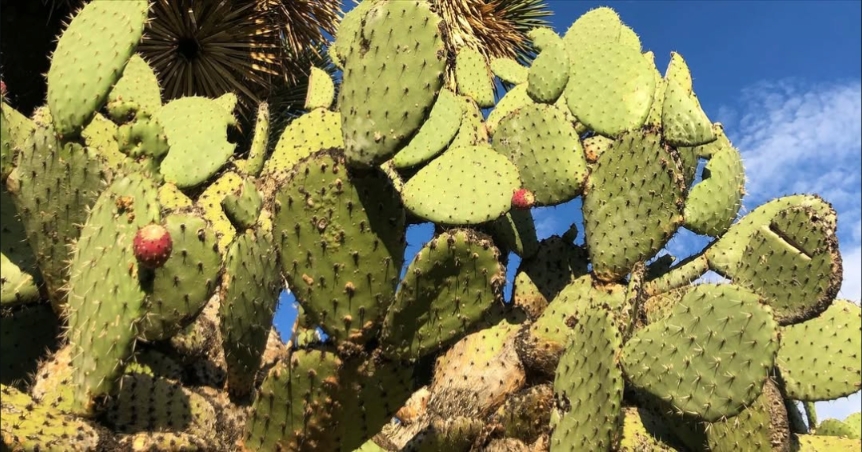

Walking through the cactus forest with him is a humbling experience. Every few minutes he stops because he has noticed something I had walked straight past, a towering prickly pear nearly three meters tall, the crumbling stones of what might have once been a pre-Hispanic foundation or a subtle difference between two neighboring agaves. Even tiny insects painted in impossible shades of blue, red, and yellow, each one announcing that deserts are anything but empty. To Martín, it is a landscape, but more deeply it is a historical conversation with nature.
I find it deeply sad that the combination of low agricultural wages and increasing violence has transformed life in many rural communities across Mexico. Martín’s son, who once joined us on our trips into the field, has since left for Monterrey, where he now works in construction. His story reflects a broader reality: for many young people, remaining in the countryside is no longer a viable option.
One afternoon we tried to estimate how many fruits a single cactus could produce, just for ecological purposes. We counted for hours before finally admitting defeat. There were simply too many. Somewhere along the way our calculations stopped, and we settled for wonder instead.
Another day we came across people collecting gusanos de maguey, the caterpillars considered a delicacy throughout central Mexico. Martín watched quietly before shaking his head. They were harvesting too aggressively, endangering the life of future agaves by leaving little behind for the following season.
“People think only about today,” he told me.
For Martín, every harvest is a conversation with the future and a landscape that must be preserved.
Long before I understood fermentation scientifically, Martín understood it practically. I arrived carrying a backpack full of instruments: refractometers to measure sugar, pH meters, thermometers, alcohol meters, notebooks, sampling tubes. Martín has no need for these tools. He would taste the fermenting colonche, watch the bubbles rising to the surface, inhale its aroma, feel the texture and quietly announce,
“It is almost ready.”
More often than I liked to admit, my instruments agreed with him. The laboratory taught me how fermentation works. Martín taught me how to notice it. Martín has never sequenced a microbial genome, but he understands fermentation with a precision that would impress many microbiologists.
Producing colonche begins before sunrise.–cactus spines are more pliable before the morning dew has evaporated.
“They come off more easily,” Martín explained.
I was skeptical at first, but soon discovered that of course he was right.
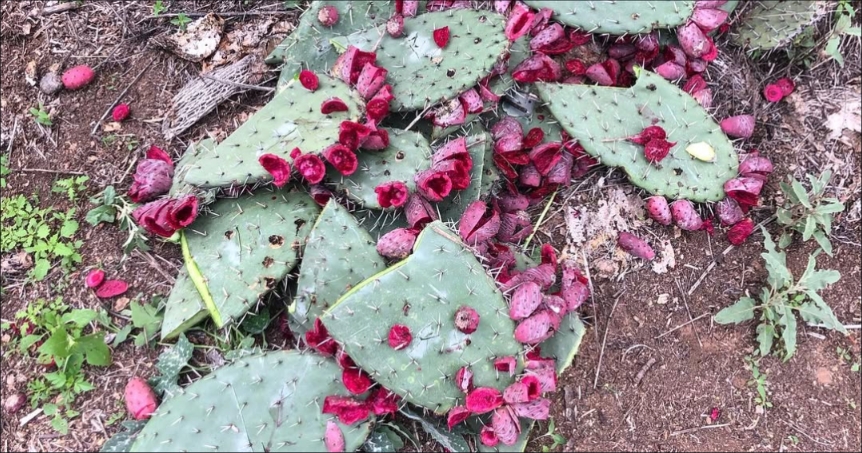
Watching Martín harvest prickly pears is like watching a specter among thousands of needles. He pedals his bicycle through towering cactus stands. With a hooked blade, he slices off the cladodes heavy with fruit, twists each prickly pear free, peels it bare-handed, and drops the crimson pulp into a twenty-liter bucket.
The discarded peels leave bright red stains across the soil, like evidence from a botanical crime scene. Inevitably, the cattle arrive. They happily devour the leftovers and wander off a few minutes later with crimson-stained muzzles.
Back at his house, a modest home with four rooms and a bathroom, the kitchen is the heart. I spent countless hours there, drinking colonche, listening to Martín’s stories about the drink, and watching friends and neighbors come and go. It was where he welcomed my students and friends, where conversations stretched long into the afternoon, and where, in one corner, he kept the clay vessel in which colonche quietly fermented. Martín proudly introduced what may be the most important collaborator in the entire process an eighty-year-old clay pot. This working fermentation vessel has been in continuous use for generations. Every family keeps one. No two are exactly alike. Some have thicker walls. Others have a handmade valve near the base to separate the seeds from the fermenting liquid. Each has its own small innovations, accumulated over decades of use.
The process was far simpler than I had imagined. For most producers in Laguna de Guadalupe, everything begins with harvesting tuna cardonas, selecting only those they describe as mazudas (fruits that are especially plump, juicy, and sweet). Back at home, the fruits are gently crushed by hand, and the juice, together with the seeds, is poured into a clay fermentation vessel. Depending on the weather, the mixture is left to ferment for 12 to 24 hours. Rather than relying on clocks or thermometers, producers know the colonche is ready by watching the bubbles rise to the surface. To encourage fermentation, some place the clay vessel under direct sunlight during the day and move it indoors at night, keeping it close to the stove to maintain a warm temperature.
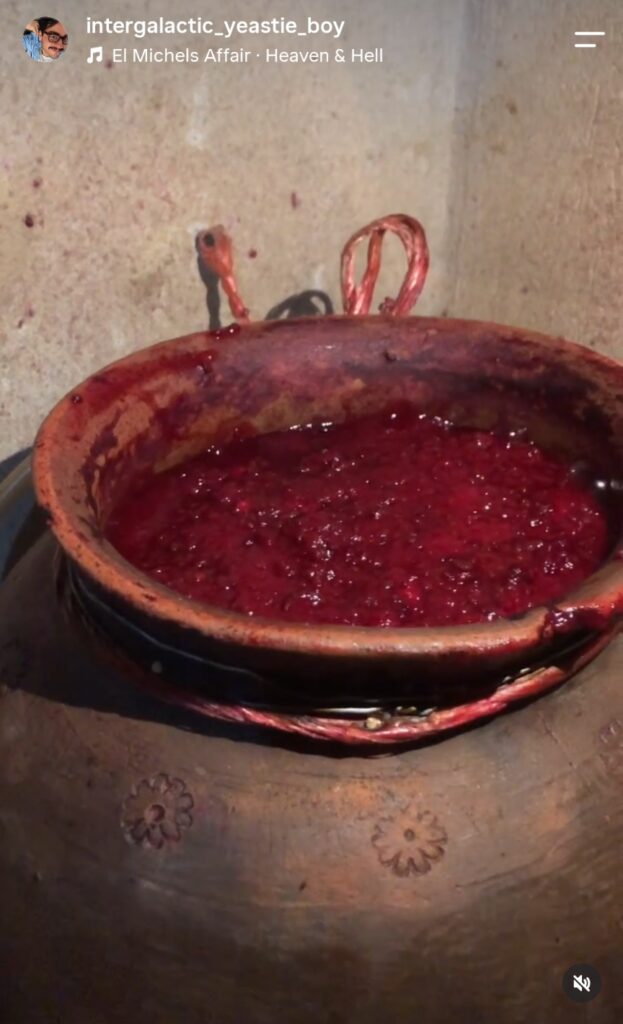
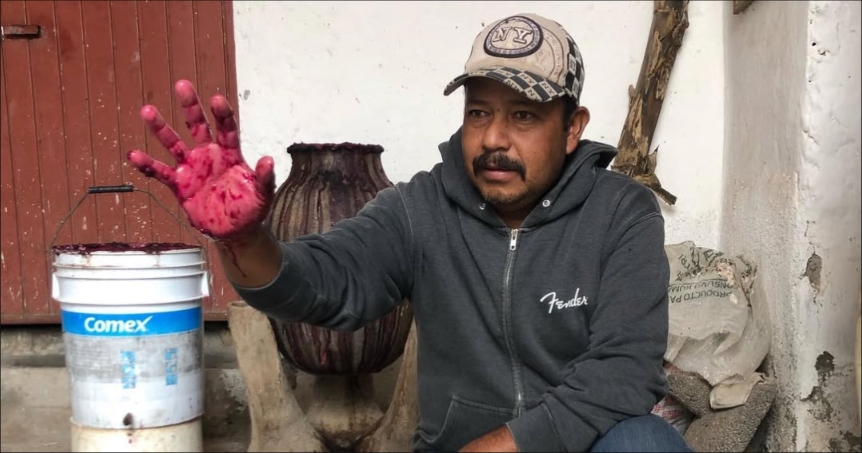
But their most remarkable feature is invisible. Every pot harbors its own microbial heritage. In 2022, together with several colleagues, we published a paper in Frontiers demonstrating that many of the microbial communities involved in colonche fermentation persist in the clay vessels where fermentation takes place. These microbial communities remain in the vessels between fermentation cycles, effectively serving as starter cultures for subsequent batches of colonche. Thus, each vessel is a living archive, preserving microbial communities that have survived one fermentation after another for decades. Every producer inherits more than a recipe. They inherit a microbial community, and they share it with the drinkers.
One of the rituals that fascinated me was the preparation of the first batch of colonche each season. Every season, the oldest producer prepares the year’s first batch, and from that pot comes a starter culture known as cinaiste. A few liters travel from house to house, awakening dozens of new fermentations across the community.
No one calls it microbial inheritance, yet every transfer carries living communities of yeasts and bacteria that have been shaped over generations. Every producer makes their own colonche, yet every batch begins with a gift from someone else. Families pass down recipes; the microorganisms pass down themselves. Only later, inside the laboratory, did I understand what I had been witnessing. To human eyes, a clay pot contains bubbling cactus juice. But in the inside, yeasts and bacteria compete, others cooperate, some produce alcohol, others generate acids, esters, aromas, and the impossible-to-describe flavor that first puzzled me when I raised a glass of colonche years earlier.
Every sip is a negotiated interaction among millions of microorganisms.When the colonche season ends, the vessels are carefully stored away for nearly a year. They sit quietly in dark corners of people’s homes, waiting. I like to imagine them the way nature documentaries portray hibernating bears, not dead, simply asleep, conserving life until the next season arrives. In this sense, the pots are never truly empty. They are simply waiting for the next harvest.
Then came another surprise when I was doing my fieldwork.
Driving east into the neighboring state of San Luis Potosí, I discovered an entirely different philosophy of fermentation. Here, producers gently cook the cactus fruit before fermentation, others perfume the liquid with cloves or anise, but they all remove the seeds. In the fridge, some people preserve a batch of colonche from the previous year. Nowadays, many producers begin fermentation with pulque, mostly because it is easy to acquire and it is another product that constantly is produced in the locality through the whole year.
One of the questions that naturally emerged was whether these different fermentation practices produce measurably different beverages. In 2025, this question was explored by comparing colonches produced by different fermentation methods. Chemically, the differences were surprisingly subtle: their volatile profiles largely overlapped. Yet our sensory analysis told a different story. A trained panel of university students who had participated in sensory analysis workshops for two consecutive years could consistently distinguish one from the other., suggesting that even small differences leave recognizable sensory signatures. Yet every producer is telling the same story with a different voice. Fermentation, like language, develops local accents. The crimson prickly pear of tuna cardona (Opuntia streptacantha) is simply the alphabet from which every version of colonche is written.
Climate and what we often call “development” has made this tradition increasingly difficult to sustain. The cactus forests Martín once harvested are steadily giving way to monocrop bean fields that increase the soil erosion, replacing landscapes that had supported colonche production for generations. Severe droughts, hailstorms, insect outbreaks, and increasingly unpredictable weather have turned every harvest into a gamble.
In 2023, Martín never even uncovered his fermentation pot because there wasn’t enough fruit. No fruit meant no fermentation, no awakening of the microbial communities that had been waiting inside the clay pot, no colonche, and no income. This raises a troubling question: what happens to the world’s fermentation traditions as climate change reshapes the ecosystems on which they depend?
A few years ago, a foreign visitor arrived and asked to buy Martín’s colonche. Martín immediately refused.
At first, I assumed he was protecting a family heirloom. Later he explained his real concern.
“The microbes live here and are how I will earn money for my family.”
People sometimes ask me what colonche tastes like.
I still don’t have a satisfying answer.
It tastes a little like berries, a little like wine, a little like the desert after rain. Mostly, though, it tastes like relationships. Relationships between people and cacti, between families and clay vessels, between microorganisms and the porous walls that shelter them from one season to the next. It carries the work of pollinators that made the fruit possible, the rhythms of rainy seasons that determine each harvest, the microbes carried by wind, insects, and hands, and the memories preserved in starter cultures passed from one household to another. Some flavors refuse to fit inside chemistry descriptors and some can’t be described with existing words. When I finished writing this story, I called Martín.
Before I had time to explain anything, he interrupted.
“So…”
“When are you coming back?”
For once, I went there not to collect samples, isolate yeasts, or talk about fermentation. I was there simply to share lunch and, naturally, to drink colonche..
Around Laguna de Guadalupe people like to say,
“During colonche season, even the pigs get drunk.”
After all these years, I still think they’re only half joking.
I finished my PhD with honors, received an award for the best ethnobiology dissertation, and was fortunate to receive several other recognitions. Yet the achievement I value most is the friendship I built with Martín. Well, that, and the fact that I eventually learned to recognize 16 of the 30 cactus prickly pear varieties found in the community–a challenge I still consider one of my greatest accomplishments. Along the way, I came to understand that these varieties are not simply different cacti; they reflect generations of careful selection, intimate knowledge of the landscape, and an extraordinary understanding of fermentation. Each variety is valued for different qualities, each season brings its own decisions, and each batch of colonche represents a different way of reading and living with the landscape.






Leave a Comment