
Oaxaca’s top bar professionals share their perspectives on the city’s changing bar scene–what’s working and what’s not. All photos by Anna Bruce.
When I came to Oaxaca in 2013, my first and favorite bar was just known as “the mezcaleria” (now more formally Mezcaleria Los Amantes). Somewhere between a cantina, and a side-show, the tiny space was packed to the ceiling with glass jars and curiosities collected by local artist Guillermo Olguien.
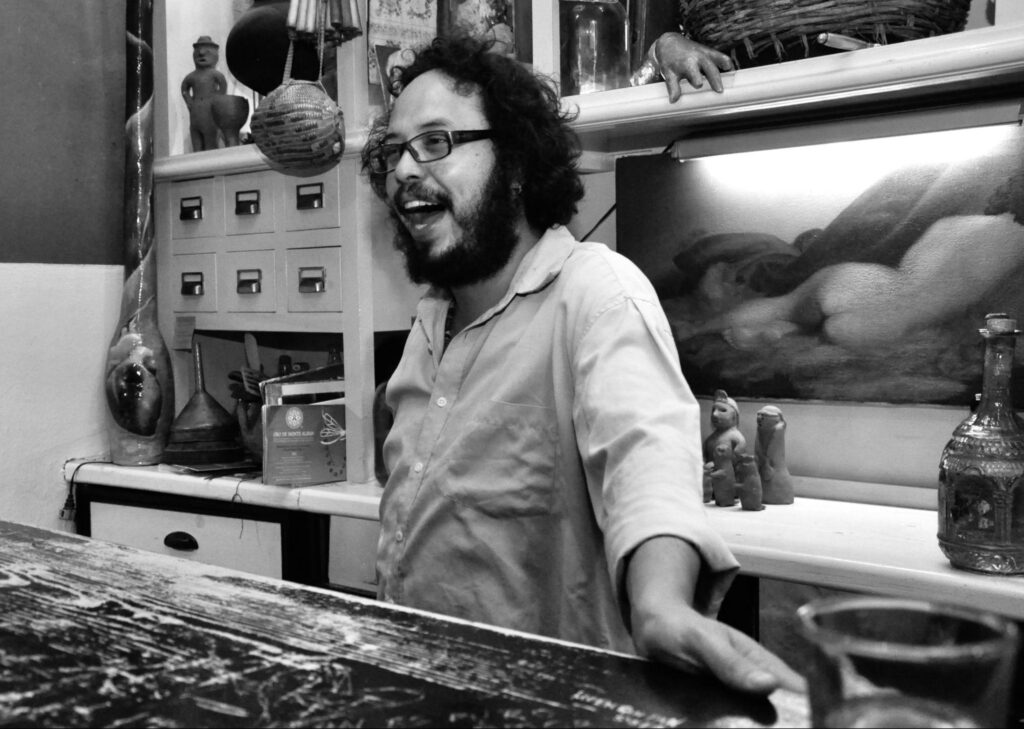
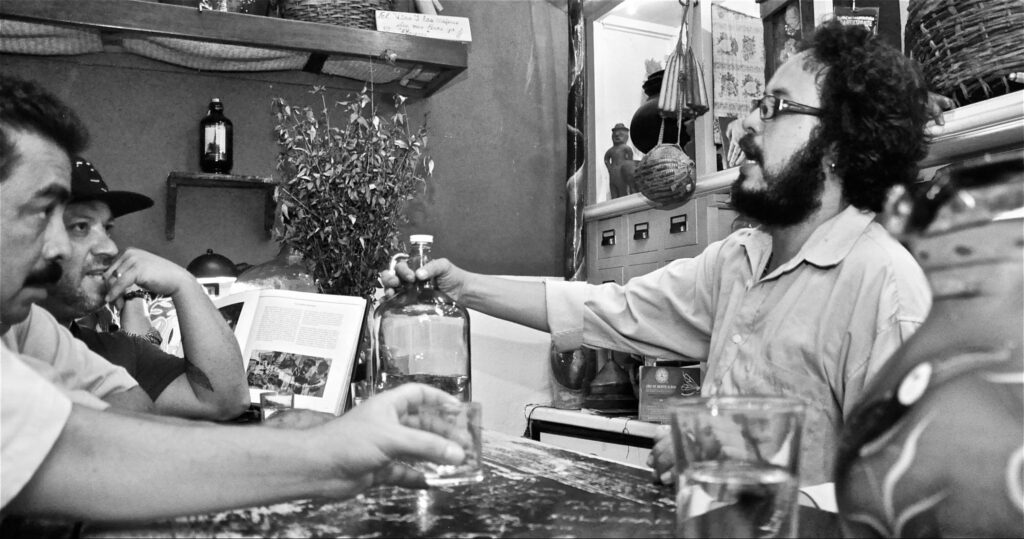
The drinks were served freely by mezcal rock-star Leon Langle, who poured straight from 20 liter jugs into hand-held jicaras. To my memory, payment was more of an honesty system and lock-ins were frequent.
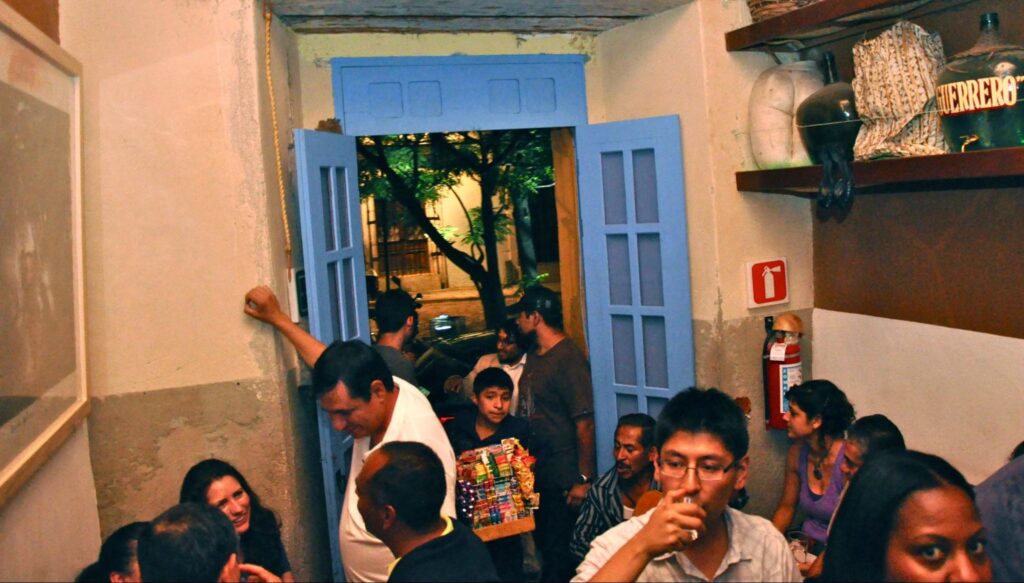
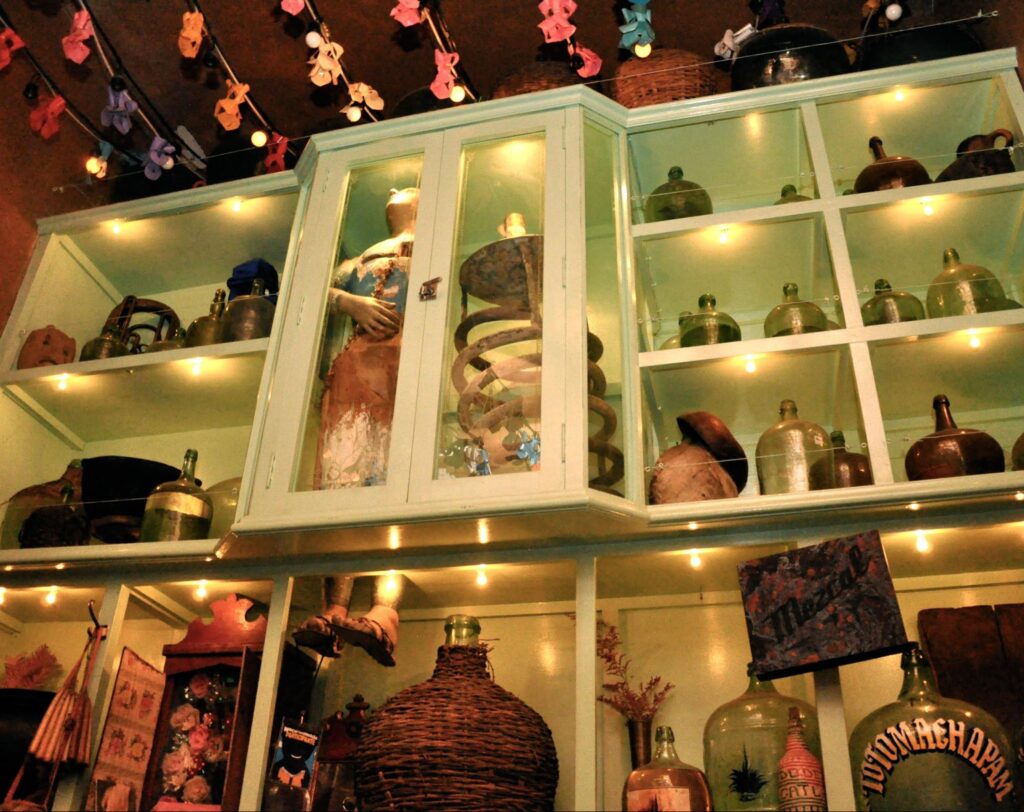
Oaxaca has long been considered a “pilgrimage” for the agave enthusiast, yet the city of 2026 looks vastly different from the landscape that greeted visitors only a decade ago. In little more than ten years, the drinking culture has undergone a radical transformation, evolving from a network of no frills cantinas into the realm of high-end mixology and specialized agave concepts.
Traditional neighborhood spots are being updated by younger generations who are blending classic local environments with premium back-bars and craft cocktail menus. Cantinas are opening their doors (more on that later) and might even serve a margarita. This evolution is marked by a complex discourse between the preservation of deep-rooted traditions and the pressures of tourism.
To understand the trajectory of Oaxacan bar culture, first we have to look behind the slatted saloon doors of the traditional cantina. The wooden panels serve as a barrier between the bar and the street, creating a sort of time resistant den for the drinkers inside. Historically, these spaces have been shrouded in social stigma.
Adolfo Manuel Gomez Carmona, a fourth-generation bartender and owner of Fito’s, notes that there was a historical taboo around cantinas. Mezcal was viewed as a drink for the working class, a perception that led to discrimination against those who consumed it.
In Malcolm Lowry’s famous novel Under the Volcano, the cantinas serve as symbolic, claustrophobic hubs of doom and heavy drinking. But the bars also provide the protagonist with moments of levity, even revelation: “Oozing alcohol at every pore, the Consul stood at the open door of the Salon Ofelia. How sensible to have had a mescal. How sensible. For it was the right, the sole drink to have had under the circumstances.”
Until recently, cantinas were almost exclusively the domain of men and “working ladies,” far removed from the inclusive spaces seen today. Entry into these bars was once considered an act of rebellion for local youth. “Growing up in a catholic society with strict values, we were breaking moral ground here… the smell of cheap perfume, red hot lips… we were terrified!” recalls Oaxacan artist Jose Santos of his first experiences as a teenager in the 1980s.
Even as recently as a few years ago, legendary spots like Salon de la Fama did not generally allow women to enter. While these gender barriers are fading, a double standard often remains, where foreign women are treated with different rules than local women in these traditional spaces. That said, the stigma around cantinas has faded and the bars tend to be more inclusive. Most are accepting of women and tourists–although there might be curious looks from locals.
Salon de la Fama still has the saloon doors and the black and white photos of old film stars; truly authentic, yet becoming a popular draw for curious tourists. But it’s “Pollos Bar” that still reminds me most of my early experiences in cantinas; a curtain for a door, trestle tables and plastic chairs. The lighting is really bad. Newspaper articles and family photos in mismatched frames decorate the walls while a jukebox juts out of a corner by another curtain that leads to some very basic bathrooms. The proprietor vaguely watches over the tables, which sag under empty bottles and glasses, left there as a record of your evening (or morning) drinks.
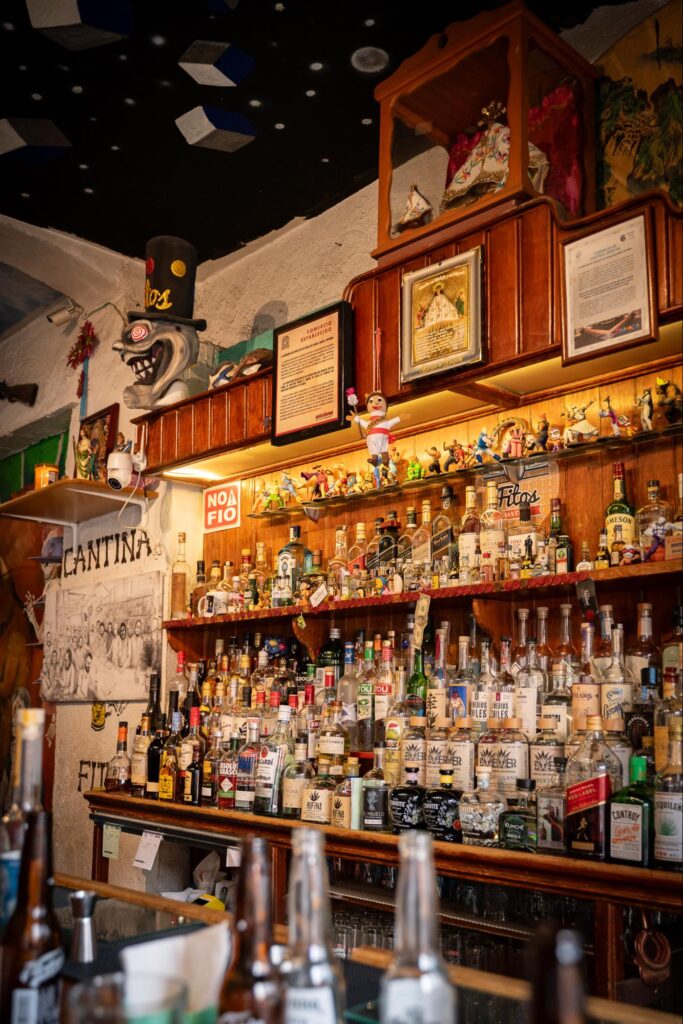
Fito’s is a favorite with Oaxaca’s bartenders like Sabina Sabe’s head bartender, Solem Larios. Run by Adolfo Manuel Gomez Carmona (Fito) and his son, it is still a great place to prop up the bar with a cheap beer and talk for hours. However, their backbar shows the influence of a more contemporary Oaxacan bar scene, with an impressive range of artisanal mezcals from around the state. Even the micheladas are served with finesse.
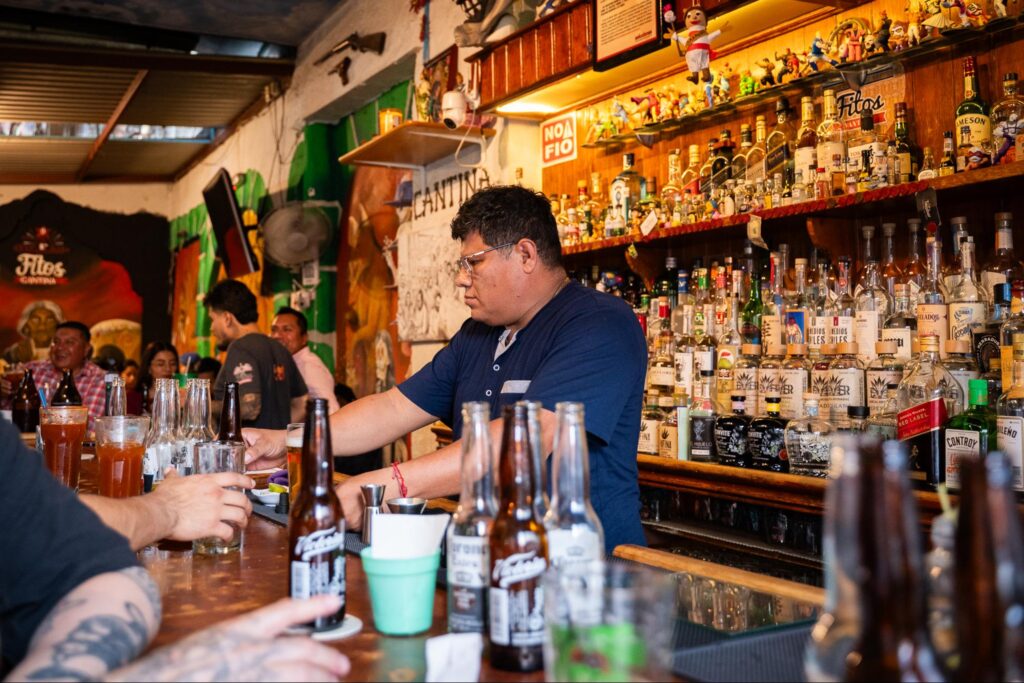
Recently I went to speak with Carmona and Larios at Fito’s, and bumped into Santos at the bar. We tried numerous intriguing mezcals before shifting to the house espadín and joining a raucous table. It doesn’t need to be said that some (unknown) time later I finally stepped out of the crowded cantina, having made many a new drinking buddy.
How the mezcal boom changed the way we drink mezcal
The economic reality of the cantina is shifting. Prices for a copita have risen from around 20 pesos back when I first started going out in Oaxaca city, to over 100 pesos in the past decade. Despite the rising costs, cantinas like Fito’s, Pollos Bar, and Salon de la Fama remain vital social hubs.
The turning point for the city began in earnest around a decade ago. The meteoric rise in the popularity of mezcal sparked a wave of tourism. A wave of visitors were eager to learn, to sample, to buy, and to export. This influx of curiosity and capital began to strip away the saloon doors of Oaxaca’s bar culture, and mezcal became a premium option, sipped and discussed, rather than slammed in a cantina.
Carlos Diaz, owner of Sobrio: Mezcal Speakeasy, describes how the mezcal boom has had a profound impact on the local economy, creating a phenomenon of reverse migration–people who left their home villages to find work are now returning to their family lands to produce mezcal.
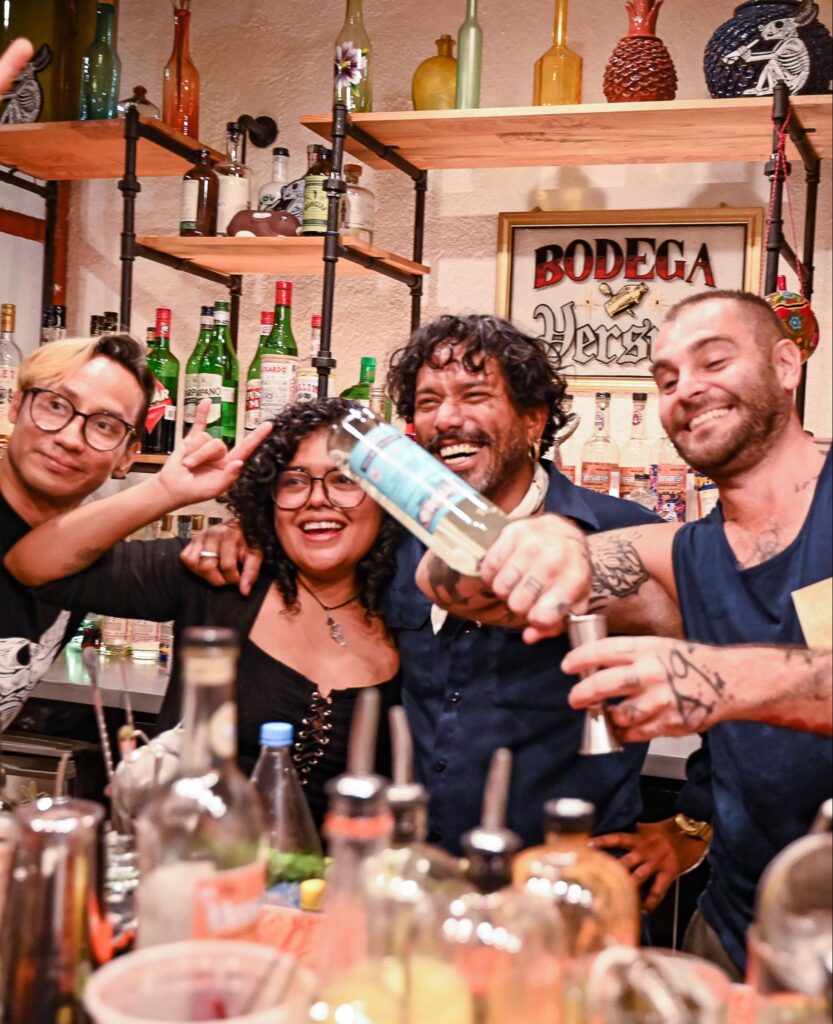
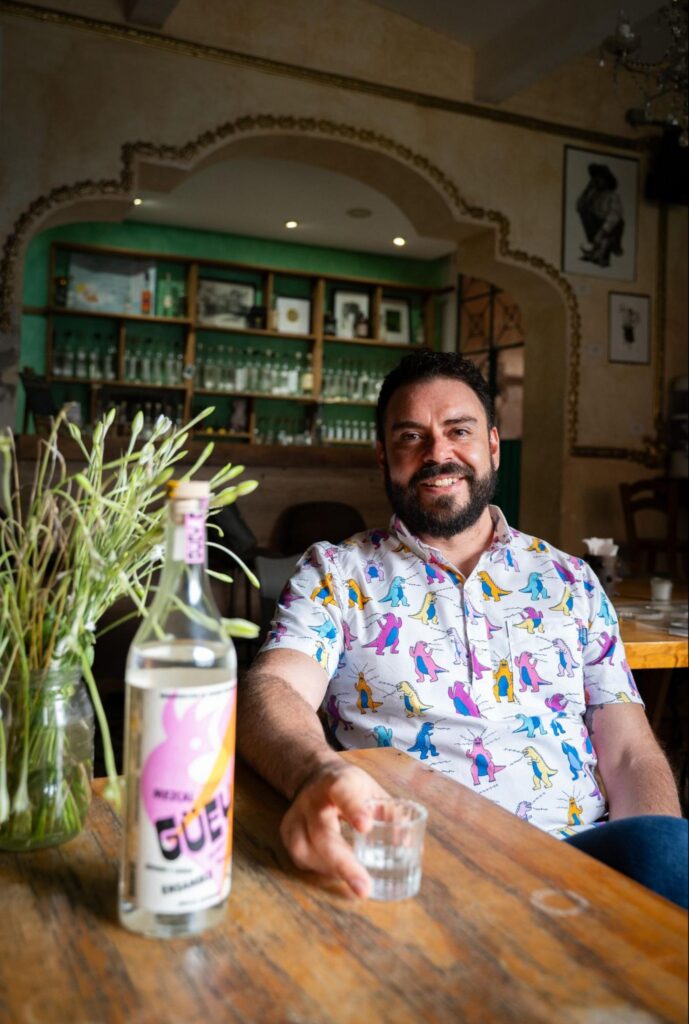
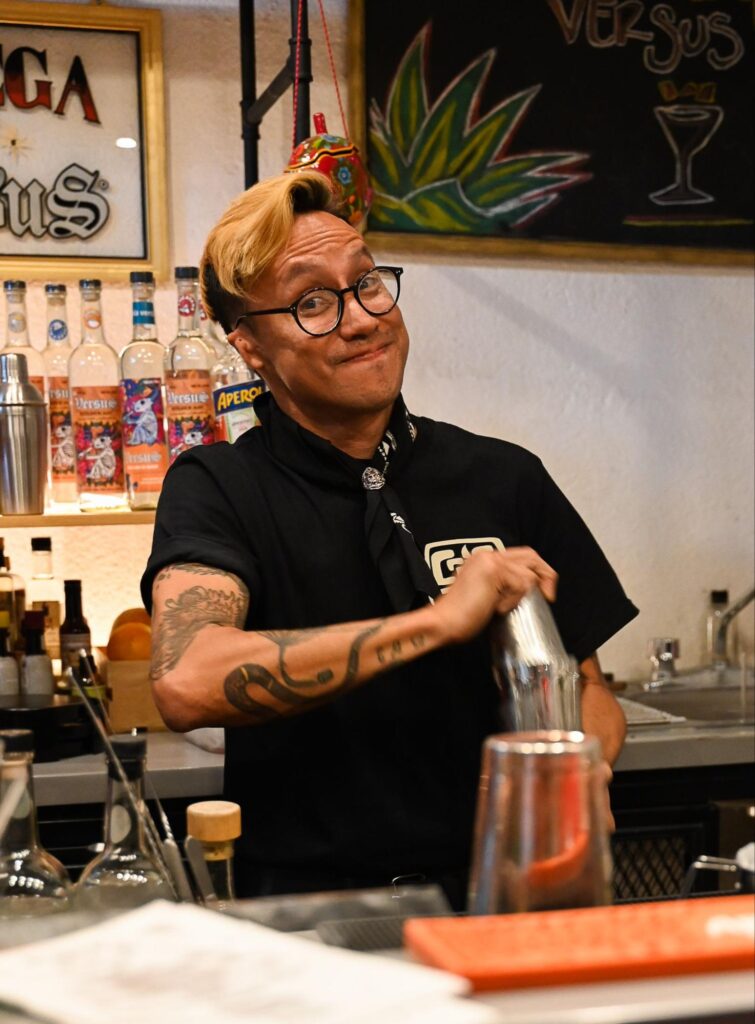
However, the premiumization of mezcal also came with heavy burdens. Boutique brands face immense pressure from Mexican taxes (IEPS and IVA), which can add approximately 70% to the price of a bottle. This typically forces small brands to focus on international exports because the liquid becomes prohibitively expensive for locals to consume in a bar setting.
Meanwhile, small producers find the government’s certification and accounting requirements prohibitively expensive and difficult to navigate. As a result, many bars and brands operate in a gray area and may rely on informal arrangements with producers to stay in business, such as serving uncertified “house mezcal.”
As mezcal tourism in Oaxaca grew, casual drinking spots evolved into curated tasting rooms and “educational libraries.” Specialized “mezcalerias” like Mezcaloteca and InSitu have led this movement, while newer tasting rooms like El Hijuelo, El Espacio, and Quiote have stood the test of time, (many bars close within a year or so), becoming established favorites with local mezcal lovers and visiting agave aficionados alike.
In Oaxaca’s mezcalerias, the role of the bartender has shifted toward that of an educator. “I think there’s an important distinction between a bar that serves mezcal and a mezcalería that creates a space for conversation, education, and a deeper understanding of mezcal,” says Celia Bolanos, founder of Quiote.
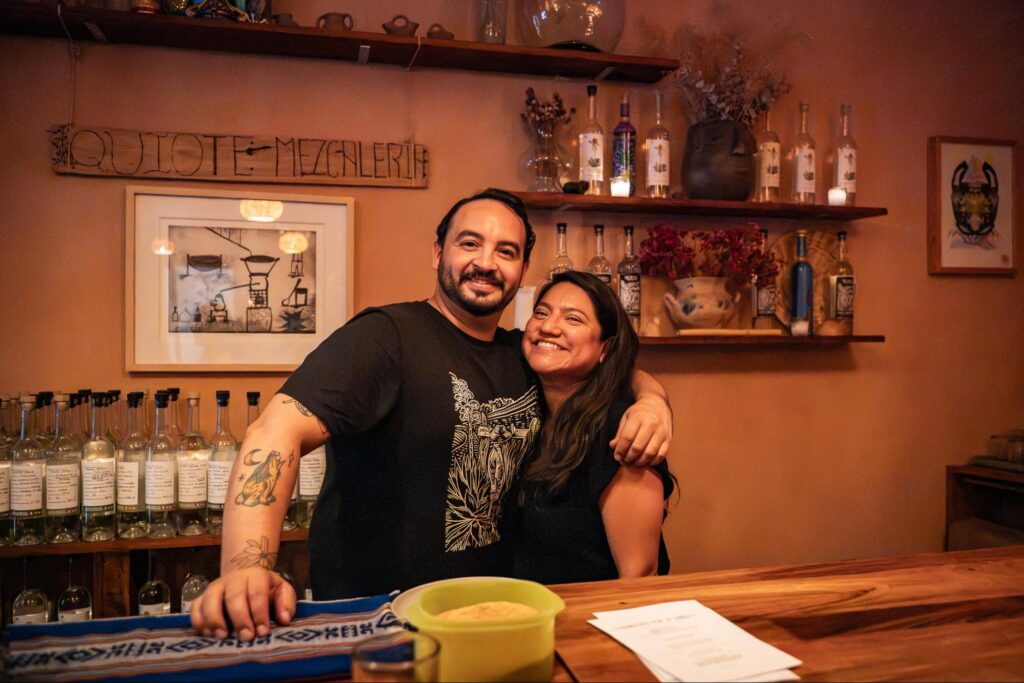
The goal is to move the consumer beyond superficial marketing terms like “smoky” and instead focus on the story behind the spirit—the family who made it, the specific agave species, and the maturation process. “Once you know the story of the family and everything that went into making that mezcal, you taste it differently,” Bolanos adds. This human connection allows enthusiasts to “shake the hand” of producers who view mezcal as part of their life rather than just their economy.
Oaxaca offers a range of experiences for the mezcal-inclined consumer. At one end are private tasting experiences such as those hosted by Bolanos and Samuel Velasco Perez, while places like Sobrio and Insitu’s Bodega sit on the fence between mezcaleria and cocktail bar.
Insitu manager, David Castillo is a well-known figure in Oaxaca’s bar scene–behind the bar or his guitar! He explains that the enduring influence of Insitu is the “comprehensive learning experience focused on keeping mezcal culture alive and relevant.”
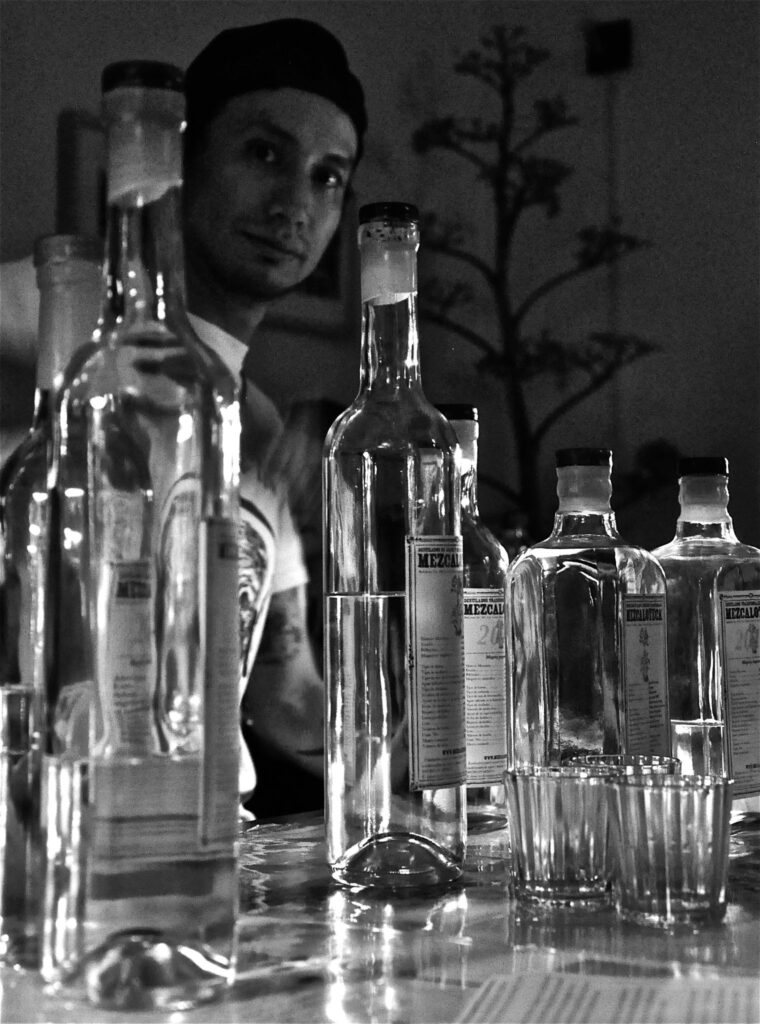
Carlos Diaz’s Sobrio is a great place to start a mezcal journey. The vibe is cantina-esque, somehow hidden, despite being flush off a main street in Oaxaca’s Centro Historico. A large central table offers space to congregate, while the simple bar provides an extensive, personally sourced selection of mezcals. Diaz and his team are always up for a chat about mezcal; but the education feels optional–you can also just grab a booth or take over a corner of the bar.
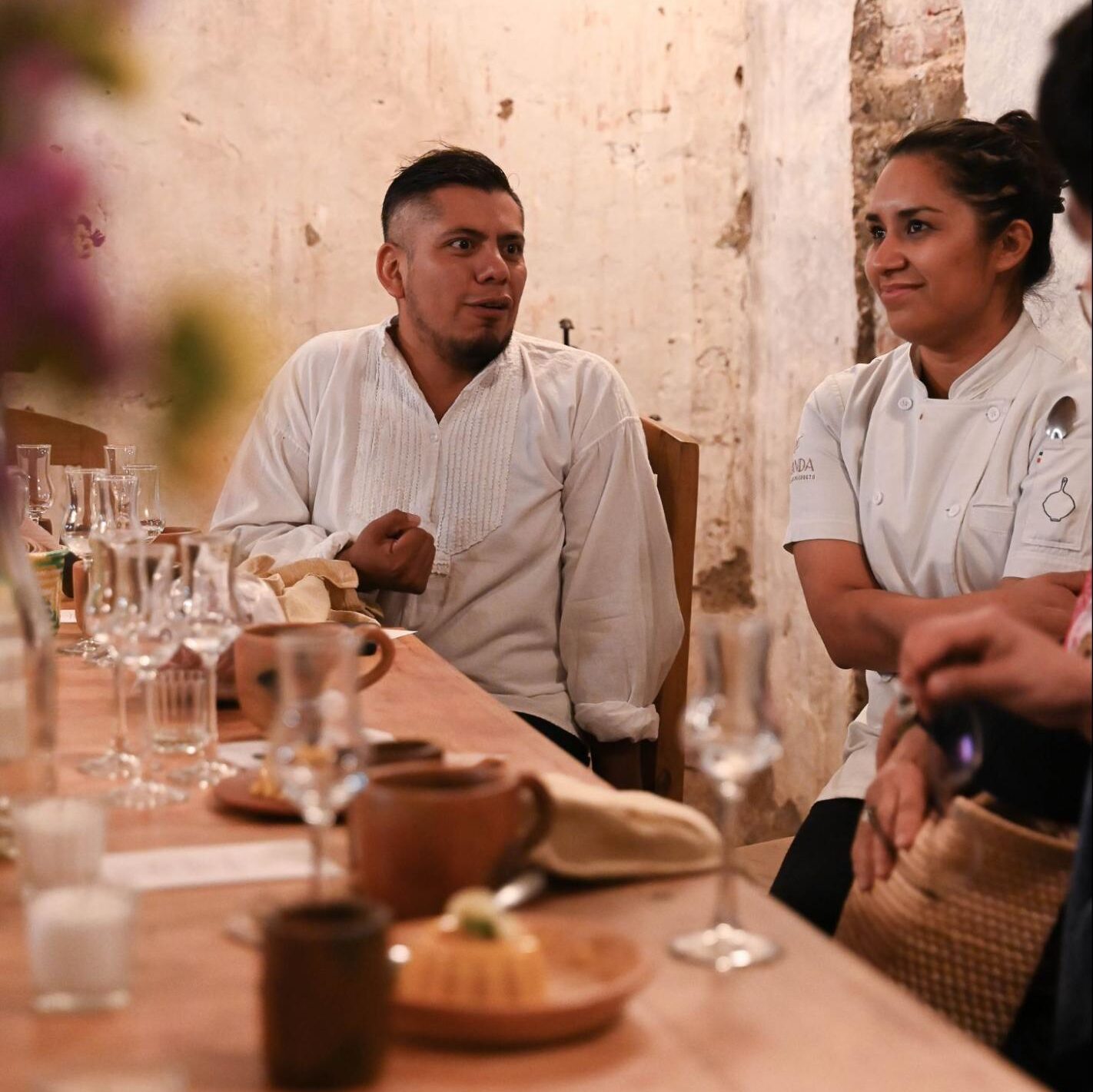
For the mezcal serious, Samuel Velasco Perez hosts regular tastings under the name Rosita de Borracho. Perez will elevate your mezcal knowledge to the highest eschalon. Serving carefully curated spirits in bespoke glassware to suit the particular sip, Sam guides his guests through their mezcal experience, often supported by a featured producer, who can answer questions on their life story and how that influences their mezcal. Sam says that this simple act of connection has influenced consumption in the mainstream world.
The inception of Oaxacan cocktail bars
The cocktail scene in Oaxaca has really taken off since around 2017, corresponding with barista culture. Before this shift, the most common mixed drinks were rum and cokes or a standard mezcal cocktail like the Donaji, a simple “screwdriver” made with mezcal and orange juice.
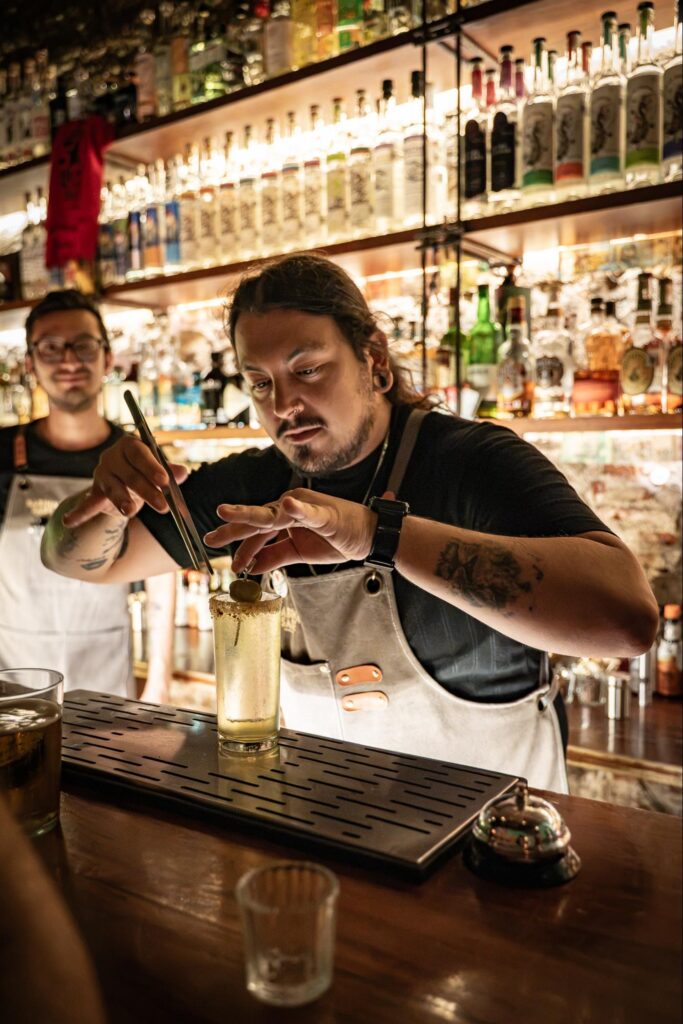
Malcriado is a newer bar in Oaxaca, co-founded by Andrez Cruz. The bar has a thoughtful range of agave spirits and some delicious cocktails. Cruz says that Malcriado’s range of agave spirits was developed with co-owners Carlos Martínez and Michael Fricker, each bringing years of experience to the table. The talented bar team, led by Martina Marre, are behind the dynamic cocktail design.
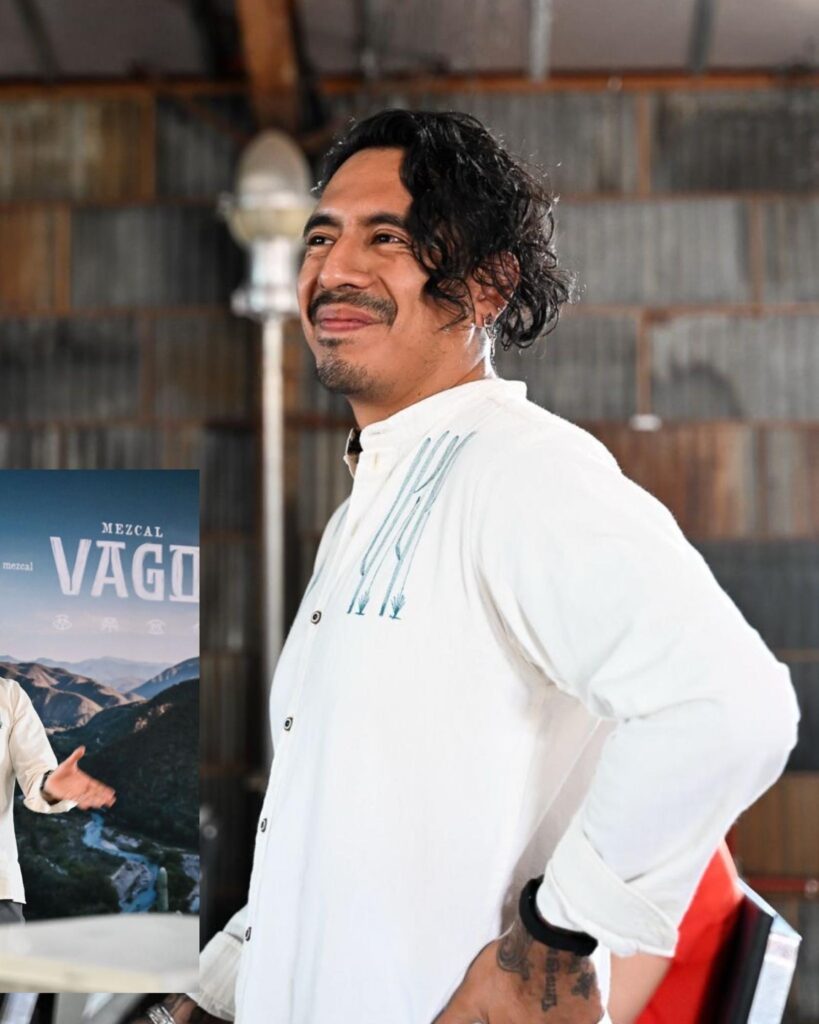
Cruz developed his knowledge of mezcal and international bar culture while representing Mezcal Vago. He says that working with Vago allowed him to travel, delve deep, and pursue his passions in a formal, professional manner, shaping his perspective on the world of mezcal and bars in general.
Despite a David Lynchian aesthetic, the bar promotes an inclusive dynamic: “Malcriado Bar es tu casa: la de la gente que cae, se queda y vuelve.” (Malcriado Bar is your home: a place for the people who drop by, stay a while, and come back). This feels like a suitable concept at a time when the Oaxacan bar scene is drawing from and sharing with a global cadre of bartenders.
Andrez says that the international context has helped him become more open-minded and respectful. “It allows me to return home and decide what I want to incorporate and what I don’t, and what I need to adjust. It has given me a better perspective on the value of my own culture and homeland, and I want that to be reflected every day in the tastings I host and the way I interact with people.”
Sabina Sabe has been ahead of the curve with their cocktails, serving complex drinks for just over a decade. Their head bartender Solem Larios is from Guadalajara, and has spent many years adjusting to the Oaxaca bar culture, an experience that influences his perspective. He explains how it often takes some time for newcomers to feel accepted. With a cheeky glint in his eye, he describes how the culture “first spits at you and then hugs you.”
Although Oaxaca remains protective of its mezcal roots, there is a growing openness to other spirits, though it remains a “hard market” according to Larios, who is currently representing El Tequileño.
Despite the creativity behind new bars like Sobrio and Malcriado, Carlos Diaz says that it is still an uphill battle to get locals to try new drinks. Tourists are more adventurous, but will usually revert to a classic marg or a mezcal after one or two.
When expanding beyond mezcal, Oaxaca’s bar scene is more likely to bring in locally made equivalents, showcasing a wealth of products from rums and whiskies to amaros. Sabina Sabe has the largest range of Oaxacan spirits in town, with brands like Paranubes and Sierra Norte. At Selva, the team has nurtured a relationship with a local producer of Almatepec, a spicy Oaxacan amaro.
Although Larios is aware of more 0% abv options in Oaxaca’s cocktail bars, he doesn’t see the trend taking hold. With an array of interesting non-alcoholic options to try from Oaxaca’s rich drinks culture, there is no need to make 0% versions of traditionally alcoholic drinks. Larios predicts a shift toward new categories, such as low-ABV agave spirits (ranging from 15% to 18%) and a resurgence of “frozen stuff” like slushies and margaritas.
Perhaps no venue exemplifies the “New” Oaxaca better than the cocktail bar Selva, which is a regular on the 50 best list. Located in a 17th-century building, the bar’s high ceilings, wooden panels, and leather furniture create a luxurious, baroque atmosphere. A mural of tropical foliage, painted by local artist Raul Herrera Rodriguez, covers a whole wall, adding immersive drama to the space.
The bar serves cocktails made from ingredients grown in the bar’s own garden, just 20 minutes away. Selva represents a shift toward “gastronomic mixology” and is on every list of places to visit in the city.
Sustainable brands strategist Glynn Pegler launched El Espacio in 2020, but has been working with bars in Oaxaca for much longer. He considers the key shifts in the bar culture to be down to a mix of organic momentum and crucial inflection points. Global recognition has elevated Oaxaca’s place on the map.
He says the defining shift happened when Oaxacan chefs, bartenders, and mezcaleros began collaborating directly. That cross-pollination created a more unified front. Rather than imitating foreign bar trends, Oaxaca started to create its own agenda.“We are in the era of those local businesses actively celebrating the local products as their greatest assets,” he observes.
Tourism has been a double-edged sword for Oaxaca. While it creates jobs and opportunities, it also drives gentrification and alters the nature of the city. While Oaxaca has long been a tourist destination, the profile of the tourists visiting has shifted; many establishments are pivoting toward offerings that are far more exclusive, upscale, and –to many– inaccessible.
Recent infrastructure changes, such as the new highway and more frequent direct flights, have significantly impacted how people visit the city. The average tourist stay has shortened from ten days to just three. This “fast tourism” draws visitors who are less interested in deep cultural education and instead focusing on ticking boxes like 50 best photo-ready bar Selva, before heading to the beach.
There is an ongoing struggle to balance the needs of wealthy foreigners and national tourists with the rights of local Oaxacans to own land and operate businesses in their own city. Many are concerned about the rise of foreign-owned businesses, and there has been public anger as local consumers are being priced out and discriminated against.
Andrez Cruz (Malcriado) condemns the government for consistently failing to protect the rights of locals. “Native Oaxacans should have better opportunities and easier access to buying land and renting, as well as a simpler process for handling the paperwork needed to own and operate a business or turn their work into a dignified livelihood.”
Celia Bolano (Quiote) says that there needs to be a greater balance between offerings for tourists and locals. “If we’re benefiting from Oaxaca and its culture, we also have a responsibility to give back and support the people behind that culture.”
Whether you want casual copitas in a rowdy cantina or prefer to peruse a highly curated cocktails menu in a world famous bar, Oaxaca has a drinking experience for everyone. But this is a highwire act. As the city continues to grow as a mixology magnet, the challenge for the next decade will be maintaining the “soul” of the agave culture while navigating the pressures of a rapidly modernizing bar scene.
For more information, check out our list of great bars in Oaxaca.







Leave a Comment