Is Patron good? Was it ever good? Does Patron 100 live up to the hype? How have the facilities changed since brand was picked up by Bacardi? Tess Rose explores Casa Patron. Note: As the story makes clear, this was part of an industry trip with travel and accommodations covered by the brand.
I first visited Casa Patron in 2013 with a Tequila Interchange Project small group. I recall being a bit starstruck as a newcomer to the agave big leagues, traipsing through the distillery alongside Misty Kalkofen, David Suro, and Bobby Heugel, among other industry icons. Even in this pre-Bacardi era, the size of the operation was impressive, as was the luxuriousness of the facility. As a group, we asked the difficult questions, doing quick math in our heads about the production capacity of their facility compared to what their marketing team said their output was for the last couple of years. We were somewhat pacified by an extensive tasting and tour of the historic barrel aging room. The tequilas were good, that was undeniable and unanimous. After lunch on the terrace, we were free to explore the hauntingly beautiful hacienda grounds.
These memories rattled around in my mind as I entered the property thirteen years later. This time I was on Patron’s branded luxury bus alongside 30+ other guests, most of whom were recognizable personalities from the social media universe. It was significantly different from my first visit. I found myself in the midst of a crowd of influencers, mingling with internet-famous content creators who had varied knowledge of agave spirits. Some people were versed in tequila, others were focused on cocktails and lifestyle–for some it was their first time visiting Mexico. I was part of a small handful of bartenders and other writers, but we were the exception in the group of intimidatingly attractive creators.
It didn’t take long for a few of the agave-focused people to recognize me as the author of The Essential Tequila & Mezcal Companion, and brand me the “Chat GPT” of agave. I became a go-to person for questions like “Why is biodiversity of agave important?” and “What’s the deal with the Sotol DO controversy?” All of which I was happy to answer in off-the-record conversations over unlimited cocktails.
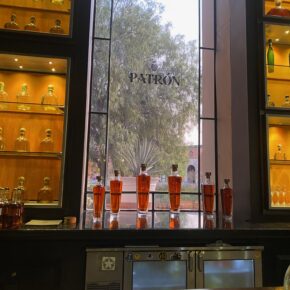
Aside from my own evolution from novice to veteran, this return to Patron showed me first-hand the expansion and changes since Bacardi acquired the brand in 2018. The property has expanded dramatically, with two or three times the building infrastructure. La Casona is spectacularly luxurious; a resort hotel with conference rooms, a gym, a restaurant, and multiple bars. It’s easy to imagine an endless flow of industry guests and celebrities coming through the property to get a taste of the Patron lifestyle.
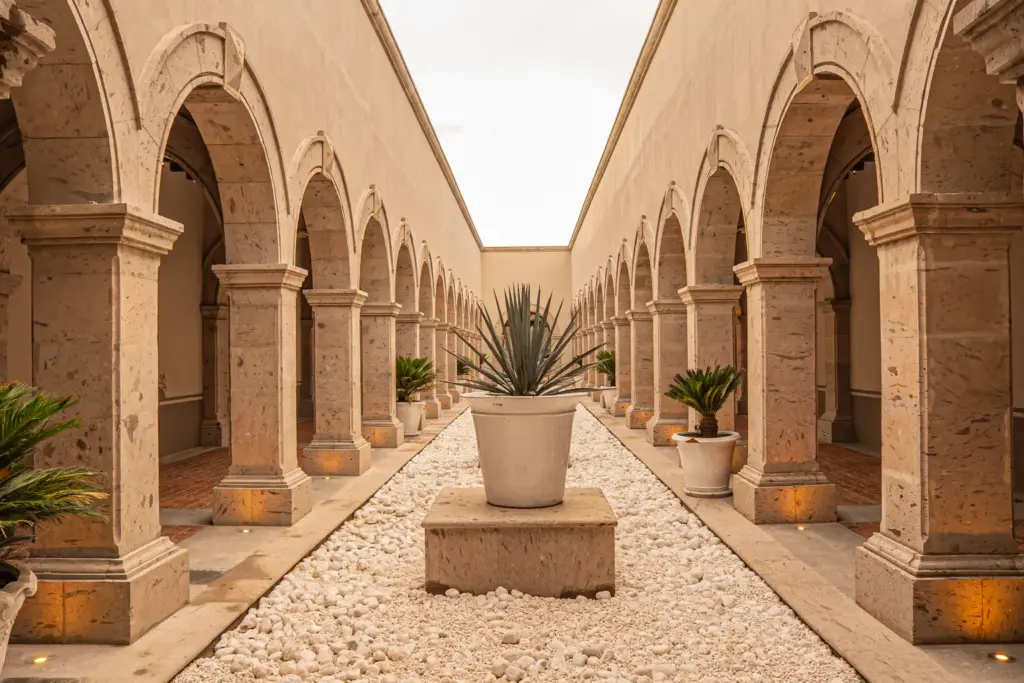
The distillery itself is expanded but largely the same. Brick ovens, tahonas, fermentation tanks that operate both with and without agave fiber, and small copper pot stills are at the heart of the production. A unique feature of the distillery is that it runs continuously 24 hours a day, an efficiency measure that reduces lost time around shutting down and opening up. (This was a feature in place before the Bacardi acquisition.) The attention to healthy working conditions for the employees was also similar to my last visit–the facility was peppered with posters: inspirational quotations, reminders to workers to take mandatory breaks, and recommended stretches and exercises for the heavy lifters.
The biggest changes were the restricted access–no more visiting the barrel room. Too many visitors could be a risk to the delicate environment, and they have created an underground bar to simulate the experience. Due to updated corporate safety standards, the guides provided us with steel-toe boots, safety vests, and goggles. It felt a little silly to put on safety boots to visit the agave field and jima demonstration in a manicured plantation and event space when I have hiked mountains in Oaxaca to harvest wild agave in huaraches, but I followed the rules.
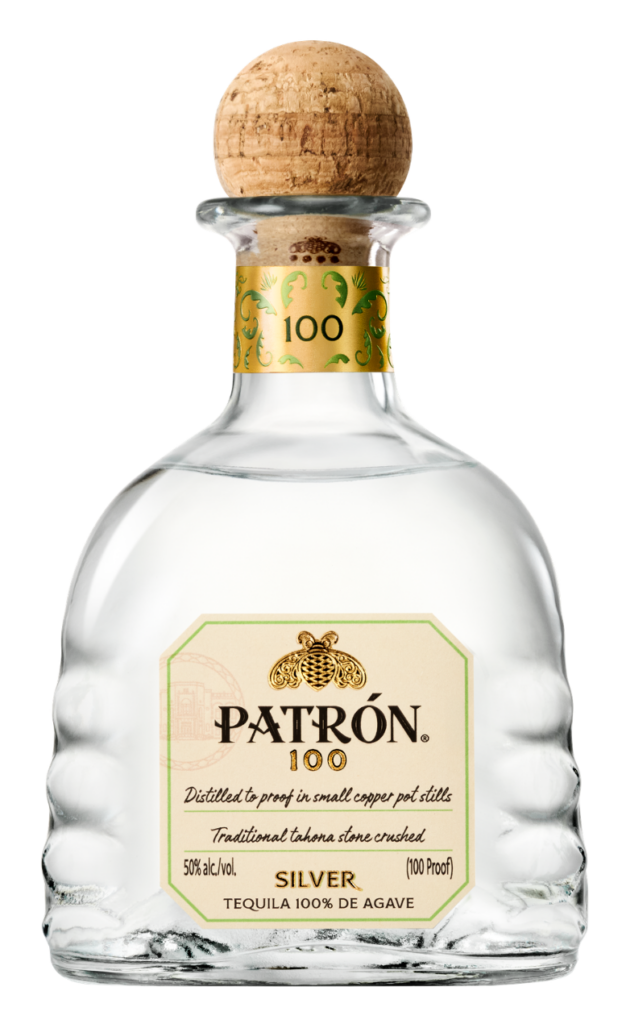
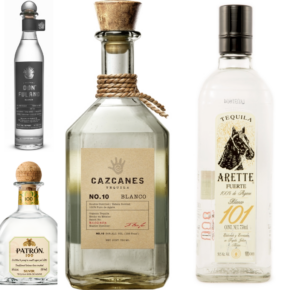
The trip was timed with the release of their new product: Patron 100, a still strength high-proof blanco at 50% ABV. When tasted next to their flagship blanco, Patron Silver, the extra kick of alcohol is evident, along with more complex agave notes, as if someone turned the volume up a few notches. It is smooth enough to sip on its own, and works brilliantly in bright refreshing cocktails. During the visit we enjoyed it in both tropical and earthy drinks, the best of which was the Good Soup cocktail at the pop up from Papercut, the best cocktail bar in Austin. Since coming home, I’ve used Patron 100 in my standard house frozen margarita with nothing but glowing reviews from friends and family. (Check out my full tasting notes.)
Releasing a high-proof version of their flagship product signals that Patron is paying attention, and have their finger on the pulse of what’s trending in the wider agave space. Consumers and the industry continue to turn toward spirits that embrace tradition and craft, and releases that feature clean agave flavors and high-quality production. With this release, Patron reasserts itself in the line-up of traditional agave spirits that prioritize ripe agave, transparent production, and an unfussy yet complex agave-forward flavor profile.
The most exciting part of the trip for me was getting a peek at their sustainability efforts. When I visited in 2013, they were already underway, but too new to let us see anything up close. As agave nerds all hot and bothered about sustainability, we were majorly disappointed–so my anticipation had been building for over a decade. The two main facilities are a water treatment plant, and a composting area.
The water treatment plant uses a system of high pressure filters that takes vinasas and deacidifies them to the point that the resulting water can be used to clean the distillery. Relatively little water is wasted in production due to this closed loop system. (The facility itself is a small structure, something that could easily be replicated and implemented at facilities that have drastically less space available.)
Composting on this scale requires more space–the area is about the size of an American football field. Industrial fans keep the mounds of fibers cool so they don’t overheat and spontaneously combust–which would obviously be catastrophic next to a distillery. The process is lengthy and takes up space, but they are successfully converting agave fibers into useful compost.
These sustainability efforts are the result of trial-and-error over years, but have been fine-tuned to effectively mitigate byproducts that would otherwise harm the surrounding environment and its creatures, including humans. While the processes were not simple to come by, they are relatively simple to implement, which means they could be replicated and used across the agave spirits industry to combat large scale harmful byproduct disposal. By embracing sustainable values, Patron serves as an example of large-scale agave spirit production sustainability.
I’ll admit I walked into the trip a bit suspicious, which I believe is warranted when encountering an arm of a multi-billion dollar international conglomerate. While I know there are aspects not shown to guests, especially those who reach millions online, I trust what I saw. From my perspective, Patron’s commitment to their own people and community was consistent–the exchanges I had with employees indicated they were happy and proud to be there. The production at this facility was transparent, with all areas available for visitors to access up close and personal, and the tequilas were good. I have been on tours where they rush you through certain areas, but this tour was slower and representatives answered all questions. It felt like another day at the distillery rather than a curated set-up for our group.
The representatives from Patron spoke at length about making it a priority to take care of their environment and local communities, and they seem able to back that up. Beyond providing healthy working conditions, transportation, and a tequila allowance of reserve products to their employees, they partner with neighboring growers to take care of their soil and water sources.
Patron is not a tiny craft brand on the forefront of reconnecting with the ancestral roots of tequila, but it is a brand committed to making high quality spirits in a holistic way that incorporates the health and sustainability of the people and places it comes from. Does this make Patron unique in the landscape of large conglomerate-owned tequila brands? Maybe, maybe not–some other large brands also embrace genuinely sustainable practices. What sets Patron apart–in my eyes–is that the brand embraces artisanal production methods and makes consistently delicious spirits, something not typical of large conglomerate brands.
Patron is unique in occupying this middle ground–not artisanal, but not industrial either. In flavor I think it skews more artisanal; it would stand up in blind tastings. In terms of its environmental and human resources efforts, it’s tricky to compare them to smaller craft brands, because they are an essentially different animal. There is certainly an argument to be made that at any large scale, the impact is not sustainable. I see agave industry insiders split: Some categorize Patron as industrial because of its production size and marketing budget, while others give them special status as artisanal, citing their consistent quality and ability to tap into themes that matter to us–like closed loop water and compost systems. Rather than digging our heels in “for or against,” I think there is more value in remaining open and curious. Is Patron now my go-to tequila because they offered me a fun trip and showed off their compost piles? No. But all things considered, I think Patron is a solid brand invested in a sustainable future for tequila, both in and beyond the bottle.






Leave a Comment