Felisa Rogers on a hip-hop anthem that calls out alleged tequila industry corruption, as well as an update on the Costco and Diageo lawsuits, and the roots of the tequila adulteration scandal.
Last fall, a friend sent me an untitled hip-hop track in Spanish. My first thought was that it was a banger. It took me a moment to realize that the rapping was…about the agaveros’ struggle to reveal corruption in the tequila industry. The song encapsulated the story I’d been covering for the past year, and actually name-checked Remberto Galván Cabrera and Julián Rodríguez Parra, agrarian activists who have been fighting to call attention to the plight of agaveros (agave farmers).
The powerful, tightly constructed anthem tells the story of agaveros that are screwed over by middlemen (coyotes) who won’t pay fair prices, and by distillers who won’t buy directly from small farmers and are (allegedly) further driving down the price of agave by adulterating their tequila with cane alcohol and selling it as 100% agave tequila.
“It’s not just a drink, it’s sacred culture,” the artist raps.
This is a complicated topic. I had (at that point) written six rather massive articles trying to explain the intricacies and why it all matters, so I was impressed by how many salient points the MC had managed to compress into a four minute song. He simultaneously hit the emotional notes, evoking the suffering of agave farmers who work hard only to watch their crops rot, while conjuring the story’s deeper roots.
I had a guess as to who had written it, and I wanted to talk to him. We had something in common.
I began following the agaveros’ movement in October of 2024, when protesting farmers gathered outside the headquarters of the Tequila Regulatory Council (CRT), a monolithic glass building emblazoned with a stylized agave. The price of agave had fallen from 32 pesos a kilo to just one, and the agaveros were alleging that the organization had failed them. Farming families arrived by pick-up and bus. An elderly guy with crutches held up a sign: “We demand the expropriation of the tequila industry so that it can once again belong to Mexicans.”
A man stepped up to address the crowd.“With the low price of agave, their idea is to ruin us economically so we go bankrupt and are forced to sell our land to the large companies!” he proclaimed. With his grey mustache, dark brows, crisp shirt, jeans, and cowboy hat, his look telegraphed, “rural leader.” I later learned his name: Julián Rodríguez Parra.
I didn’t know these people, but they had a dignified desperation that was familiar to me. I was born poor in rural Oregon, but spent a good chunk of my childhood in the Jalisco countryside. In 2010, a developer seized coastal land that rightfully belonged to the people of my adopted Mexican hometown. I was stunned by how hard the fishermen, farmers, and their families fought for their land and livelihood. They were campesinos with few resources but major cojones. I wanted to support them, so I started writing about it.
Twenty years later, they’re still fighting for their land, and I’m still writing about how rural communities respond to hardship and function in a rigged system.
After watching footage of the protest at CRT headquarters, I was (at the time) skeptical of the agaveros’ charge that “premium tequila” marketed as 100% agave was adulterated with cane alcohol. That said, they were accusing huge brands. I figured I could use that hook to get people reading about the deeper roots of a rural resistance movement. Rural voices are often lost in the din, and I thought these agaveros were worth a listen.
I contacted Remberto Galván Cabrera, who was at the time the spokesman for an agavero organization called the Mexican Agave Council.
Remberto filled me in on the details of the agaveros’ complaints, doubling down on his assertion that Don Julio and various other major brands were “fake tequila.” Little did I know our conversation would be the start of a wild ride–that a year later I’d be listening to a hip-hop anthem about him.
Remberto Galván no lucha por gloria, lucha por los que no tienen voz.
“Remberto Gavlan doesn’t fight for his own glory, he fights for those who have no voice.”
After listening to the track twice, I texted his nephew: “Hey Ricardo, this may seem like a weird question, but did you write this agavero anthem?”
Ricardo and I had been in touch sporadically since I wrote the first article about the agaveros’ allegations of industry corruption and adulterated tequila. I was initially depressed that the article didn’t generate much interest, but I did get a text from a guy thanking me for my coverage of “the movement.”
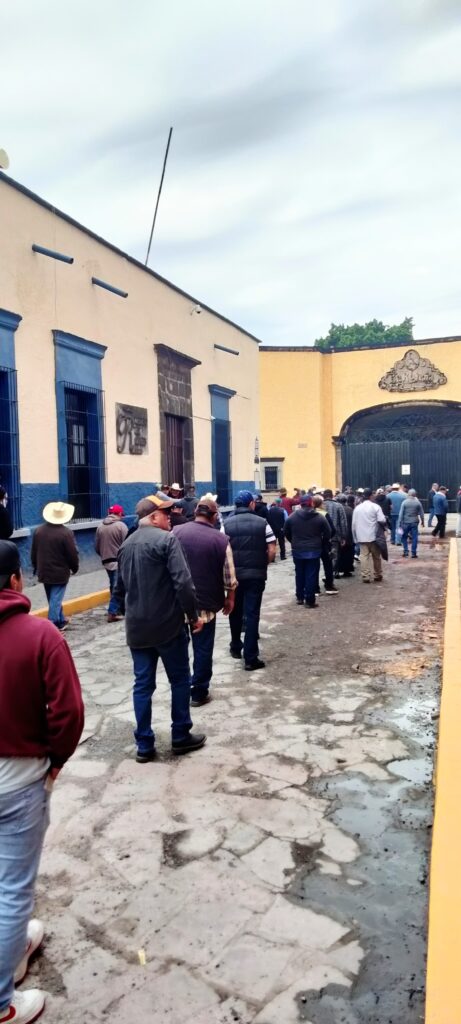
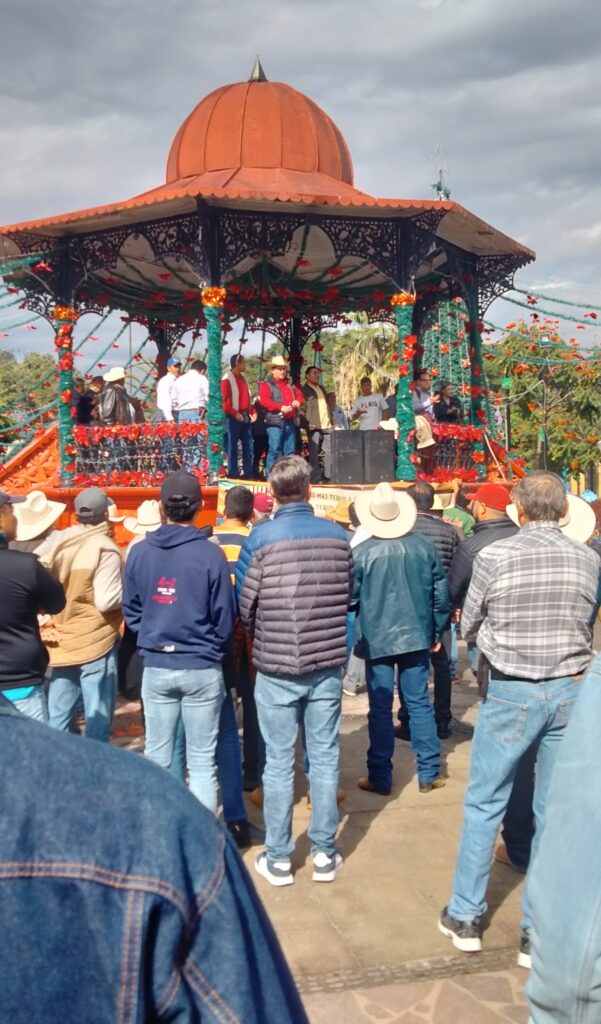
This turned out to be Remberto’s nephew Ricardo, who is the son of the agrarian leader Julián Rodríguez. We kept in touch. Ricardo alerted me when his father was arrested and jailed at a peaceful protest outside a Sauza distillery, and gave me Remberto’s new number after his uncle’s phone and briefcase were stolen in an assault. Ricardo was usually on hand if I had a question about a new development in the saga. After listening to the “Agavero Anthem,” I had more questions than usual.
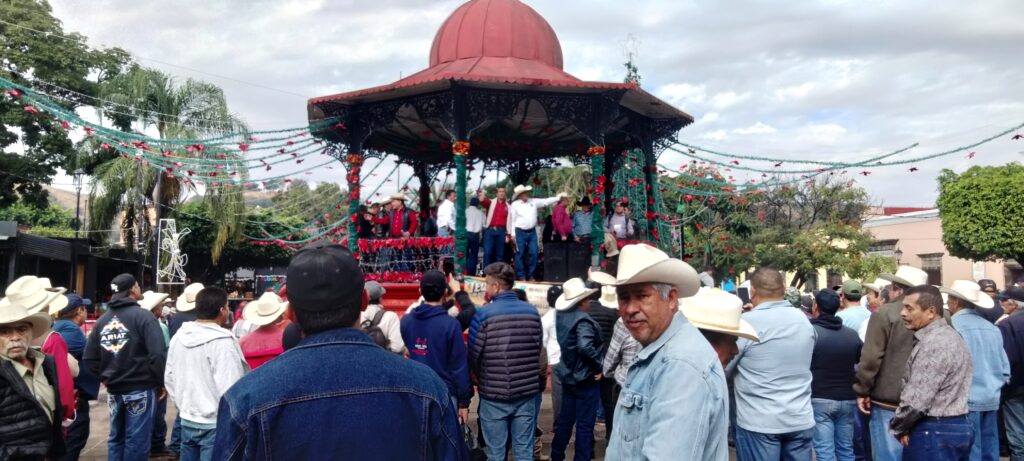
I asked him if he’d be up for an interview but was clear about my qualms. So far he’d been working behind the scenes, and we’d already seen what happened to the people who were front and center. Remberto and the people closest to him were getting regular death threats.
“Me and my dad understand the reality of the temperature of the water that we’re in,” he told me when we finally spoke.
In 2024, his father asked him for support in starting a new agrarian movement. Ricardo gladly agreed. He had since been assisting his dad and uncle with messaging by creating videos, graphics, and slogans. He launched a campaign to call attention to his father’s imprisonment–including dropping hip-hop tracks about it.
Ricardo’s involvement solved a mystery for me. For a union of farmers led by men in late middle age, the agaveros always had a surprisingly sophisticated social media and web presence. Everything clicked into place when I met the behind-the-scenes millennial.
Ricardo is friendly, quick to joke, and quick to laugh. He speaks with equal sincerity and frankness about his faith, his enthusiasm for tequila, and his pride in his family’s firebrand legacy.
“I am just a servant. I’m not a leader here,” he said. “I’m not trying to be a leader. I’ve always had a service-minded attitude.”
In the case of his protest tracks, being service-minded meant hitting up some hip-hop artist friends and trading them tequila to use their equipment.
When I asked him about his creative thought process, he made light of it, saying, “I don’t know, I’ve always been a good storyteller. I’m a clown and I like to read a lot.”
His reading involves digging up historical quotations to plaster on graphics that are a cross between 19th Century Mexican iconography and Soviet-style propaganda posters.
“I’m a history nerd,” he said with a smile. That tracks.
His song reflects a tension that has existed between small farmers and large tequila companies since the 19th Century, when the Cuervos, the Sauzas, and other prominent businessmen made shifting alliances with politicians in order to expand their tequila empires at all costs. This hinged on stealing land. After violently rigging an election to support the regime of the dictator Porfirio Diaz, Cenobio Sauza used his newfound political clout to break up public land trusts set aside for Indigenous farmers.*
In Tequila Wars: Jose Cuervo and the Bloody Struggle for the Spirit of Mexico, Ted Genoways describes how Suaza’s men rode into a community without warning, seized the cattle, clear-cut the trees, and set fire to farmlands, burning fields of corn and beans. He writes: “There was no stopping Sauza now. In the blackened soil, the tequila empresario planted row upon row of agave, sprawling for hundreds of acres.” A neighbor would later recall, “He destroyed the mountains. He ordered people off their property and only had to say it once. No one dared to resist for fear of their lives.”*
Evidently this fear of death didn’t apply to Ricardo’s campesino ancestors.
“Basically it all goes down to my great-great grandfather, Catarino Rodríguez,” he says, taking us back to 1893. “He was hanging out by a wall, smoking a cigar with a couple of his friends, when some hacienda owners rode in on their horses and insisted that all the campesinos kiss their hands, as was the custom at the time.” When Catarino refused, he was shot to death in the ensuing skirmish.
This refusal to accept the status quo is a through-line in Ricardo’s family history. When promises of democratic elections and land reform sparked the revolution in 1910, Ricardo’s great-grandfather Agapito was all in.
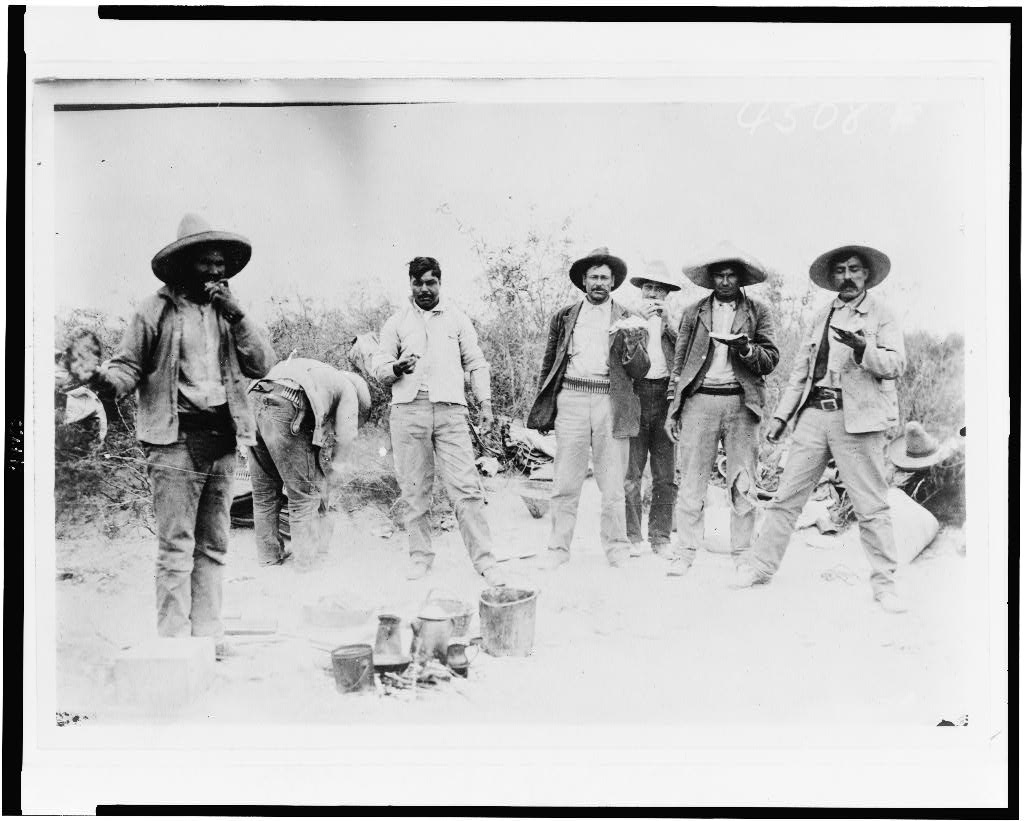
“He was 25 when he enlisted in the revolution, where he had the opportunity to vent his pent up rage against the abusive and criminal hacienda owners,” Julián told his son. (From an oral history Ricardo has been working on.)
As the revolution appeared to be nearing an end in 1915, the first group of Indigenous farmers filed to reclaim nearly 30,000 acres of land that had been seized by tequila barons.* Luis Sauza and Jose Cuervo were listed as defendants.
Though the farmers had documentation proving the land was theirs, it could never be that easy. The Cuervos and Sauzas were clever and tenacious, and the convoluted chaos of the revolution wasn’t quite over. When the dust finally settled, the hacendados (hacienda owners) clung to their holdings. Agapito Rodríguez returned from war and began organizing small farmers and fighting for land reform.
A decade later, a few politicians actually followed through on the promise of the revolution and many of the giant agave haciendas were broken into smaller parcels and redistributed to campesinos. In Divided Spirits: Tequila, Mezcal, and The Politics of Production, sociologist Sarah Bowen writes, “The postrevolution land reform, which took place in the Amatitan-Tequila valley between 1927 and 1942, had shifted responsibility for the production of agave from the tequila companies and elite landowners to small farmers.”
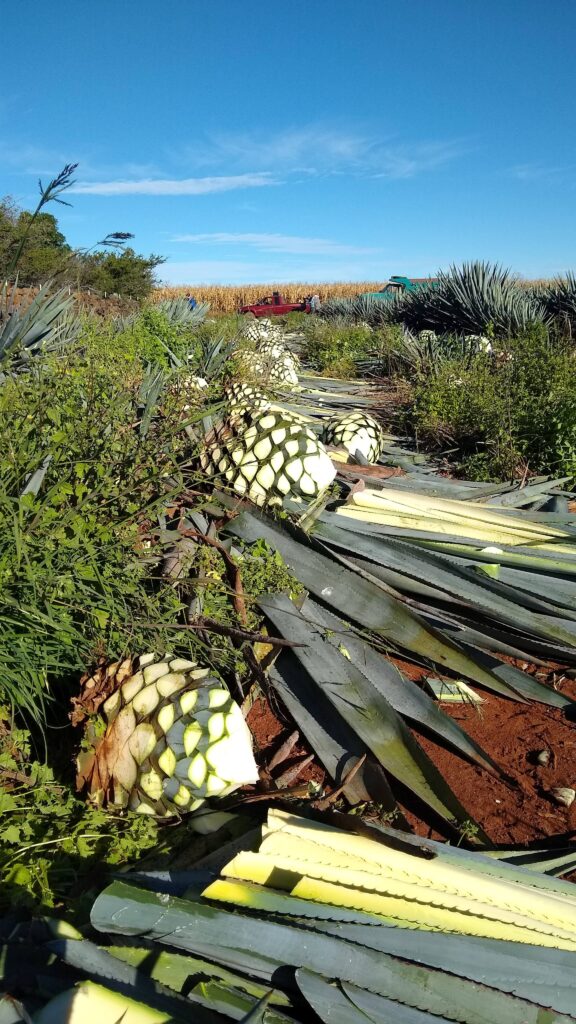
This would seem to put more power into the hands of small farmers, but, unsurprisingly, it hasn’t exactly worked out that way. Agave takes at least six years to mature, making it uniquely susceptible to a boom-and-bust cycle that is exacerbated by everything from fluctuations in the demand for tequila to diseases or freezes that wipe out entire crops. “Blue agave has one of the most dramatic price fluctuations of any commodity in the world,” sociologist Clayton Szczech notes in A Field Guide to Tequila.
Mexico does not have state agricultural planning. “There are no incentives to plant when demand is slack nor are there subsidies to guarantee a price floor. Farmers and, to a lesser extent, tequila makers bear all the risk of the volatile price cycle,” Szczech writes. “Agaveros are often poor to begin with and, when their timing is off, they become destitute after losing money on an agave crop, especially if they borrowed money to plant their crops.”
To worsen the situation, the big tequila houses colluded to keep the price of agave low** and began to again (allegedly) steal land from small farmers.
Julián’s father Sebastian fought against this.
“During the day he worked in the fields. During the nighttime, he’d try to organize the people. Because he knew that as a collective they could reach something, and they could try to pressure for a better wage or a better price for the agave,” Ricardo says.
In 1957, Sebastian died in a suspicious tractor accident. Julián believes it was murder, retribution for his participation in the fight to stop large tequila companies from allegedly trying to seize thousands of acres of land from small farmers.
Two allegedly murdered ancestors didn’t stop the next generation from continuing to fight for agrarian rights. Remberto began organizing workers when he was a teenager working in the agave fields for Cuervo. Julián was a founder of the local chapter of El Barzón, which he describes as a “rural resistance movement.”
In a sense, El Barzón functioned as both a mutual aid society and a protest against ruthless banking practices implemented during an economic depression. In Jalisco, farmers on tractors blocked bank entrances and occupied town squares to protest seizure of farmland on debts that were mushrooming due to extreme inflation and re-adjusted interest rates. This debtors movement spread across the country and into other sectors of society during a time of extreme economic distress. By 1995, El Barzón had about half a million members.
In addition to the outright land seizures, farmers were facing pressure to sell or rent their land to the largest tequila companies, which wanted to regain complete control of the agave market.** It is a testament to agrarian, rural identity that some agaveros resisted. Sarah Bowen writes,“Many farmers in the Amatitan-Tequila valley were adamant that they continue to grow their own agave, despite the risks. Some farmers seemed to see farming as a subversive act.”
The Barzonistas appealed to local political leaders for help, asking the state government to negotiate a minimum price for agave: Three pesos a kilo, which would at least cover costs. They also petitioned for the elimination of coyotes (middlemen), who leverage the most desperate farmers for their own profit. Politicians made promises but nothing ever came of it.
“We were left at the mercy of transnational corporations who imposed contract farming through coyotes, controlling agave prices and excluding traditional farmers,” Julián explained.
In 1996, farmers parked 50 trucks loaded with rotting agave in all the major roadways and blockaded the town for 39 days while they tried to convince tequila companies and officials to set a minimum price for agave. An attempt at negotiations dissolved and riot police descended on Tequila.
As Julián describes it, the police had already beaten dozens of protestors by the time he arrived on the scene. The action was centered around the gas station on the edge of town.
According to Julián’s account, he broke through the police line and into the gas station, where he doused himself in gasoline and threatened to set himself on fire if they didn’t withdraw. The police wrestled him to the ground and someone threw a bottle at his head, but he managed to knock the chief of police unconscious. His wife Ofelia and a friend set the gas station on fire. The police took off running, pursued by enraged campesinos.
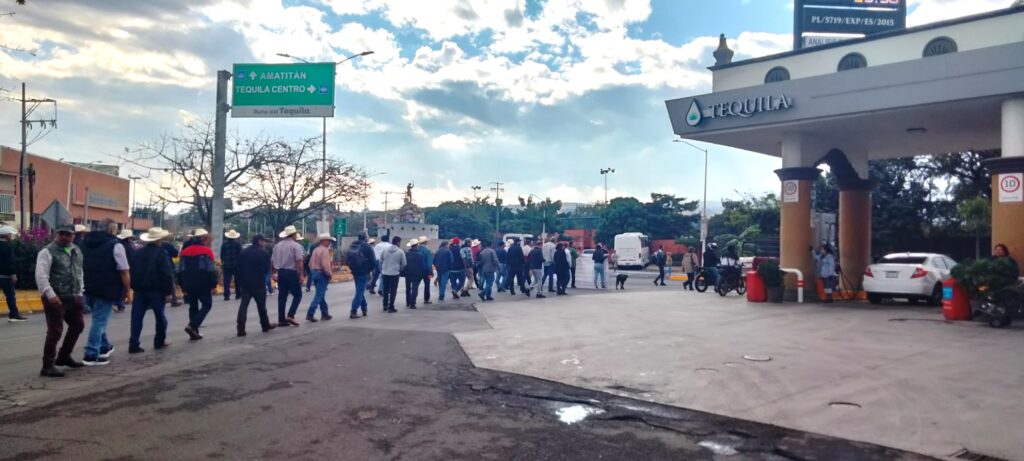
The aftermath was brutal. The co-founder of the local chapter of El Barzón, Don Rafael Padilla, was a bloody mess. Another comrade, Víctor Sarabia Soto, was allegedly stomped so violently that he later died. Many people were gravely injured. The agaveros continued to maintain the blockade for another two weeks, but Julián was eventually arrested on charges of extortion and spent three years in prison. He lost his agave fields. The boom and bust cycle continued, causing suffering to both agaveros and smaller tequila brands.
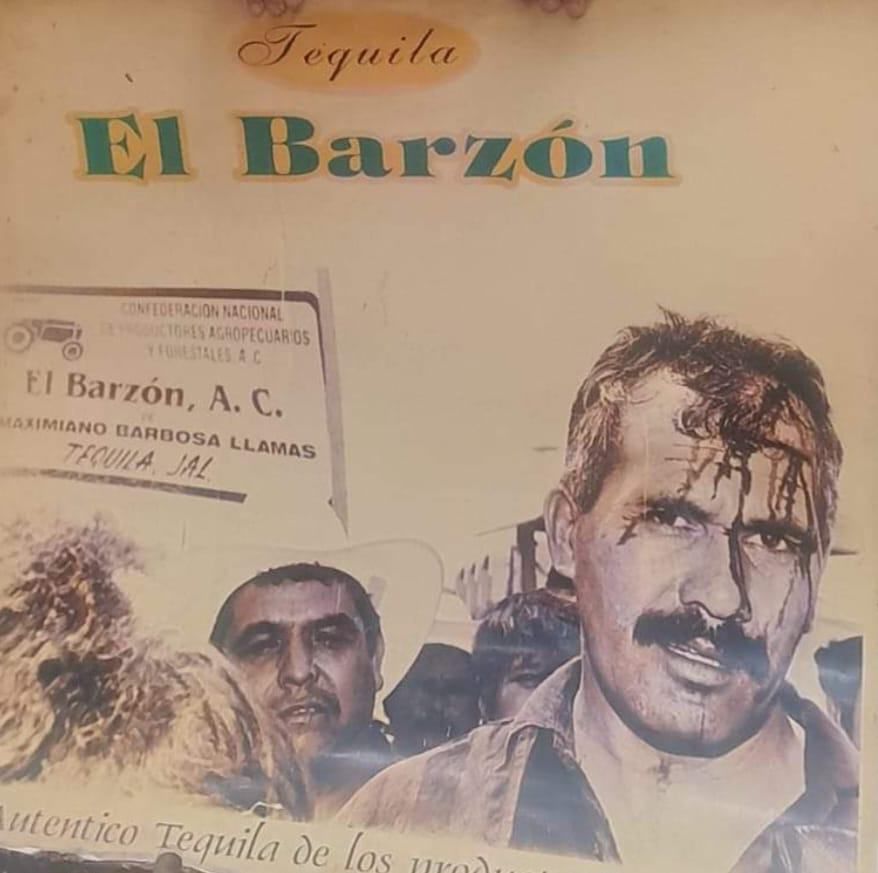
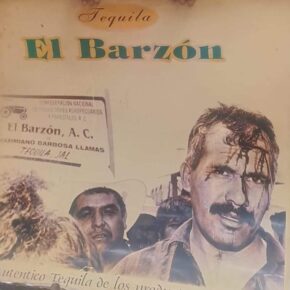
The picture of Julián’s bloody face became an iconic image in the movement; he himself later emblazoned it on a tequila bottle and named the brand El Barzón.

The name said it all. As Heather Williams wrote in Planting Trouble: The Barzón Debtors Movement in Mexico, “Taken from a perversely funny folk song about a hacienda peon who must borrow from his boss to pay for a yoke (the barzón) that has fallen to pieces, the organization’s unofficial name recalls the song’s winding tale of woe as the peasant sinks deeper and deeper into debt when interest on his loan accumulates faster than he can pay it off. For the sake of the yoke, then, the peasant ends up indentured for life.”
These were the laments that echoed in the refrain of Ricardo’s “Agavero Anthem.” A hundred years later, the song remains the same.
Which isn’t to say that this story hasn’t progressed. A lot has happened since that first interview with Remberto. For a while, I continued to write into the void until, in a surprising turn of events, a major US law firm, Hagens Berman, got wind of the story and filed a class action lawsuit against Diageo, alleging that the liquor giant’s flagship tequila brands, Casamigos and Don Julio, were adulterated with cane alcohol.
When I broke that story, US drinkers finally took notice. The narrative got picked up by the mainstream press and influencers were all over it. After that, the lawsuits started piling up and more big tequila brands were called out: 818, Lunazul, Cincoro, and Kirkland, among others. Meanwhile, Remberto had four bottles of tequila sent to Eurofins Lab in France and publicized the test results, which seem to indicate that the tequilas are adulterated. The lawyers also claim to have proof. (Want to know more? Here’s a timeline that also links to some test results.)
The CRT continues to refute that such tests are possible, although the science seems solid. Diageo has vigorously denied the allegations and have filed a motion dismiss. The case is pending judgement. Costco also filed a motion to dismiss, and Hagens Berman will file opposition in June.
But what does all this mean for the agaveros? It’s hard to say. The price of blue agave is slightly up (to around six pesos a kilo), but Remberto tells me that it’s “conditional” and only for certain sellers. In other words, the coyotes continue to squeeze small farmers.
It makes me think of something Szczech said when I interviewed him for that first article: “Since the revolution, there has been a widespread expectation of state support for the countryside that only started to be unraveled or betrayed in the 1980s with Mexico’s neoliberal turn, which was consummated with NAFTA in 1994. That’s why so many agaveros are like, What the fuck? Where’s the government’s support? We’re farmers. This is Mexico. The state is supposed to help us because we’re an agricultural country, and we had a revolution about this.”
Ricardo reflects this outrage: “At the end of the day, the agave farmer gets screwed time after time. And that’s what angers me.”
When I ask Ricardo why he continues, he says, “Just hearing my dad’s struggle, and wanting to help but not being able to be next to him–I guess out of desperation I just write.”
This is certainly a sentiment that I can relate to, and it gets me thinking about why anyone is sticking with this. Ricardo is writing from afar, but Remberto, Julián, and other organizers are feeling the heat on a lot of levels and have been, off and on, for a long time.
Julián spent two months in jail and is still under house arrest and facing charges. But the pressure isn’t just from above.
“It becomes very tricky,” Ricardo says. “Because of the movement, my dad and my uncle have become toxic individuals in the industry. No one wants to associate themselves with them. And because no one wants to associate themselves with them, all the agaveros that are behind them are suffering. That’s where I get pissed off.”
Two things about this statement interest me. First, it’s important to note that Remberto, Julian, and other firebrands don’t necessarily represent a majority of any kind. They represent farmers with a certain mindset, while the entire tequila industry is subject to the boom-and-bust cycle–including the distillers.
Second, during our conversation Ricardo has used the phrase “pissed off” multiple times. In the end, I think it’s clear that this story of exceptional perseverance has a throughline of anger that stretches back well over a century. A simmering rage at the elite, the banks, tequila’s aristocracy, corporations, corrupt government, and collusion in these upper echelons.
It’s complicated–the firebrands aren’t heroes to everyone, but damn do they keep at it.
It may be about anger, but it’s also clearly about ingrained rural identity, a deep connection to the land, and an ancestral reverence for agave that goes back for millennia.
In my first conversation with Remberto Galván, he waxed poetic about the plant. “Around the world agave is considered a plant of the gods…a plant that’s curative, that brings happiness, that has real value,” he said.
This reverence for agave can be difficult to understand for those outside the culture, but if this article proves anything, it’s that it’s not to be trifled with.
As I’ve pursued this story, this obviously sincere belief in the worth of agave and the value of farming comes up in every fiery speech, every Facebook post, every conversation.
It’s in the song: “Remberto Galván , defensor del agave, defensor del pueblo.”
(Remberto Galván, defender of the agave, defender of the people)
It may seem quixotic to risk so much for a plot of land and a fair price. But as Professor Daniel Chavez Landeros wrote in his 1998 paper on El Barzón, “Despite their diminishing economic power, traditional rural societies tend to devise strategies and find new ways of expressing their discontent.”
Or as Ricardo says, “You know, love makes you do some crazy shit.”
References:
A Field Guide to Tequila: What it is, Where it’s From, and How to Taste It by Clayton J Szczech, Artisan Press, 2023
**Divided Spirits: Tequila, Mezcal, and the Politics of Production by Sarah Bowen, University of California Press, 2015
*Tequila Wars: Jose Cuervo and the Bloody Struggle for the Spirit of Mexico by Ted Genoways, Norton Press, 2025
“El Barzón: performing resistance in contemporary Mexico” by Daniel Chavez Landeros, Arizona Journal of Hispanic Cultural Studies (Vol. 2), 1998
“Planting trouble: The Barzón debtors movement in Mexico,” by Heather Williams, Center for U.S-Mexican Studies, University of San Diego, 1996.







Leave a Comment