Susan Coss on how bar industry insiders created The Shift Change to create community and combat ICE tactics.
It began with a text message. Then a phone call. The first from Chicago-based writer Emma Janzen, the second from Estereo spirits director Guillermo Martinez. Here’s the thing about Mexico in a Bottle: Over years of creating the events in the same cities, friendships form. Bartenders, writers, brand people, consumers — a community initially bonded over a love for mezcal, and then over so much more. So when folks in that community tell me to pay attention to something, I generally listen.
In this case, Emma was asking for space at our Chicago event for a new project called The Shift Change Tour. The idea for this stemmed from a series of conversations that began last fall after Emma published her (now award-nominated) article How Bars Are Responding to Ice Raids. Before it was an article, it was pages of notes from months of conversations and research about what bars and restaurants were doing to protect their workers and understand their rights. What finally brought it to life – the missing piece to give the article its heart – was a presentation by Tiffany Hernandez, the bartender who created the Escuelitas Foundation, an organization that runs Know Your Rights seminars for workers in the hospitality industry. Having met Tiffany in Chicago, I totally get it. She is absolutely dynamic.
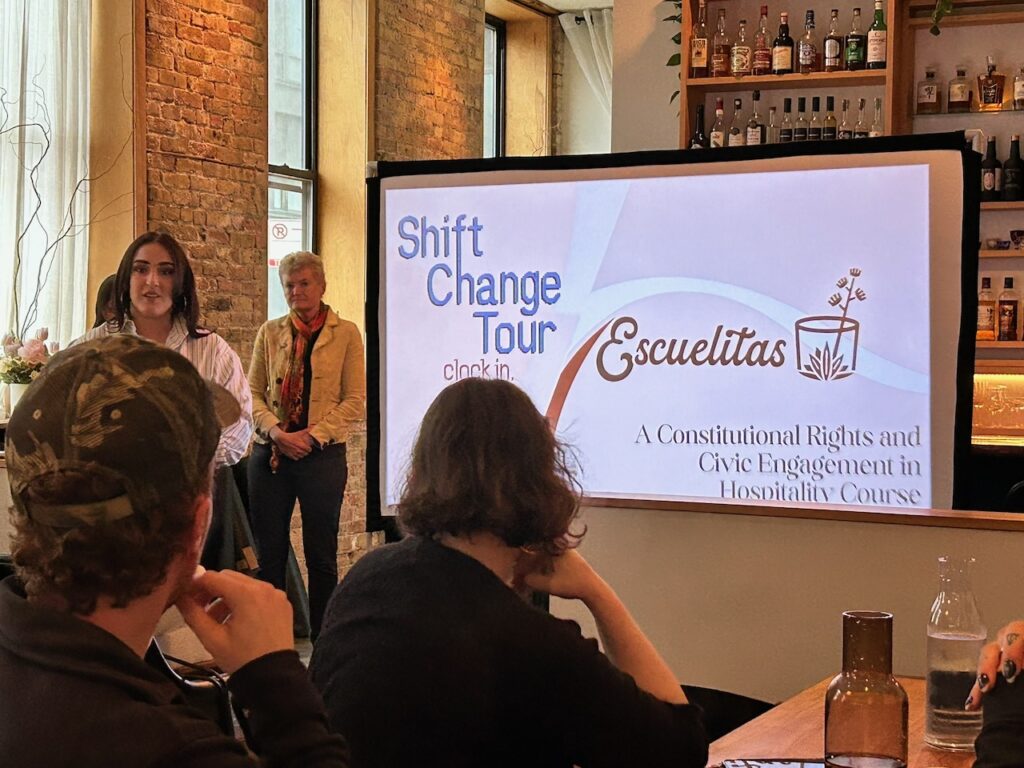
So after that piece was published, it sat with Emma. Oftentimes, writers publish their piece and move on. Sometimes there are follow up stories but most of the time it is on to the next story. But not this one. Conversations with Tiffany continued: What more could they do? Emma’s long time friend Robb Jones eventually joined the conversation. Robb is the owner of Meteor Bar in Minneapolis. When things exploded in the city last winter, the bar became an integral part of organizing businesses to help support workers and families, which culminated in the enormous “ICE out of Minnesota” general strike that drew almost 75,000 people out in frigid temperatures.
The creation of The Shift Change
From that experience, Robb, Emma, and Tiffany brainstormed on how they could share all of their learning with other people in hospitality, and thus was born The Shift Change. Tiffany had already built the foundation with her seminars, Robb had the hands-on organizing experience from those months in Minneapolis, and Emma had the connections across the country with the media, bars, and bartenders.
The kick off was Chicago, a city that had seen its own share of ICE violence. But this is the Windy City, Second City, City of Big Shoulders, names that speak to its resilience, political history, industrial roots, and vibrancy. For folks who aren’t labor history buffs, Chicago was basically the birthplace of the modern labor movement. We can thank the Chicago activists of the late 1880s for sparking actions that led to the eight hour work day. Suffice to say, these are folks that take organizing seriously and aren’t easily intimidated. We saw that from news coverage of the ICE attacks and how folks fought back. What we didn’t see was all of the behind-the-scenes organizing that fed people, got kids to and from school, and provided legal assistance for those caught up in the raids.
Here’s the thing…I live in a San Francisco Bay Area bubble. Despite being a “blue” area, tech billionaires and their relationships with the current administration have shielded many of us from a similar reality. (ICE raids still happen, just in smaller, less obvious ways). I had already seen firsthand the impact these aggressive tactics had on Washington DC – traumatizing people and hurting the local economy. So when I learned more about The Shift Change and the kick off, I changed my plans and stayed in Chicago for an extra couple of days. I am so happy I did.
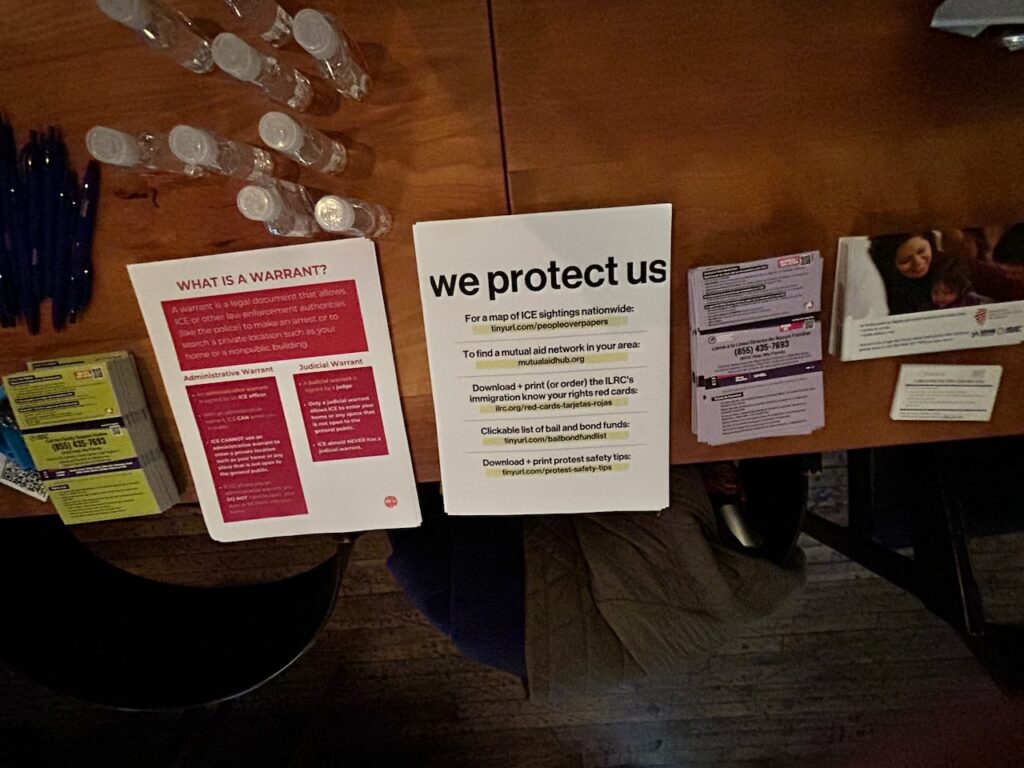
The concept of The Shift Change Tour is pretty simple: Go to a city, host a seminar, host a fundraising pop-up with Meteor Bar, and then plan for the next stop. But it’s the details that make this so powerful. The seminar took place at Kumiko, an award-winning bar and restaurant. The corner building, with its large windows, gave the space an open feel despite the torrential downpour outside. It was a packed house. Tiffany walked us through the stats of the economic impact of the ICE crackdown, particularly on the hospitality industry, and gave an overview of workers rights. Patricia Dillon, a lawyer who is part of a network of legal responders that provides pro bono legal assistance to those caught up in the ICE raids, elaborated further on rights and actions that people can take to organize and assist. Minneapolis bartenders Berit Johnson (Meteor), Tyler Kleinow (Meteor) and Angel Torres (Mestiizo) spoke of their personal experiences and actions during the siege in Minneapolis.
Folks with local organizations spoke of other resources available to affected people, from healthcare to housing and food aid. And finally, a city council member from the southside of Chicago spoke about what was happening politically and how people could get involved. It was inspiring, enlightening, emotionally draining, and hands-down one of the most comprehensive, full circle seminars I have attended. It is a blueprint for national organizing.
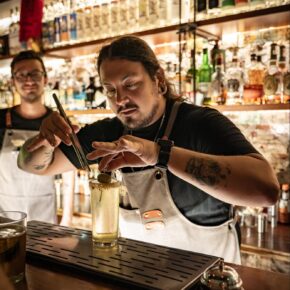
Later, at Estereo FM, the pop-up was in full swing when I arrived. It was a Monday night and the place was packed with industry people. There was true camaraderie; even though I am only in Chicago once a year, I felt part of it because community is community and no one counts your days of attendance. The drinks by the Meteor folks were delicious, and despite the heaviness of the day, there was so much joy.
I didn’t get a chance to speak in length with Tiffany in Chicago, so I followed up with her after and below is the full transcript of that interview.
The Shift Change Tour continues with plans for stops in more cities. Follow them on Instagram @shiftchangetour. You can support the work they are doing by contributing to its Go Fund Me campaign.
Can you tell me a little bit about your background and how you ended up behind the bar?
I was born and raised in Los Angeles, CA. My family immigrated from Guadalajara, Mexico, in the ’70s, so I am a first-generation Chicana. No one in my family had a career in hospitality and, as one of six daughters, I definitely took the road less traveled as a middle child by choosing to be a career bartender.
At 18, I started off as a hostess at an independent restaurant in Little Tokyo in downtown LA. I worked as a hostess until I turned 21 and got my first bar-back job at a neighborhood craft cocktail bar, then landed my first bartending job at 22 at a high-volume craft brewery. In the summer of 2016, I got the opportunity to participate as a CAP at Tales of the Cocktail — that’s when I knew I was doing this forever.
I moved to New York the following November and worked at two World’s 50 Best Bars. After COVID, I moved back home to help my family open a bar in Long Beach, CA. Then a friend asked me to come to Denver to help run a Latino salon and cocktail bar. I sold everything I could and moved to Colorado in 2024. The Denver hospitality community has been incredibly welcoming and is growing in such a beautiful and inspiring way — I’m so glad to be a part of its growth.
Where did the inspiration for Escuelitas and The Shift Change Tour come from?
I saw the need for Latino representation in the community. I utilized my network and got brand ambassadors to invest in educational classes that provided lunch for attendees, revenue for the bars and restaurants hosting the classes, and brought our community together around meaningful conversations — not just drinking.
When the 2024 election happened, I knew we had to do something. The idea came to me when a regular came in with his wife and sat with me during happy hour. He mentioned he was a civil rights lawyer, and I asked him, “Do you think you could talk to bartenders about what it might look like when they interact with ICE at their workplace?” He said, “I think I could do that.” His name is Milo Schwab, and he is one of the key attorneys on our team who has helped us train communities on how to protect their constitutional rights.
Since January 2025, we have taught over 80 classes across five states and counting, distributed over 3,000 whistle kits, and mobilized bartenders on how to practice democracy daily and become more civically engaged.
What has been the reception so far?
For the community, people feel more courageous and less afraid about the reality of the country we live in. We are watching the crumbling of our democracy, our economy, and our society’s humanity in real time. As bartenders, servers, and chefs, humanity is central to our work — we care about people, and it’s hard to let the abuses we see every day just slide.
There is something we can do about it, but most of us haven’t really engaged with local government before. I make sure to cross-organize with hyperlocal nonprofits and connect attendees to resources they can actually use. I also invite progressive candidates and elected officials to speak directly to the industry — giving us a chance to ask questions like, “What’s it like running for office?” or “What do you plan to do to support tipped minimum wage workers?” We get to inspire our industry to demand a better future.
Given all of the challenges in the hospitality industry right now, do you see this type of grassroots networking as a way to reinvigorate bars as so-called “third spaces”?
One hundred percent. As Keyatta Mincey, a bartender from Atlanta with a nonprofit tackling food insecurity in the hospitality world, has said: “Community is the new currency.” America slowly descended into a hyper-individualistic society, and we are now understanding that we will only survive and flourish as a collective.
Bars and restaurants have been integral community spaces since the beginning of time. It feels not only fitting but like our duty as bartenders to fight for our communities however we can. This is how I am doing it.
How do you see this campaign growing?
My dream is to create an educational platform that individual cities can fund through their tourism boards — helping educate an important sector of the economy, much like ServSafe or mandated sexual harassment training. Getting funding for this kind of work is extremely difficult under the old model of liquor brand sponsorship. Brands are too afraid to take any political stance, and tariffs have decimated budgets. But still, we persist — because this education matters.


BRAVO. You are heroes.