
Beyond the headlines, the story of agave abroad is not about theft. It is about what we haven’t built yet. Joahna Hernandez reports on agave industries in Madagascar, India, Brazil, and-of course-California.
During the last edition of the World Cup, there was a phrase that Mexicans made viral every time that the national team won a match, Y si sí. It is not quite a statement nor a question but something in between. It is a collective manifestation: What if this time we actually go far? What if this time we actually make it? It was said with a mixture of genuine hope and private suspicion that something will go wrong in the fifth game, that the potential everyone sees will remain, as it always does, the potential.
Mexico is the country of eternal potential. The economy has been about to take off for decades. Sometimes it does–according to the headlines, at least–but people don’t often get to see it in their daily lives. Fútbal is a perfect example: the raw talent is undeniable, but the sport has become a business owned by a handful of companies whose shareholders are more interested in the bottom line than in what happens on the pitch. Our gastronomy carries a UNESCO recognition as an intangible cultural heritage of humanity while we import most of the corn we eat, we lead Latin America in the production and distribution of ultraprocessed foods, and we watch our traditional markets lose ground to convenience store chains. Our biodiversity represents two percent of the world’s total–not by accident but thanks to indigenous and farming communities who have managed, selected, and protected that natural wealth for centuries. And yet we remain the most unequal nation among the members of the Organization for Economic Co-operation and Development (OECD). The people who built that richness are among the poorest.
And then there is agave.
Conversations about agave and who gets to profit from it tend to quickly generate heat. A recent post on Mezcalistas instagram about advertising and who owns a brand’s stories reminded me how quickly this topic becomes a dispute over belonging, authenticity, and exploitation–all legitimate concerns and real tensions. The loudest version of that argument goes something like: a Mexican getting paid to share ancestral knowledge about agave with people growing it in foreign countries is an act of complicity–that ancestral knowledge belongs to communities that built it and has no business being exported.
But that is a conversation that people expect. What I found when I started reporting on this was something quieter and, honestly, more unsettling. It is not a dispute, it is a pattern, the same one that shows up in Mexican fútbal, in our economy, in our food systems, and almost everything we are capable of building. Enormous potential, but insufficient infrastructure. Brilliant people finding a door open somewhere else. And out there, a world that discovered what we had and decided not to wait for us to get organized.
This is not a story of villains but a story told in shades of gray. Along the extremes of theft and opportunity, there is a more nuanced conversation to have. In Mexico, the grays are always more revealing.
California agave and Mexican opportunity
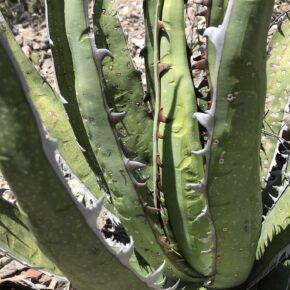
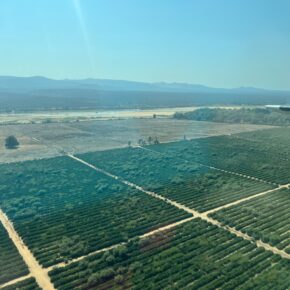
Yessica Fernández Galicia grew up in a pulque making family in Estado de México. She studied economics at the University of Chapingo and arrived at UC Davis in 2020 for her master’s residency. She was researching destilado de pulque with the hope of developing it as a cultural product with international relevance. California’s agave farmers weren’t on her radar. Seven months in, a local problem changed that. Mexican-American farmers across the state were converting their land to agave and being systematically deceived. They were sold the wrong species, told they were buying one variety and receiving another, and then watching plants die years into the cultivation cycle.
Yessica stayed and extended her residency. As part of her work with UC Davis, she helped write a species selection and production guide for California growers in Spanish and English to use in a series of workshops and training sessions. Published in 2023, the materials were based on Yessica’s and fellow colleagues’ taxonomic research into which varieties actually survive in California conditions, which varieties were being misrepresented in the market, and what the agronomic differences meant in practice.
She co-created a document that should have existed before an agave industry in California was even conceived. That gap, the one between the enthusiasm of a new market and the knowledge infrastructure needed to sustain it, is what AB2606 threatens to make permanent. When California passed the bill in 2024, it created a regulatory framework that defined agave specifically as a spirits crop, and gave the California Agave Commission the authority to levy assessments on all growers and processors to coordinate an industry built around alcoholic beverages.
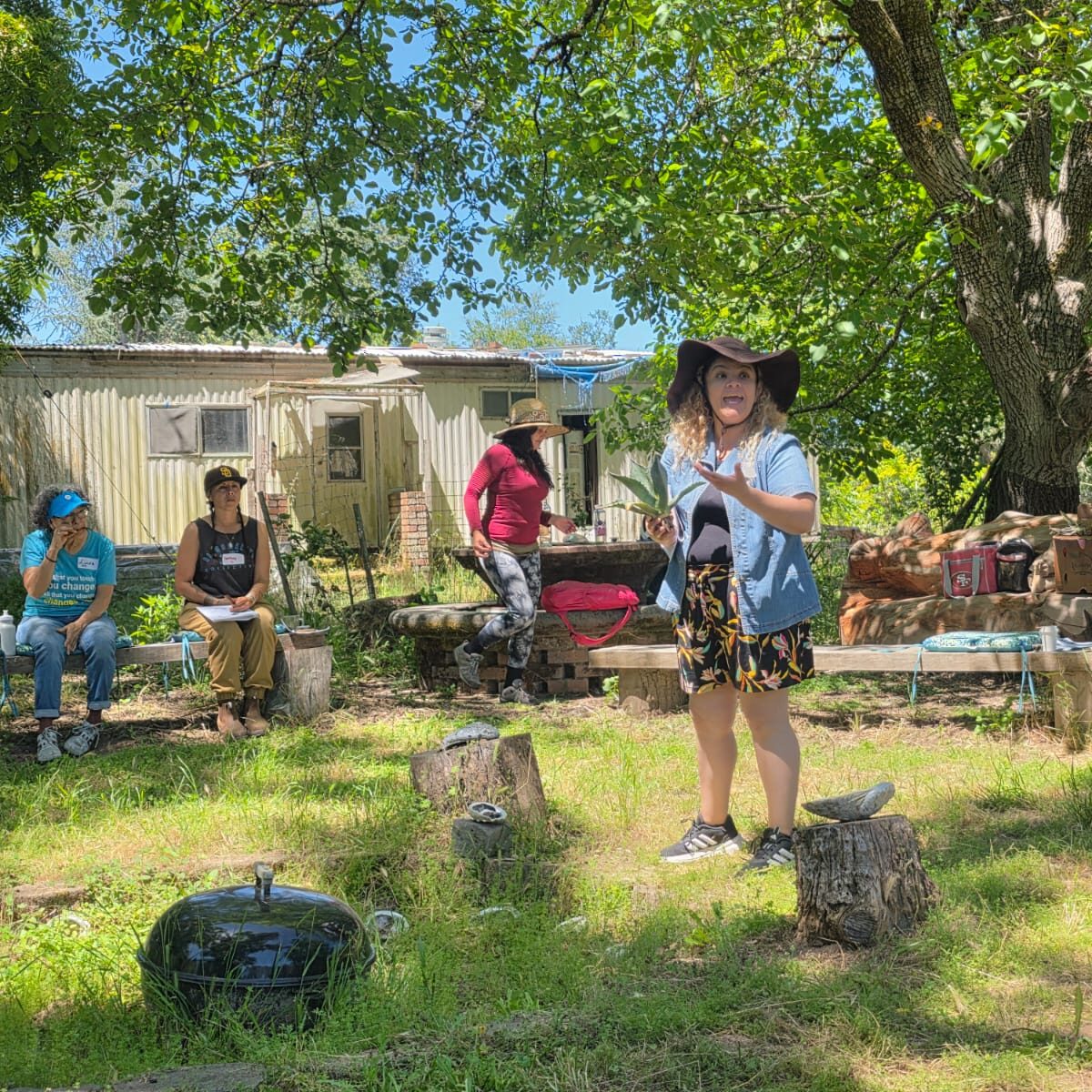
The California Agave Alliance (CAA) was created as a grassroots movement in response to AB2606, which created a fee structure that put an undue financial burden on small growers and gave an advantage to large corporations. According to Yessica, who is part of the CAA, the movement exists precisely to avoid the pattern that followed the tequila industry, one in which market logic wrote the rules first, the plant got reduced to its most profitable expression, and the communities closest to it got reduced to underserved suppliers. Their position is to foster opportunities for exploring all the different options agave from California offers, not to hamper growers and processors with regulations that prevent many from even getting started. An industry built on a plant with thousands of years of documented use as food, medicine, fiber, and construction material should not be defined only by what fits inside a bottle. To do so would be to neglect the potential and reduce it to a single possibility. Mexico already knows how that story goes.
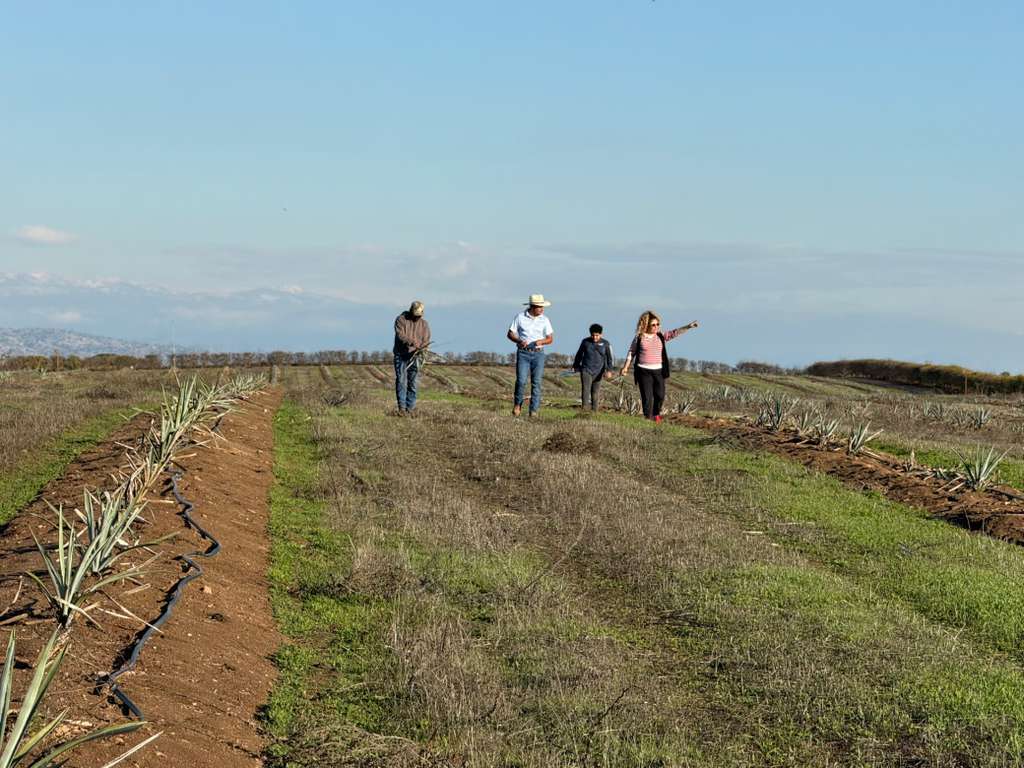
Yessica has spent four years trying to return to Mexico, to find an institutional home, to do from the inside what she has been doing from the outside. Academics call it “talent circulation” when a skilled professional emigrates–knowledge travels with the person and eventually returns enriched to the country of origin. But it only works if the country of origin has the capacity to receive returning researchers. Mexico’s national science funding infrastructure has been particularly unstable in recent years. The decision-making bodies shift with every change of government, leaving the infrastructure perpetually unfinished.
A 2021 study on the migration of Mexican scientific talent showed when researchers based abroad attempted to collaborate with Mexican institutions, 54 percent reported lack of interest from the institutions as the main obstacle. The United States invests roughly 3.5 percent of its GDP in research and development. Mexico invests less than one percent. That gap is economic but also indicative of one system that circulates knowledge and one that exports it without a return address.
Knowledge is power. Are we using it?
Salvador Periban is not a scientist. He is welder, a ceramist, an agave nerd who learned the craft of making mezcal through building stills for different mezcal projects such as Sombra in Oaxaca. Today, he curates the Melate Maguey collection, but also documents stories for his podcast, Heritage Mezcal. His name came up in this reporting, in separate conversations, as someone who knows the world of agave projects outside México and is not afraid to say exactly what he thinks about it. That combination of empirical knowledge without institutional caution turns out to be rare and useful.
In our conversation about agave going global, what he said was simple and radical: Mexico is the authority. Not because of a denomination of origin or a regulatory framework, but because of time. Time is what Mexico has with agave and it means domestication and accumulated knowledge. It also means having a narrative that doesn’t need inventing because it already exists and it is thousands of years old. It is written in the codices, in the names of towns, in the figure of Mayahuel, a mythological character that embodies the relationship of the ancestral cultures with the plant. The agave system was built around the possibilities it provided: medicine, fiber, food, paper, housing, cultural identity. These attributes position Mexican producers as authority. In his opinion, watching agave expanding to other latitudes is “a natural process that will happen with planetary agriculture, territories adapting.”
The US Alcohol and Tobacco Tax and Trade Bureau currently registers 500 agave related brands in the US market. In 2020, there were 58 US agave distillate brands. In 2024 there were 143. Another 24 products arrive from countries including India, Australia, Peru, Ecuador and Venezuela. Somewhere between 2018 and 2020, the US created a new category: non-Mexican agave spirits.
Peribán isn’t disturbed by these numbers. On the contrary, he sees the global expansion of agave as the beginning of a much wider category the way wine became wine. What excites him is not competition but curiosity. “I love the idea of how agave distillate will taste in other countries,” he told me.
While I agree the time advantage and the authority of Mexico are real, the country still lacks a system that converts all of that into something that works for the majority of Mexican producers and communities.
Brazil has a different plan for agave
To understand why a Brazilian biotechnologist working on agave biofuel matters to this story, we must go back to the 1970s. After the global oil crisis, the Brazilian government strategically reduced dependency on imported petroleum by building a national biofuel industry from the ground up. They promoted sugarcane ethanol as a first-generation biofuel, developed flex-fuel motors capable of running on fifty percent gasoline and fifty percent ethanol, and turned that technology into a standard feature of cars assembled in Brazil. It was a radical industrial decision that reshaped the country’s energy matrix over decades.
Mexico took a different route. In Technological trajectory of biofuels in Mexico and Brazil, Mexican researchers Arcelia González and Yolanda Castañeda trace Brazil and Mexico’s contrasting trajectories to a fundamental difference in who drove the development. In Brazil, the state was the engine. In Mexico, the state stepped back, protected its petroleum interests, and let the research exist without the policy framework or budget to scale it. The knowledge exists in Mexico because institutions like Centro de Investigación y Asistencia en Tecnología y Diseño del Estado de Jalisco (CIATEJ) and Centro de Investigación y Estudios Avanzados (CINVESTAV) have been working on agave biofuel for years. What has been missing is the political will to invest in an alternative when the existing extractive model of fossil fuels still writes the budget.
Fabio Raya is a biotechnologist who arrived at agave through Brazilian industrial logic. The plant flourished in the sertão, the vast semi-arid region of Brazil’s northeast where farmers had been growing agave sisalana for sisal fiber for decades. The infrastructure, the land and the agronomic familiarity were already there.
The Brazil Agave Development program BRAVE, his project funded by Shell, is attempting to discover if agave could become the country’s next biofuel crop. The process ferments the whole plant, distills the ethanol, and converts the remaining vinasse into biogas that powers the project itself. Ideally it is a closed loop — agave going in, energy and its own fuel source coming out.
Raya recognized that Mexico has no agave biofuel industry because the national oil industry has held that development back. But when he traveled to Mexico to learn about agave and build collaborations, he found something he hadn’t anticipated: the cultural weight of agave and the identity built around the plant over centuries. He saw how agave was not only a crop with industrial potential but a living system with its own problems and vulnerabilities. In a sense, I think the absence of cultural attachment to the plant is part of what allowed Brazil to move forward industrially where Mexico hasn’t. In Brazil there was no reverence to negotiate with, no identity to protect, and no petroleum industry using its political power to keep alternatives small.
But there’s a flip side. Graciela Carrillo, who coordinated the book Biorrefinerías y Economía Circular, documents biofuel development in Mexico and identifies the structural challenges clearly: high implementation costs, lack of industrial scaling, and the need for technological innovation to make the biofuels market commercially viable. Her concern goes beyond the economic aspect. Large-scale biofuel production can trigger significant land use changes, agricultural expansion and shifts in traditional farming practices. In a country with Mexico’s biodiversity, these risks are tangible. The fact that Raya came to Mexico to understand the plant better proves that cultural attachment to agave is not just an impediment to biofuel development. It provides a knowledge base that makes that full use possible without destroying what makes the plant valuable in the first place.
Agave spirits from India and Madagascar?
Riker Vermilye is an American who arrived in southeast Madagascar through the Peace Corps. The agave was already there — thirty thousand hectares of sisalana planted during the French colonial period for fiber production. Abundant and underused agave plants, growing in a region where ninety percent of the population lives on under two dollars a day and deforestation has compounded poverty for generations. He saw a connection between the plant and the territory’s climate challenges and created Madagave, a social enterprise built around agroforestry and distillation, while managing a luxury tented camp that funds part of the operation. His distillation methods draw from the mezcal-making process of San Luis Potosí. To understand the full uses of agave sisalana, he has collaborated with Vía Orgánica in San Miguel de Allende, and various nonprofits and the Centro de Investigación Científica de Yucatán (CICY). At some point in that process he picked Peribán’s brain. The project is still in pilot phase, targeting 200 to 300 liters per month.
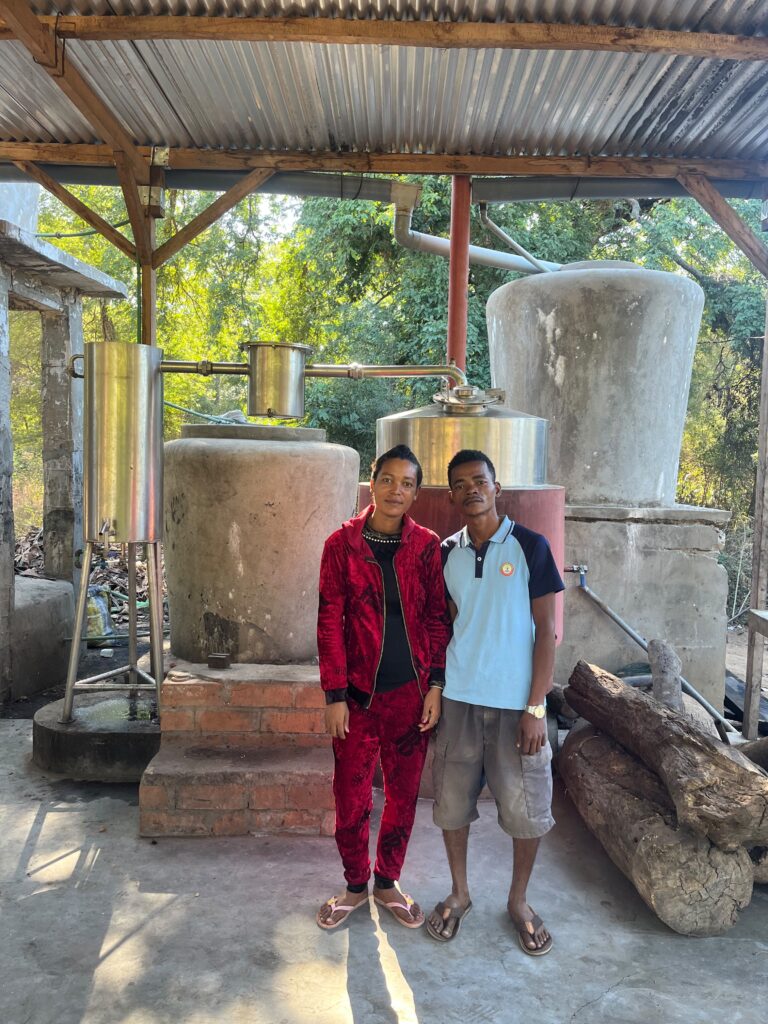
In 2020, he spent 10 months in Oaxaca, where he lived and learned about the relationship between community, plant, and landscape. That vision was the spark of the project. He is not claiming Mexican heritage for his product, but he accepts the application of Mexican knowledge, through Mexican collaborations, to a problem that is fundamentally about land and community in Madagascar. In a conversation that often flattens everything into appropriation or authenticity, that distinction is worth holding onto.
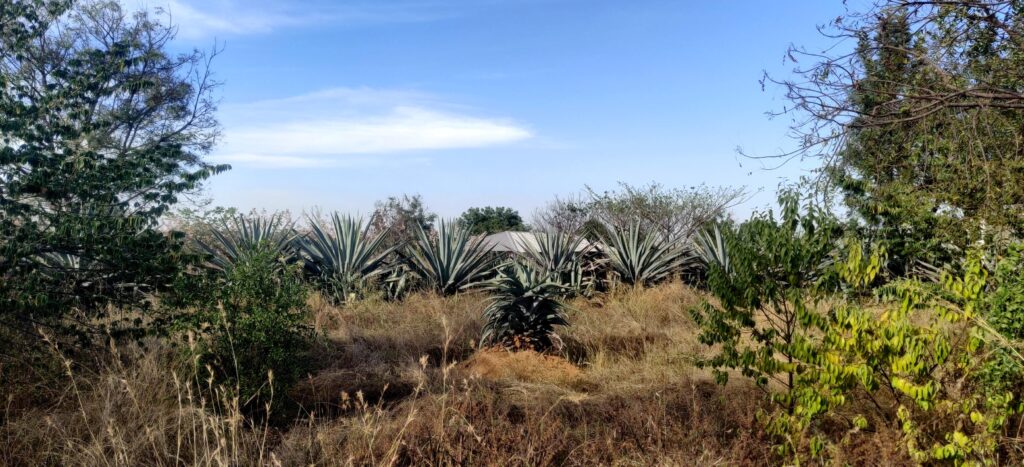
In India, the story developed differently but colonial logic planted a seed too. Rakshay Dhariwal’s path to agave had nothing to do with climate resilience or community development. It started at his own bars and restaurants, watching clients gravitate from single malts toward agave spirits. He saw a trend moving across his tables in real time. When the pandemic arrived and gave him free time, he decided to explore distillation from a producer point of view. He then created Maya Pistola, a spirit made with an agave similar to arroqueño that grows wild in the Deccan plateau, an elevated land region in southeast India.
Agaves were originally brought in by the English to be used as fences to protect the cattle from the rail lines. Dhariwal studied the distillation process and the classification of agaves in Mexico, and exchanged information with other people like Avi Leitner in Israel, Phillip Lowe from Roho Agave in Kenya and JP Fraser from Cocuy Agave in Venezuela. He says the learning curve has been long but it is now, after only two years, beginning to pay off.
Making spirits is not the only or even the most obvious thing these plants could offer. But the market moment makes it the most visible option. Neither Madagascar nor India carry the weight of that accumulated relationship that Mexico has with agave. They are, in the most honest sense, at the beginning. In India, extreme heat makes processing brutal. In Madagascar, the plant being distilled was never domesticated for that purpose. Both projects are exercises in starting from zero — which is admirable in its own way, but it also makes visible, by contrast, what actually already exists in Mexico.
The scientist who hasn’t left Mexico
Eduardo Sánchez Jiménez is a researcher from Guerrero based at the Universidad del Estado de México, he studies farming communities and their forms of organization. He has consulted for agave projects in Ecuador, Perú, and Colombia, and traveled for agricultural summits to China. In a story with people who found the door more open somewhere else, Eduardo decided the work needed to be done from inside. What he has observed in international conversations is less about how agave is transformed and more about what it represents. The technique is secondary and the context is the conversation.
In Peru it was more about how communities organize or about power relationships. In China, the interest was ecological — clean processes, low environmental impact, production methods that leave the land better than they found it. The spirit in the bottle was secondary. In his experience, what the world is increasingly asking about agave, it turns out, is not what it tastes like but what it does to the people and places that produce it.
During a conversation with Moroccan researchers in Beijing, he learned that during Benito Juarez’s presidency Mexican tlachiqueros from the Valley of Apan were sent to Morocco to share agave knowledge. There are Moroccan communities that still conserve that tradition and recognize Mexico as the cultural center of the maguey. The knowledge was already traveling long before the mezcal boom made it a commercial concern. The question is if we, as Mexicans, are aware of that.
“In Mexico, we have a crucible of experiences determined by geography, culture, climate, and the plant itself. All four determine together what the culture of agave distillates becomes and what it means,” he says. It is the result of generations of people living inside a landscape long enough for the plant and the people to shape each other.
He is precise about where he draws the line. When blue agave was taken to California and displaced native species, that was phytogenetic appropriation and the NOM of tequila exists partly as a response to that theft. He defends those protections. And in the same sense he says other countries have as much right to grow agave as Mexico does. The line is not who grows it — the line is whether the genetic material domesticated by Mexican communities over millennia remains protected from becoming someone else’s intellectual property.
“We can respect tradition,” he says, “but the mindset needs to change in Mexico so we can better position our agave potential, so the benefits actually reach the communities that own the knowledge.” There it is again. The potential. And the gap between the potential and what we do with it. Eduardo has spent his career working inside that gap, from Mexico, without leaving.
The world is not taking agave from Mexico
Mexico holds approximately two percent of the world’s total biodiversity. That number sounds like power. In practice it describes a vulnerability. A country rich in what the market calls “resources” and persistently poor in its capacity to manage them on its own terms. The reason for this paradox is not mysterious. The communities that have protected that biodiversity and maintained its balance have never done it from a market logic. The logic stems from being part of the ecosystem rather than extracting from it.
That relationship, accumulated over centuries, is precisely what makes Mexican knowledge about agave irreplaceable. And it is precisely what gets discarded when the extractivist model arrives.
We have seen this pattern elsewhere in Mexico at a larger scale. Massive tourism investment in places like Mahahual, Quintana Roo; natural gas projects in Loreto, Baja California, real estate development in Chuburna, Yucatan–all these projects that promised “development” in exchange for resources and protected areas. Then the investment arrives and defines the value of the territory in its own terms while the communities that maintained it are left on the margins.
The risks in agave’s broader exploitation are two and worth naming. The first is environmental; agave’s resilience becomes a liability the moment it is treated as an invitation to monoculture. A plant that survives drought, restores degraded soil, and captures carbon does so within an ecosystem, in relationship with the surrounding biodiversity. The history of sisal grown as an industrial monocrop across Brazil and East Africa in the twentieth century is a cautionary precedent sitting uncomfortably close to the current enthusiasm.
The second risk is the phytogenetic material itself–meaning the genetic diversity that exists in Mexico because Indigenous communities spent millennia selecting, domesticating, and caring for hundreds of maguey varieties. That accumulated selection cannot be separated from the communities that performed it, and it cannot become the intellectual property of a laboratory in another continent. These are the lines that should matter. Not who distills agave in Madagascar or grows it in Australia or California.
And California is precisely where that fear tends to concentrate within Mexican farming and producing communities. This fear is understandable given California’s proximity to major markets and how fast the agave industry is growing. But the numbers tell a more nuanced story. California’s agricultural minimum wage sits at $16.90 an hour. Mexican jornaleros working in agave earned the equivalent of approximately $2.41 per hour in 2022. That gap makes direct cost competition between the two industries structurally impossible.
California’s path to viability runs through premium positioning, not through undercutting Mexican prices. The threat is not displacement. Mexico has not yet built the analytical and policy infrastructure to read these scenarios, to define collectively what future it wants, and act from the clarity rather than from fear. The world is not taking agave from us, it is showing us in real time what we have been sitting on.
Y si sí stopped being a question the day we decided to treat what we know as what it is: not a memory to protect but a foundation to build from. The potential is not the problem, not having a plan is. And it can start with the people who carry both the knowledge and the credentials, putting that knowledge to work where decisions are made. I see that plan as a renewed NOM that serves producers and communities, not just the brands built on top of their knowledge; a tax system that makes the domestic market viable for small producers instead of pushing everything toward export; benefit-sharing mechanisms that actually reach the communities that built the knowledge being regulated. None of this requires invention. It requires the collective decision to build seriously from what we already know — and to stop measuring success only by what fits inside a bottle or a foreign investment portfolio.
This way the potential becomes a plan.
Updated 8/28/2027 to correct the misspelling of Yessica Fernández Galicia’s name.







Leave a Comment