Susan on the good, the bad, and the ugly at this year’s Agave Heritage Festival. (But mostly the good!) All photos by Anna Bruce.
Full disclosure, I have loved the Agave Heritage Festival (AHF) from the moment we started writing about it in 2019. I have not missed the festival since. Each year I find myself even more impressed by the breadth of the event and the incredible mix of people in the room. There are so many talks and tastings, film premieres, art and–well, it’s just about the deepest exploration of agave you will find in the US.
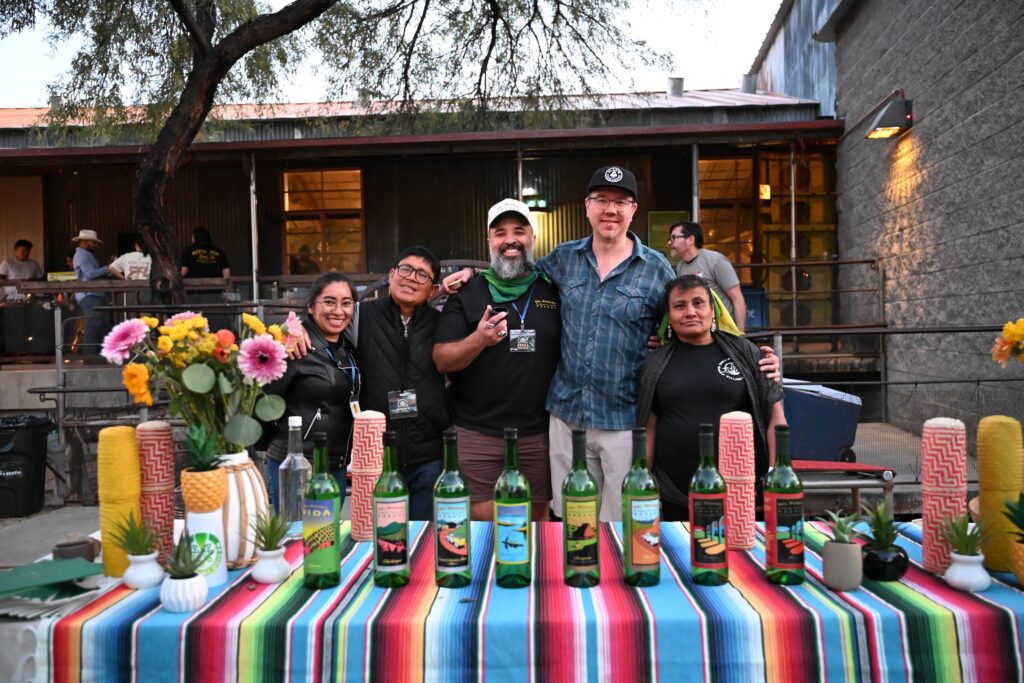
This year, we partnered more deeply with AHF, producing Mexico in a Bottle in Tucson. It was our first truly consumer event, as the tasting took place on Saturday night. I spotted some industry people, but it was primarily consumer, and I will say a very engaged consumer! Tucson is a tiny market, but AHF draws people from across the region so you had folks from Texas, California, Colorado, and even Massachusetts. We doubled the number of participants. As with our other Mexico in a Bottle events, we offered spirits beyond agave, including Mexican gins, liqueurs, whiskeys, and rum. All in all, it was a beautiful night, and we can’t wait to see the photos from Anna Bruce and Rambling Spirits.
Education, education, education
It’s no easy feat to put together panels and discussions that are both relevant to what’s happening in the world of agave spirits but also interesting. It’s not that there aren’t enough interesting topics and people. Far from it. It’s the constant moving parts, with panelists often canceling at the last minute and the mad scramble in finding replacements.
So much of what makes the Agave Heritage Festival special is who is in the room, as I have previously noted. At one point during a bacanora presentation I found myself surrounded by Felix Monterrosa of Cuish, Edgar Angeles who distilled for Real Minero, Miguel Partida of Chacolo, Luis Carlos Vasquez the producer of Del Maguey’s Santa Catarina Minas expressions, ethnobiology professor Dr. César Ojeda, as well as industry people, including Lucas Asis (media), Clinth Lopez (Silver Lyan DC), and David Tyda (Barcoa PHX)–to name just a few.
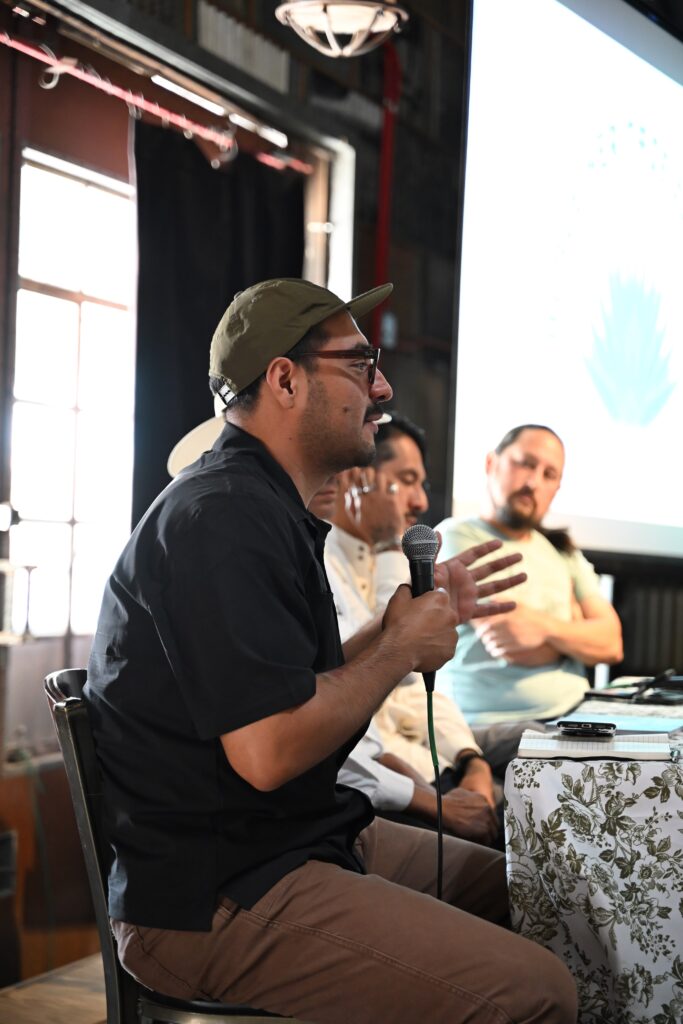
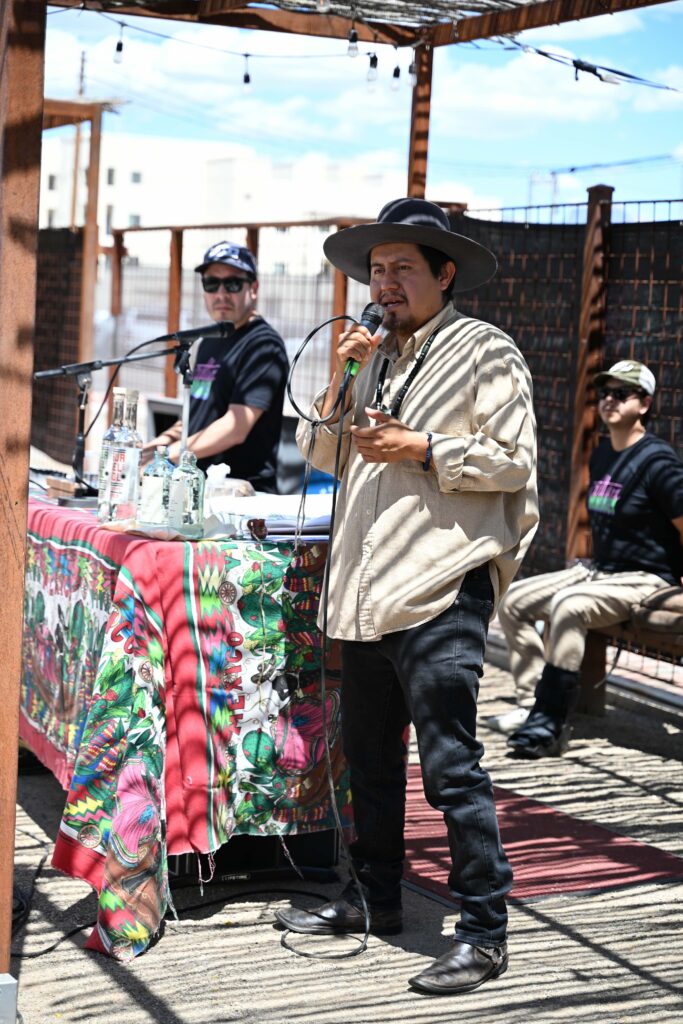
So why does that matter? Number one, it leads to great conversations, informed questions, and authentic networking. It is about sharing knowledge and experience among producers, bridging distance both geographical and cultural, and finding commonality. And of course understanding differences. It would be an incredibly boring conference if everyone agreed. Giving a space to disagree is also valuable.
Crisol, which may just be my favorite bar in the US, provided room for presentations and tastings from small producers. Owner Doug Smith has created a space that feels like you are hanging out with friends in your living room or on your front porch. It is convivial, relaxing, and–best of all–has a kick-ass selection of agave spirits and cold beer. Somehow, it happened to be the bar that everyone gravitated toward after evening events, making it the unofficial after party. One of the presentations included a group of small-batch sotol makers who drove from Chihuahua. Talking to these producers you begin to understand why headlines proclaiming Sotol will be a serious rival to Tequila are so overblown and ridiculous.
In fact, that’s probably the greatest aspect of the festival–you are hearing directly from the people who are working on projects on the ground, from sustainability and eco restoration, to farming and distilling. We live in a world in which we are so disconnected, despite being so connected online, that marketing and headlines are oftentimes divorced from what is actually happening.
Tackling contention head on
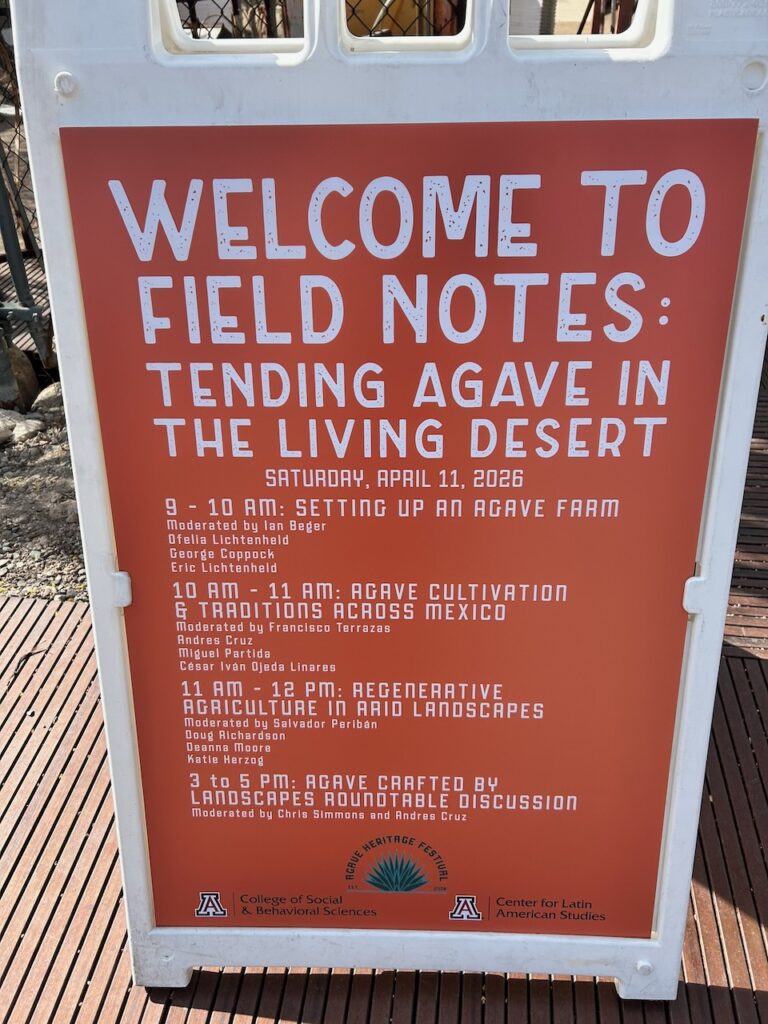
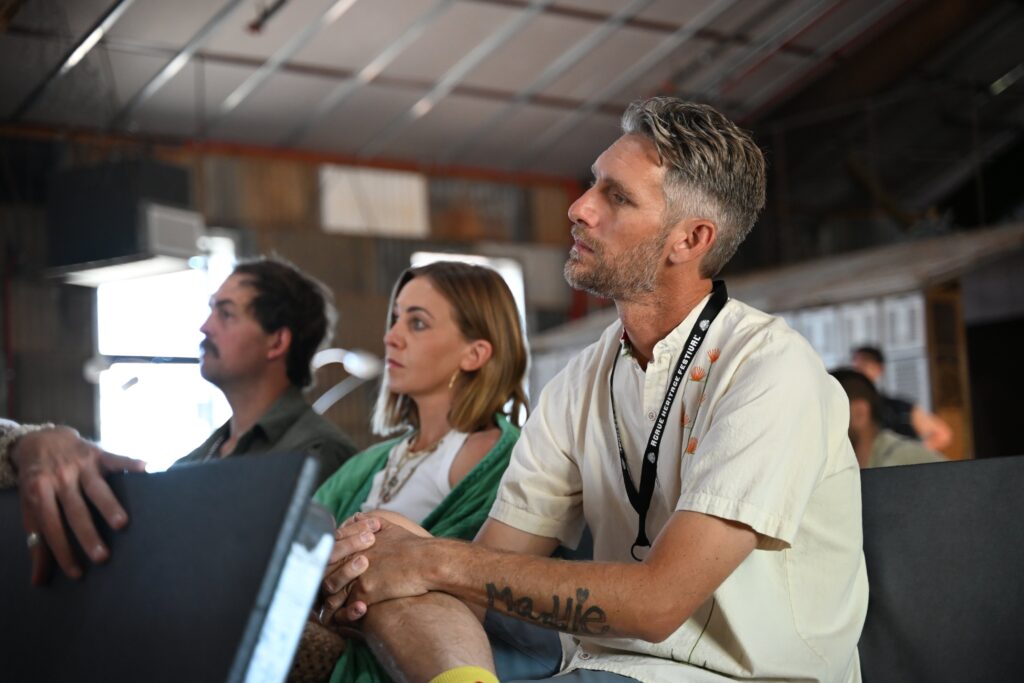
Several of this year’s programs were devoted to agave cultivation, with the panels composed of conservationists, academics, and agave farmers, including folks with growing operations in both Arizona and California. It was a great opportunity for people on both sides of the border to understand more about each other’s projects and to speak face to face. The collective knowledge in the room was impossible to measure, considering we were hearing from multiple people with generations of growing experiences.
It was tremendously disappointing that a few of the growers from this side of the border didn’t stay beyond their own presentations, missing out on a unique opportunity to build relationships and listen to a different perspective.
Because, let’s face it, there is a huge elephant in the room when it comes to agave cultivation and distillation outside of Mexico. We need to be able to talk about that, as uncomfortable as it may be. Botanist Wendy Hodgson, probably the foremost agave expert in the United States, went straight to the issue of biopiracy in her questions to various panelists about how they procured their agaves. Could they show provenance? It is imperative for folks around the world to have awareness of how they procure their seeds, hijuelos, and tissues. There is privilege in not thinking about that process or considering that question. To be frank, not everyone could answer that question.
These are hard conversations and we need to be listening to one another. I have had to learn (and relearn) so many times to get out of my own way in order to open myself to different perspectives and ideas. I don’t know if it’s ego or what that keeps so many of us from being open, but it hinders the conversation. There was a moment, at the end of a panel, when one of the speakers engaged in what I assume was an attempt to wrap things up in a universalist manner a la “We are all in this together.” But he landed on an unfortunate word choice: “We are all Indigenous” (said by a white man to an audience that included Indigenous peoples). It was such an oblivious statement and only reinforced why so many Mexicans have concerns about agave appropriation. When he was given the opportunity to try and rephrase or apologize, he chose not to and, in fact, doubled down.
I bring this up not to cancel anyone, but to emphasize that idea of getting out of your own way. If we want to have greater understanding of one another and to be able to see different points of views and experiences, we need to do just that.
The Agave Heritage Festival continues to provide a great platform to ideate the challenges facing the agave world and work toward solutions by sharing information. I hope more people realize just how special that is and come next year to participate and be ready to listen.
Some favorite moments at the Agave Heritage Festival
This is in no particular order… Sipping on Dos Potrillos sotol, which I first encountered two years ago at Mexico in a Bottle Durango and which is sadly no more (thank you Sandro!); meeting Lourdes Encinas, wife of Batuq producer Rafael Encinas; hearing the harrowing tales of raicilla smuggling along the Jaliscan coast; hanging out with César Linares and finding some serious kinship; seeing people taste Del Maguey Arroqueño with producer Luis Carlos Vasquez; sharing curly hair product recommendations with Grant Gardner; hearing Alejandrina’s laugh from across the room; receiving two beautiful drawings from Felix Monterrosa; giving David Tyda a big gigantic bear hug; listening to Omhar Acuña play the accordion and sing corridos; telling Cristina and Tyler more than once that “I will just be an hour” only to lose myself for two or more at Crisol; eating the best damn torta and washing it down with some Mazot Uvalama bacanora after Mexico in a Bottle. What happens in Tucson…



Leave a Comment