Joahna Hernandez digs deep on why two elite mezcal brands have dropped the maestro from their labels. Is this the new paradigm?
With close to 6,000 registered mezcal brands in Mexico, keeping up with the news about their profiles, what they produce, or what positions they take is no small task. In a market this competitive, things can easily go unnoticed. However, two of the most respected and intellectually rigorous mezcal producers in Oaxaca– InSitu and Real Minero–have recently made a decision that, while it may not have generated headlines, is worth pausing on: both have removed the name of the maestro or maestra mezcalero from their labels.
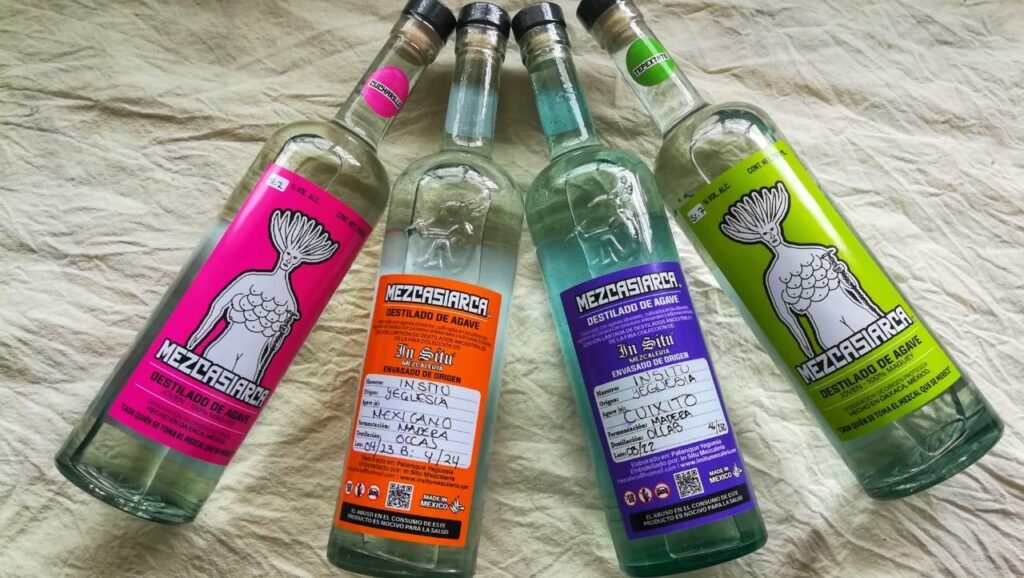
This might seem like a minor design choice but if you follow the ongoing debate around mezcal’s identity, its commodification, and its roots in collective knowledge, it is a decision that opens up one more conversation about authorship, and the distance between what a label says and what actually happens inside a palenque.
Before getting into the debate, it helps to understand the regulatory landscape. The NOM-070-SCFI-2016, Mexico’s Official Standard governing mezcal labeling, is remarkably precise about what must appear on a bottle. For domestic sale, the label must include the brand, the category (Mezcal, Mezcal Artesanal, or Mezcal Ancestral), the class (Joven, Reposado, Añejo, etc.), the agave species used, the alcohol content by volume, the state where it was produced, the producer’s legal name and tax information, and the protected denomination of origin legend. For export, similar requirements apply, with some additions around country of origin.
What is conspicuously absent from this list? Any mention of the maestro or maestra mezcalero. Their name, their lineage, their decades of knowledge, none of it is required by law. Its presence on the label is not an obligation but a choice, one that has carried far more meaning than mere compliance.
To understand why the maestro mezcalero ended up on the bottle in the first place, it helps to step back and look at the broader arc of how mezcal was introduced to the international consumer.
Anthropologist Ronda Brulotte, in her essay A Taste for Agave: The Emerging Practices and Politics of Mezcal Connoisseurship, offers a precise and somewhat uncomfortable account of this process. Her argument, rooted in ethnographic fieldwork, is that the appreciation of mezcal as a premium, artisanal spirit was not simply discovered by consumers—it was socially constructed using the language and frameworks already familiar from wine and whisky culture.
Brulotte explains this construction through the concept of interdiscursivity: the use of elements in one discourse and social practice which carry institutional and social meanings from other discourses and social practices. Mezcal, once dismissed in many circles as a rough, low-class spirit, was repositioned through the vocabulary of terroir, craftsmanship, and provenance—terms that carried existing prestige from the world of fine wine. In that sense, a discourse was borrowed from one field to make another more legible, relatable, and aspirational. A cosmopolitan consumer class absorbed this language and, through it, assigned value. The spirit didn’t change but the story around it did.
For me, this dynamic has a parallel that anyone who has visited the United States as a foreigner might recognize. Walking through Philadelphia’s Constitution Museum, or the American History Museum in Washington D.C., what struck my attention was not just the content but the architecture of the experience: the linear timelines, the accessible narration, the framing that makes something complex feel clear, complete, and almost inevitable. The United States has mastered the art of packaging its own mythology, of making history feel like a product you can understand, consume, and carry home with you.
Mexico City holds the record for the second highest number of museums (190) in the world after London, and yet we, as Mexicans, debate multiple, contested versions of our own history in ways that resist that kind of clean resolution. Complexity, in the Mexican context, tends to stay complex.
Mezcal, in many ways, followed the American model when it entered the global market economy. The Denomination of Origin provided a regulatory structure. Categories like artesanal and ancestral created a hierarchy. Terms like craft and traceability became defining for consumers. And into that framework, the figure of the maestro or maestra mezcalero was inserted: a human face, a craftsman’s name, a story that followed the same logic as the winemaker on a Burgundy label or the distiller’s signature on a bottle of single malt. Almost like putting the dots together to make better sense of it .
The people building the narrative, in other words, were often not the people building the mezcal. As Brulotte explains, “From plant to product, mezcal authorities elevate the spirit’s value through other specialized yet highly profuse discourses—notably those authorities tend to be distributors, marketers, consumers, or other boosters rather than producers.”
One figure who looms large in Brulotte’s text is Ron Cooper, founder of Del Maguey, widely credited with introducing artisanal mezcal to the US market in the 1990s. Cooper coined the concept of single village mezcal, a framing in which mezcal’s character was inseparable from its place of origin, its terruño. Terroir, in the wine sense, but applied to agave spirits.
Brulotte analyzes Cooper’s influence carefully. The single village concept did bring real attention to the geographic and cultural specificity of mezcal production by fixing the homogenizing tendencies of industrial spirits. But it also embedded another idea: that the character of the distiller, the hand of the individual maker, was as much a part of the product as the land itself. Craftsmanship was individual while the maestro was the author.
This was, Brulotte observes, a framework built for the consumer as much as for the producer. As she asks: “How does one learn to appreciate mezcal when the historical or cultural context associated with it is virtually absent?“ The maestro’s name on the label is, in part, an answer to that question. It gave consumers a point of entry, a personality to follow, a story to hold onto while they were still developing the knowledge to navigate the spirit’s complexity on its own terms.
Brulotte also situates mezcal’s rise within a broader process that Oaxaca has been undergoing for decades. She writes that “Oaxaca’s historic poverty and indigeneity, since the 1970s, have been converted into a folkloric resource employed by its ever-expanding cultural tourism industry. A mix of colonial architecture, colorful markets, and a seemingly endless calendar of religious celebrations attract Mexican nationals and international travelers who are drawn by Oaxaca’s promise of well-preserved indigenous culture. Oaxaca is both exotic and ‘Other,’ but repackaged in a way that is safe and consumable for outsiders.”
Mezcal fits neatly into this economy of the consumable exotic. The palenque becomes a destination. The maestro becomes a character. The bottle becomes a souvenir of an encounter with something ancient and authentic — an authenticity that has been, to varying degrees, curated for the market. This is not unique to mezcal, nor to Oaxaca. But it is a dynamic worth naming, because it shapes the very questions we are asking about what a label should say.
The result is the Denomination of Origin. The regulatory structure created to protect mezcal’s integrity and the communities that produce it also became the scaffolding on which a market-friendly mythology was constructed. The critiques of the DO that have accumulated over the years—that it tends to standardize production in ways that erase cultural and regional diversity, that it concentrates power in certification bodies and commercial actors rather than producers—are inseparable from this broader dynamic.
The matter of a mezcal label
Seen in this light, the name of the maestro on the label is a consequence of introducing mezcal into the market economy. It became a tool to make the spirit legible and desirable to consumers who lacked the cultural context to appreciate it otherwise. The label, in this reading, is as much a marketing document as an informational one. This does not make it dishonest, necessarily. It worked. But it also created a mythical figure, a sort of hero. And mythologies, by their nature, simplify realities.
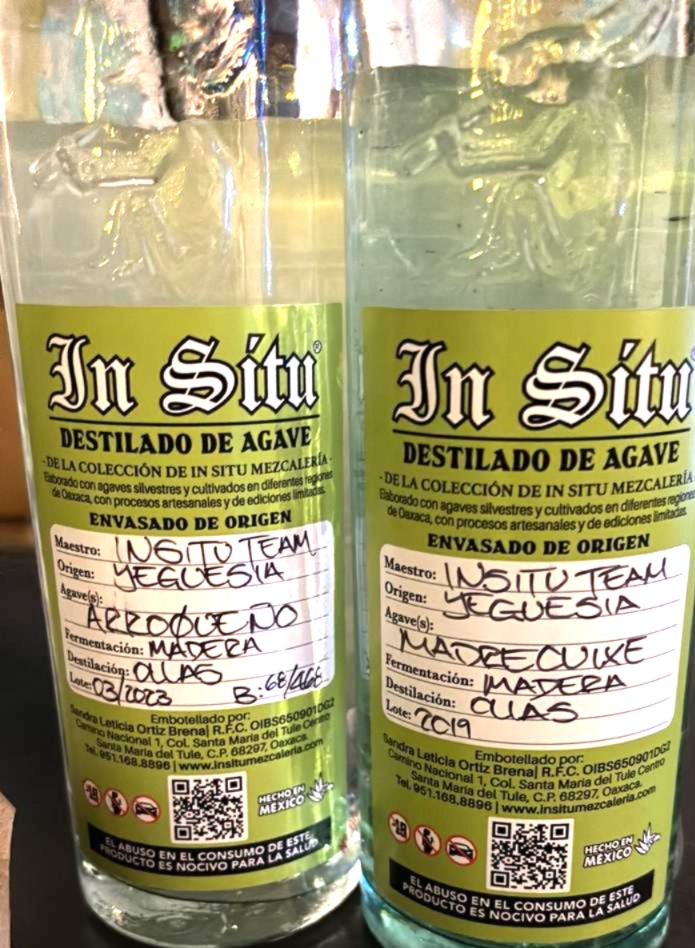
Sandra Ortiz Brena, Communications and Marketing Director at In Situ, offers an account of how that changed at her company. In Situ removed the individual maestro designation from its labels in 2021, in parallel with a broader operational reconfiguration of the Yeguesia palenque under new direction. The timing was not coincidental. “This decision responds to an ethical and productive statement,” she explains. “Mezcal making is a collective process that involves multiple actors, from cutting the agave to distillation. To name only one person on the label simplifies and even invisibilizes the technical and specialized work done by the rest of the team.”
The change, she is careful to note, was not about removing recognition of mezcal knowledge, it was about refusing to concentrate that recognition in a single figure when the reality of production is always collaborative. Consumer response, she reports, has been positive: both at the point of sale and at In Situ’s own bar, consumers value the transparency of the approach and understand that mezcal is the result of collective work. The change has strengthened the perception of authenticity and generated more informed conversations around production processes.
On the question of how sales teams and consumption spaces should navigate the transition, Ortiz is measured. “More than a commercial challenge, this is an adjustment in the communication narrative. The quality of mezcal does not depend on the label, but on its process and what it delivers in the glass.” First, the product validates itself through sensory experience. Then, the label contextualizes it. In that sequence, the absence of a single name becomes an invitation to a different kind of conversation in the glass.
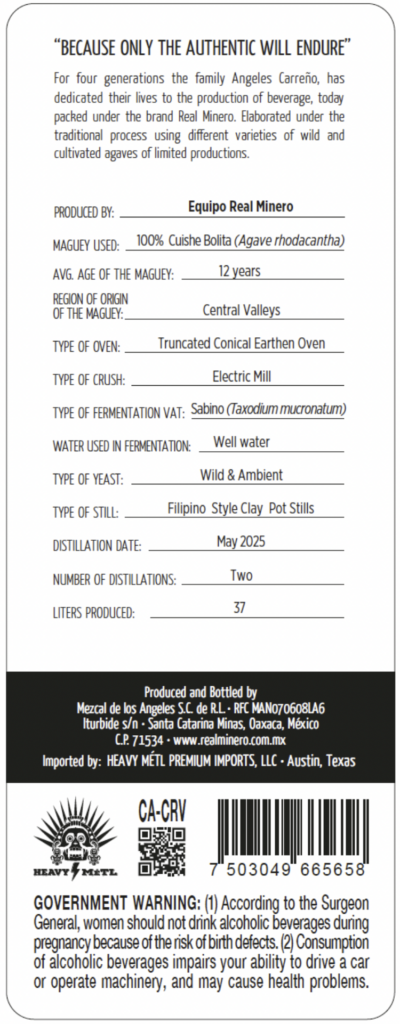
Graciela Angeles Carreño, general manager and self-described mezcalillera at Real Minero, has articulated the philosophical underpinning of this shift with particular force. In an essay published in 2021, she describes mezcal production as fundamentally a family practice, and herself as a cuidadora or caregiver of mezcal.
In Mexico, as she well knows, women are rarely permitted to escape the responsibility of caregiving. Angeles Carreño doesn’t resist this designation. She reclaims it, and reframes it as the very mechanism through which knowledge travels across generations. The knowledge of mezcal, she argues, does not pass through formal instruction from a single master to a single apprentice. It passes through proximity: in the kitchen, while preparing food for the workers at the palenque; in the conversations between women working alongside one another; in the tending of the sick, the maintenance of the household, the thousand acts of daily care that keep the social world of a producing family intact.
When a label credits a single maestro, it doesn’t just misattribute the work. It makes visible one figure while rendering invisible the network of relationships that made that figure’s work possible at all. Starting June 2025, their labels changed to, made by Real Minero Team.
Luis Nogales, director of the Centro de Estudios sobre el Maguey y Mezcal (CEMMEZ), extends this argument into the domain of traditional technique. In a blog post on mezcal de autor, he challenges the assumption that individual maestros created the approaches they use, arguing instead that traditional mezcal production is defined by what he calls the receta colectiva or a collective recipe, shaped by generations of community practice, local ecology, and what he describes as the gusto histórico de la comunidad, the community’s historical palate.
He draws a line between genuine individual innovation such as adding mole to a pechuga, or substituting serrano ham for the traditional chicken breast and the claim that traditional techniques represent individual authorship. The first two choices , he says, might legitimately be called mezcal de autor. The latter cannot, because it belongs to no one person. It belongs to a tradition.
Does the name still matter?
Not everyone in the mezcal world reads the removal of the maestro’s name as a correction or an act of ethical clarity. For many professionals working on the commercial and educational side of the industry, the maestro mezcalero remains an indispensable reference point, an expression of respect or attribution. Seen not as mythology, but as practical, navigational information.
Mapo Molano, bar manager at Café de Nadie in Mexico City, holds a firm position on the matter. For her, the name of the maestro or maestra is not a marketing device, it is foundational technical information, essential to properly educating the consumer. When introducing someone to mezcal, who made it is as relevant as what agave was used or where it was produced. The maestro is a point of entry, a way of grounding a complex and often unfamiliar spirit in a human story that people can follow and return to. For Molano, removing that information from the label doesn’t serve transparency. It complicates an already difficult pedagogical challenge.
Stephen O’Halloran, a spirits specialist based in San Diego who works at Skurnik Wines and Spirits, is watching the change from a different vantage point. As someone who actively promotes In Situ, he has been paying close attention to how the market is responding. So far, he says, it hasn’t affected sales. His reading is nuanced. For In Situ specifically, the removal may matter less than it would for a lesser-known producer, because the brand’s geographic origin already carries its own recognition and credibility. As long as a mezcal comes from Miahuatlán, serious buyers and consumers who know the characteristics of that region will continue to seek it out. The place, in a sense, functions as the author. “It’s an interesting shift,” O’Halloran notes, without committing to a verdict. Whether the same logic would hold for producers without an established regional reputation is a question the market has not yet answered.
Ana Jacinto, a mezcal curator and cultural promoter in Oaxaca, remembers how before the use of the term maestro, most producers would be called “palenquero” or “mezcalero”. She likes using maestro/maestra as a way to recognize the importance of the job they do. Since there is no school or diploma to validate their knowledge and/or trajectory, this is the way to recognize not only their craft but their willingness to keep a tradition alive.
What does this mean on the ground level?
In the palenques I have visited, the work was never done by one person. There were siblings hauling wood, cousins tending the tahona, mothers or grandmothers present at all times.
Take the family behind Gozona, a mezcal whose label carries the names of Luis and Sergio Juárez. Ask them who makes the mezcal and the answer is immediate: it is everyone. Tío Sergio is direct about this. The work is shared, the knowledge is distributed, and the names on the bottle represent something larger than themselves. Tía Sara’s family used to produce more mezcal than Tío Sergio’s—a well-known producing family were their regular buyers. There were 200-liter barrels kept purely for storage, and 35-liter barrels loaded onto donkeys for transport. Tía Sara’s brother still produces today. As the eldest of six siblings, he inherited the family land and continues the practice—a detail that opens another conversation entirely, because land tenure for women in rural Mexico remains deeply unequal.
In Tía Sara’s own telling, everyone in the family knows a little of everything. But she has a particular affinity for distillation and tepeztate. Her knowledge is an accumulated sensitivity developed through years of proximity and attention. She is also a traditional cook, part of a group recently recognized and certified by the federal government. Her mole is what she is formally celebrated for. Her understanding of distillation is what she carries more quietly, without a certificate to its name.
In San Pedro Totomachapan, the family behind Casa Celis offers another version of this story. Martha Pablos, a retired schoolteacher recognized in her community, is among the few people of her generation still working in mezcal. Her cousins lost interest—they studied, migrated, moved on. The continuity fell to those who stayed. Casa Celis, founded four years ago by Martha’s son Adiel, a trained dentist, is both a family project and a deliberate act of recovery. Before 2022, the mezcal they made had no classification, no formal label, no category. It was mezcal chapero—house mezcal, made from whatever agave was ready. Martha used to travel to Oaxaca City with Adiel when he was a university student, selling mezcal on the side to make ends meet. The brand came later. The practice, and the care behind it, came first.
The day I visited Casa Celis, the family fed me, showed me around, and folded me into their morning routine without ceremony. Martha came out to join us despite not feeling well. When I asked, she mentioned almost in passing that she had had an abscess on her leg for several weeks. She said it the way you say something you have learned to manage alongside everything else that needs doing. There was no complaint in it. She came out anyway.
There is something to the observation that the producers now questioning the maestro narrative are brands with history, with established reputations that predate the mezcal boom. They can afford to remove the name because they built their credibility before the buzzwords arrived. They have a sense of how it was before having to create their brand. For a newer producer entering a saturated market, the calculus may look very different.
What this debate ultimately surfaces is not a question about labels. It is a question about systems. It is about the conditions under which traditional knowledge enters a global market, who gets to define the terms of that entry, and what gets lost or distorted in the process.
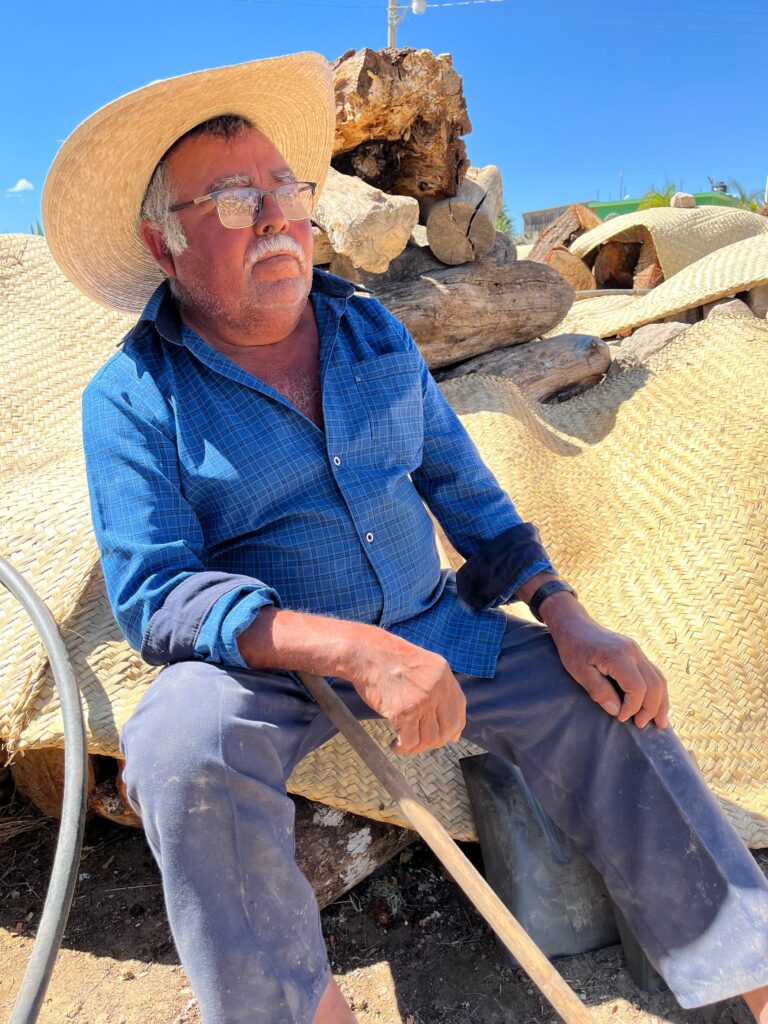
The name of the mezcalero as a cultural expression
There is a passage in Graciela Angeles Carreño’s essay that cuts through the entire debate with quiet precision. She writes that within their own communities, producers do not call themselves maestros. They are tíos and tías, uncles and aunts. The title of maestro arrived from outside, and younger generations, drawn by the visibility the mezcal boom has made possible, risk losing something essential about their own identity in the pursuit of that external validation. The desire for fame, she warns, can become a quiet form of self-erasure.
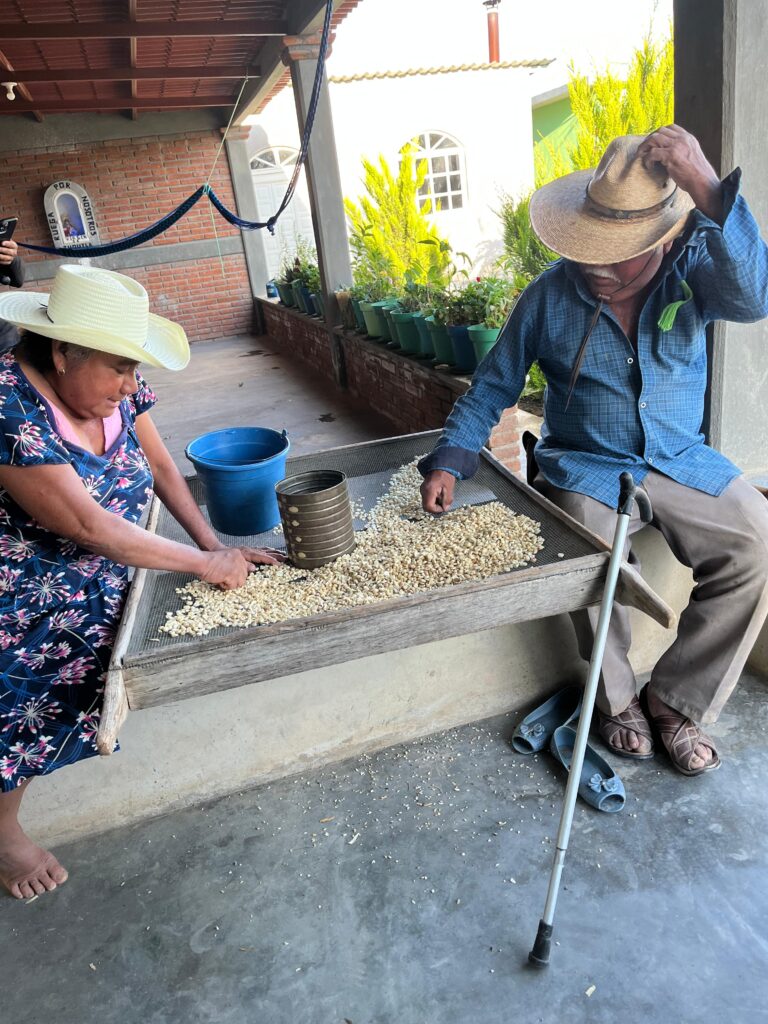
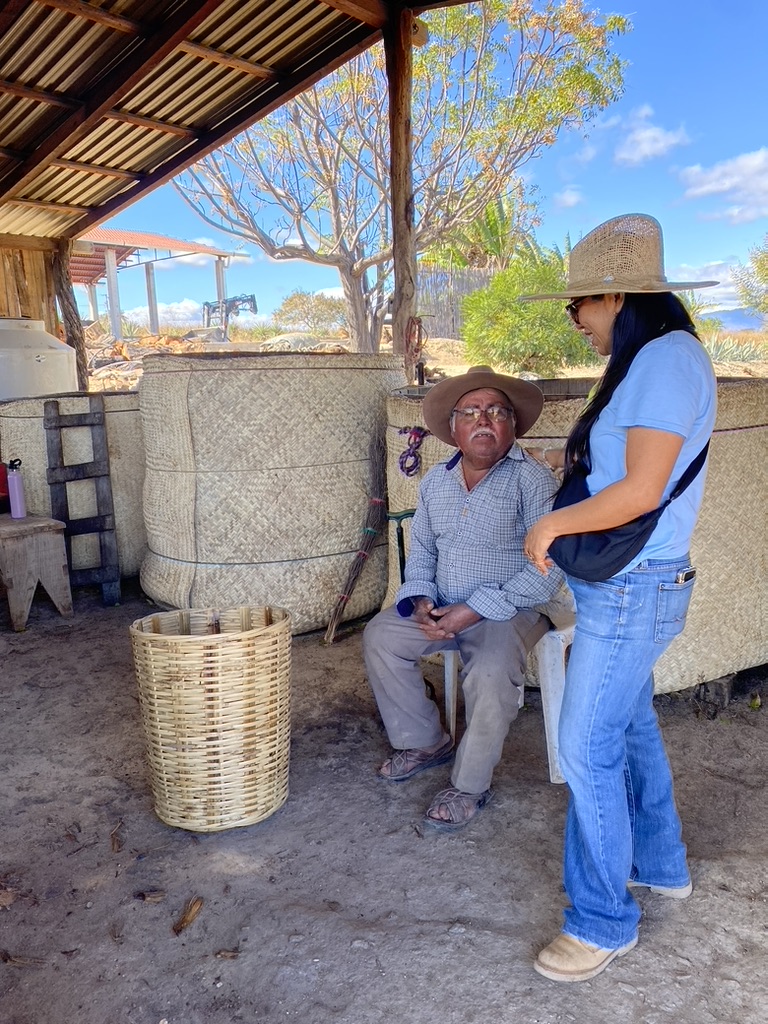
On the last day of my most recent trip to Oaxaca, I accompanied Ana Jacinto to visit producers Víctor Ramos and Natalia Sánchez in Miahuatlán. It was a brief visit—barely an hour before heading to the airport—time enough to taste a couple of mezcales, watch the distillation, move through the space that this couple have shaped over a lifetime of work.

What stayed with me, besides a 2023 batch of Coyote, is the breakfast that Tía Natalia had prepared. It was not elaborate in the way that things prepared for visitors sometimes are. It was careful—grounded in a form of attention that comes from familiarity, not from the need to perform hospitality.
Jacinto was born and raised in Valles Centrales and taught by her grandparents to use tio or tia when talking to any senior person in their community. The practice varies across pueblos and regions, shaped by the diversity of language and territory, but its logic is consistent. It situates people within relationships rather than titles.
To call someone Tío or Tía signals proximity, continuity, and mutual recognition within a living social fabric. The figure of the “maestro mezcalero,” by contrast, operates in a different register. It translates that knowledge into terms that are legible beyond the community—terms that can travel, circulate, and resonate with broader audiences.
This does not make one more authentic than the other. For many, “maestro mezcalero” has become a meaningful form of recognition, one that acknowledges skill, authority, and trajectory. But it does not fully replace the relational language from which that knowledge emerges .
What conversation do we actually need?
Neither of these families map neatly onto any side of the debate about whether the maestro mezcalero should appear on the label. The knowledge that sustains their brands lives in their mother, their family, and the accumulated memory of people who kept making mezcal long before there was a label to put their name on. These stories do not argue for one narrative model over another.
For the current state of mezcal, maybe we need to ask a deeper question. What narrative best serves the communities that produce mezcal, rather than the fluctuations of the market that consumes it? I don’t think there is a single answer. But it is one worth asking out loud, with the people who actually make the spirit present in the room.
In that sense, figures like the tía offer not a replacement for the “maestro mezcalero,” but a way of seeing its limits. Not a brand, nor a biographical note, nor a category on a label—but a form of knowledge inseparable from the relationships that sustain it. Between these ways of naming lies a tension the industry has yet to fully resolve: how to represent a collective practice without reducing it to a single name.
Perhaps this is where the conversation about the label is ultimately heading—not toward deciding whose name belongs on the bottle, but toward recognizing that no single name can fully account for what is actually there.
This, perhaps, is what the conversation about the label is ultimately reaching toward. Not a resolution about whose name should or shouldn’t appear, but a recognition that the most honest narrative for mezcal is one that begins with what is actually there: in the relationships between people who have been building this knowledge together in the past and present, and who have their own names for what they are.





I really like your approach to this issue, and I think it’s interesting to see how people have moved away from, and/or are rethinking, the idea of the “maestro/a mezcalero” in the way they present their products. Great writing!
Removing the master distiller’s name from the bottle is nothing less than cultural appropriation.