In March of 2026, the Associated Press published an article titled, “Mezcal’s popularity is booming in the US. That comes with a growing environmental cost in Mexico.”
The author outlined familiar numbers: production of mezcal leapt from one million liters in 2010 to 11 million liters in 2024. In examining the “growing environmental cost in Mexico,” the article cites a study, led by Rufino Sandoval-García, that examines how mezcal production has accelerated deforestation in Oaxaca.
The article highlighted the usual roster of concerns regarding the mezcal industry’s impact on the environment. The rise of monoculture as farmers plant cloned espadín–that old devil’s bargain of gaining short term efficiency at the cost of reducing biodiversity and creating crops that are more susceptible to disease. How growing from clones has caused a decline in endangered bat populations that pollinate agave when it goes to seed, while simultaneously increasing a reliance on industrial food chains by obliterating the age-old milpa system of companion planting. Plus the issue of water use and the pollution caused by run-off from mezcal production. Whew, I got it all into one paragraph.
The story caused ripples of concern among some aficionados. But here at Mezcalistas, our biggest question was: Why now?
Mezcal sales and production numbers have been flat or declining since 2022. Mexican academics have been studying the environmental impact of the mezcal industry for decades. Books have been published about it in both Spanish and English, including in the popular press–see Granville Greene’s aptly titled The Mezcal Rush, which hit the shelves ten years ago, after ten years of research. So mezcal is not exactly booming and the environmental issues aren’t news.
The AP piece isn’t totally wrong–the popularity of mezcal continues to cause environmental problems in Oaxaca and elsewhere in Mexico. It’s just that it feels a bit odd to trumpet this as news when things are trending in a different direction. The widespread deforestation and accelerated planting of cloned espadín happened at a time when every year was better than the last–for mezcal sales. People were caught up in that bubble. Times have changed.
What the article fails to note is that as the volume of mezcal sales dramatically increased, so did the volume of the conversation about conservation, as well as the quantity of scientists, advocates, and producers who are working to change that conversation from alarmist to solution-oriented.
As mezcal sales gently decline, these projects remain tenacious–people are sharing information, creating frameworks for the future, planting for the long-term. Which is why in we want to take a look at what’s working–and who is doing the work.
Back when my interest in mezcal was centered on stopping at roadside palenques to fill plastic jugs with cheap and tasty booze, Graciela Ángeles Carreño was already synthesizing her family’s ancestral commitment to conservation with what she was learning as she studied sociology in rural communities across Oaxaca. She was interested in projects–what worked and what didn’t. She was interested in creating sustainable systems in her home community of Santa Caterina Minas, Oaxaca. She wasn’t alone in her ability to see a bigger picture.
For the Ángeles family and a number of other like-minded producers, the solutions started long before the alarm bells began ringing.
Graciela describes her father Don Lorenzo as both a campesino and a visionary. Campesino translates roughly to peasant, and Graciela speaks it with pride. “He was a guy who always planted corn–he planted corn no matter what,” she says fondly. He also planted a lot of maguey. He was obsessed with trying to save rare agaves from extinction and supporting biodiversity.
Don Lorenzo was the first in his line to read and write, but he was only able to attend primary school for four years. He made sure his seven children had better educational opportunities.
Graciela, who has a doctorate in rural development, wants other people in her village to have similar opportunities.
“We have the thesis that if a community increases its education level, the quality of life of the people will improve,” she says.
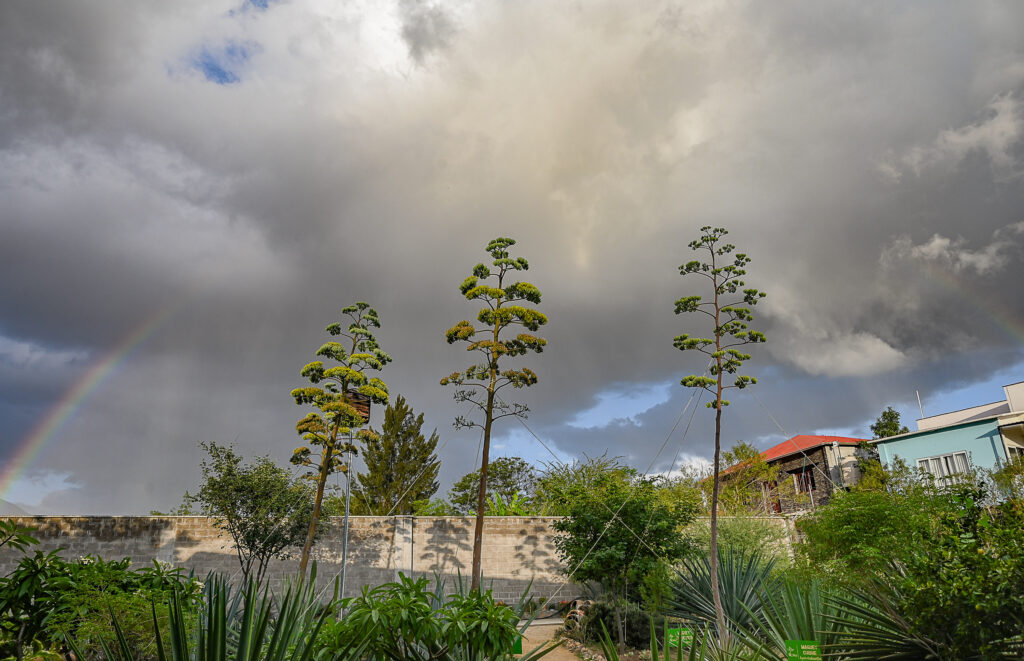
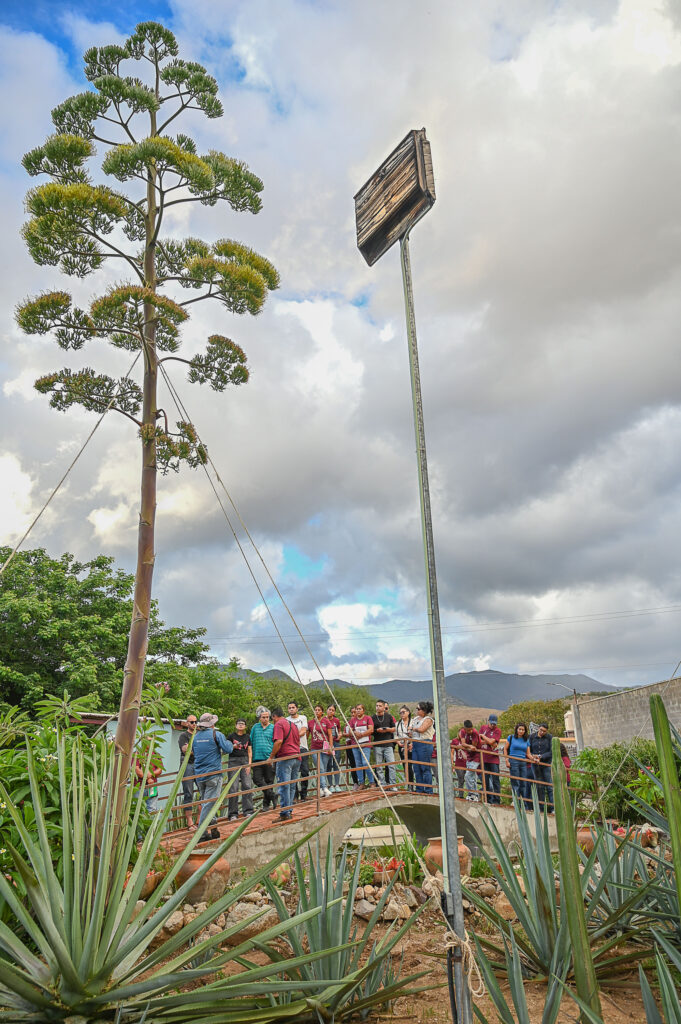
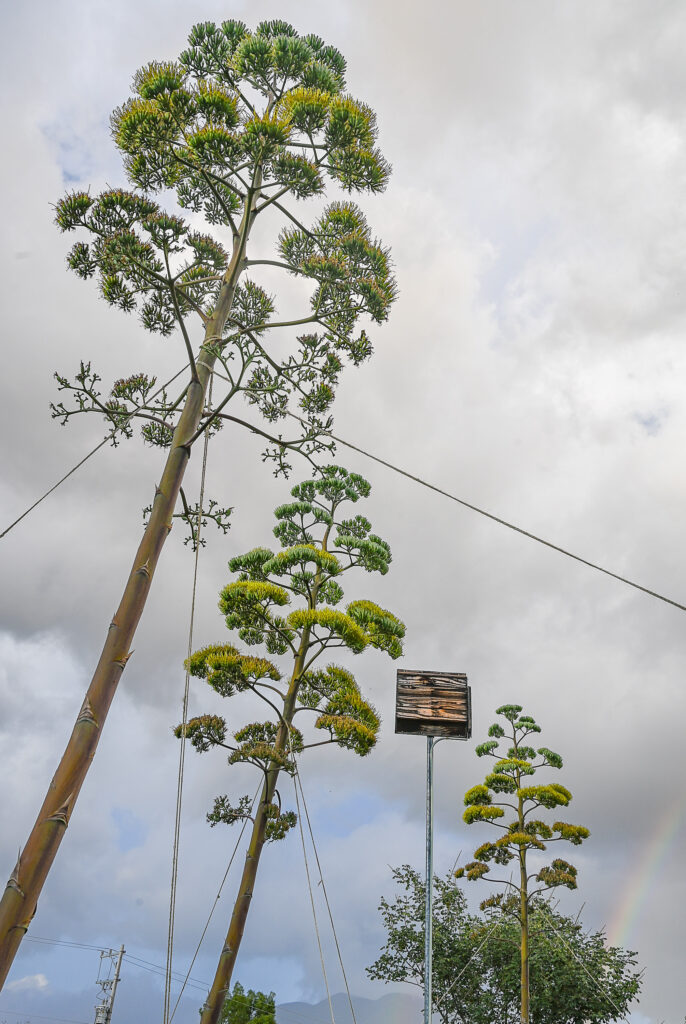
In 2013, the family built Biblioteca El Rosario, a village library and community center. In 2018, they founded Proyecto LAM to honor their late father and to continue his work improving biodiversity and rescuing rare agaves from possible extinction. Now directed by Magda Padilla del Muro, the project includes an interpretive garden where agaves are allowed to go to seed, and a seed bank to catalog, preserve, and replant. The gardens allow them to more closely study the life cycles of rare agaves. Villagers can stop by to pick up free agave seedlings, as well as saplings and other plants.
“Proyecto LAM and the library represent the values of Mezcal de los Ángeles,” Graciela says. “Our values are honesty, identity, loyalty, respect, and social and environmental responsibility.”
Sustainability has multiple pillars. While studying sociology in rural Oaxaca, Graciela had seen enough abandoned projects to know that the library, gardens, and seed bank needed an ongoing source of sustenance.
“Since the beginning I realized I don’t really know how to go out and ask people for money for the project,” she explains. “It doesn’t feel comfortable to me. I don’t know how to do it. But what we do know how to do is make and sell mezcal. So wouldn’t it be better to do something with the mezcal?”
Every year Real Minero sets aside three lots of mezcal that they sell to support Proyecto Lam. The project is also supported by the sale of souvenirs, the money from tours, and workshops at the palenque. (Real Minero has two dedicated rooms for visiting students or other academics, who teach classes at the palenque or for free at the school, where the entire community can benefit.)
The family believes that sharing this type of knowledge is of the ultimate importance.
An example is their annual Noche de los Murcielagos (night of the bats) in the interpretive garden at Proyecto LAM, which includes a dinner and dialog with scientists who specialize in bats and/or agave. The idea is to raise awareness of how bats pollinate agave, and why letting agave go to seed is of vital importance to endangered bat populations–and agave biodiversity.
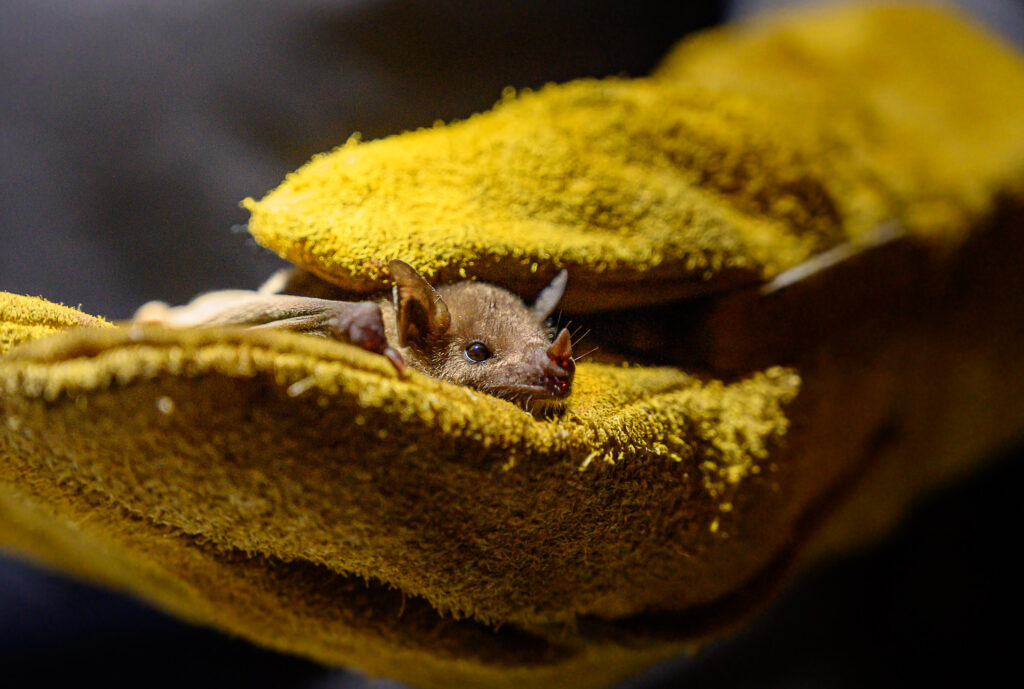
The event was originally conceived as an educational opportunity for the staff, but Proyecto Lam now offers some seats to the public. (The 2026 event will be on June 20.)
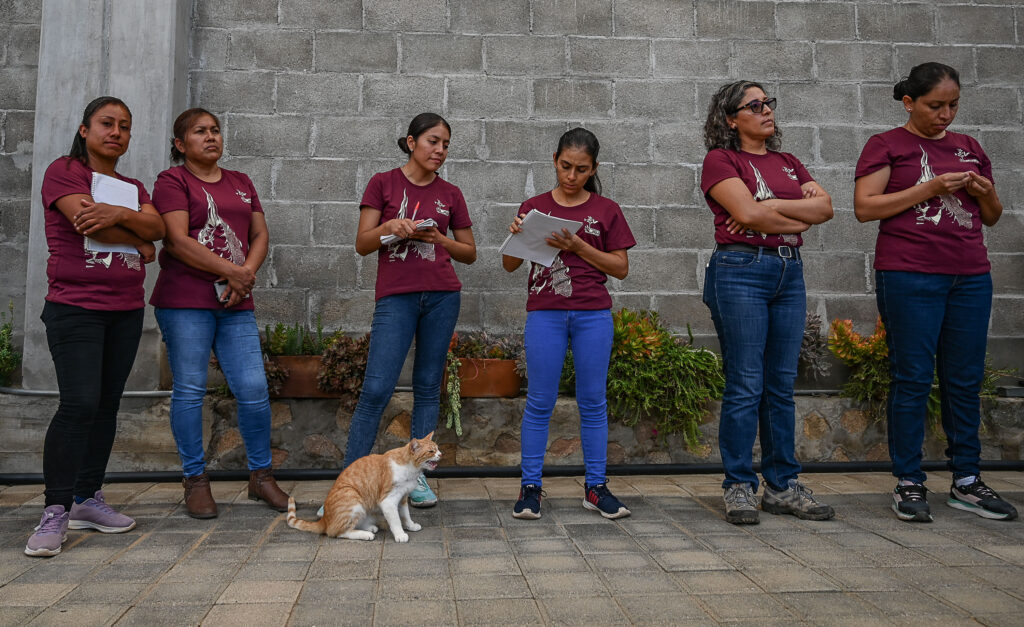
“We have a really beautiful dialog,” Graciela says. “Part of what we’re doing here is citizen’s science, which is to say taking information that’s generated at centers of investigations and at universities, and making it accessible to everyday people, to the layperson.”

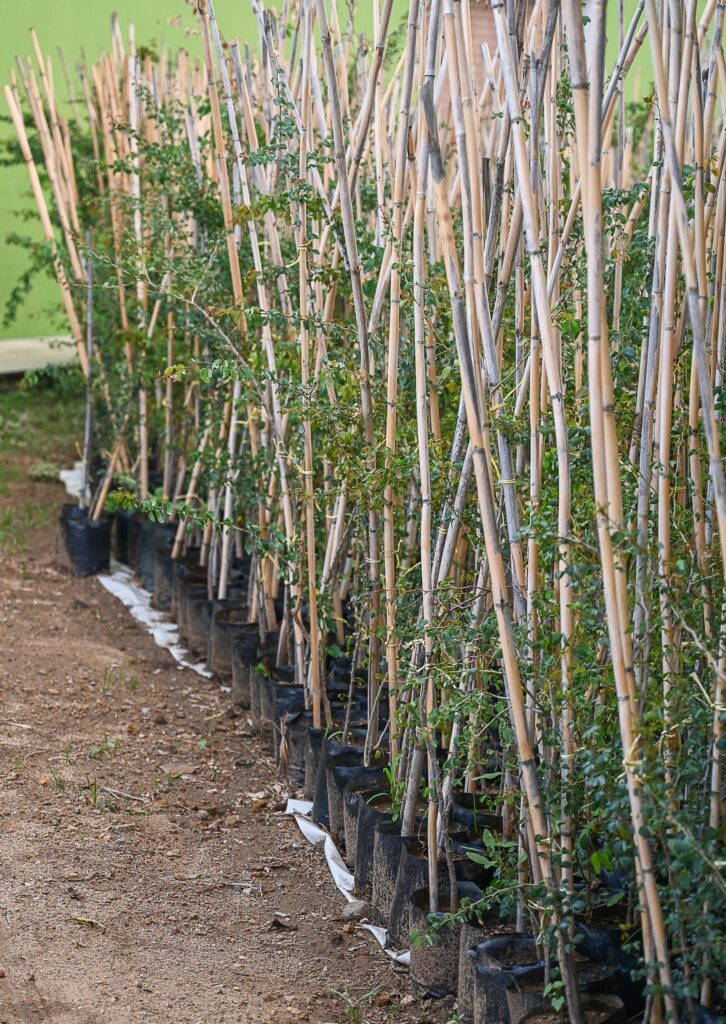
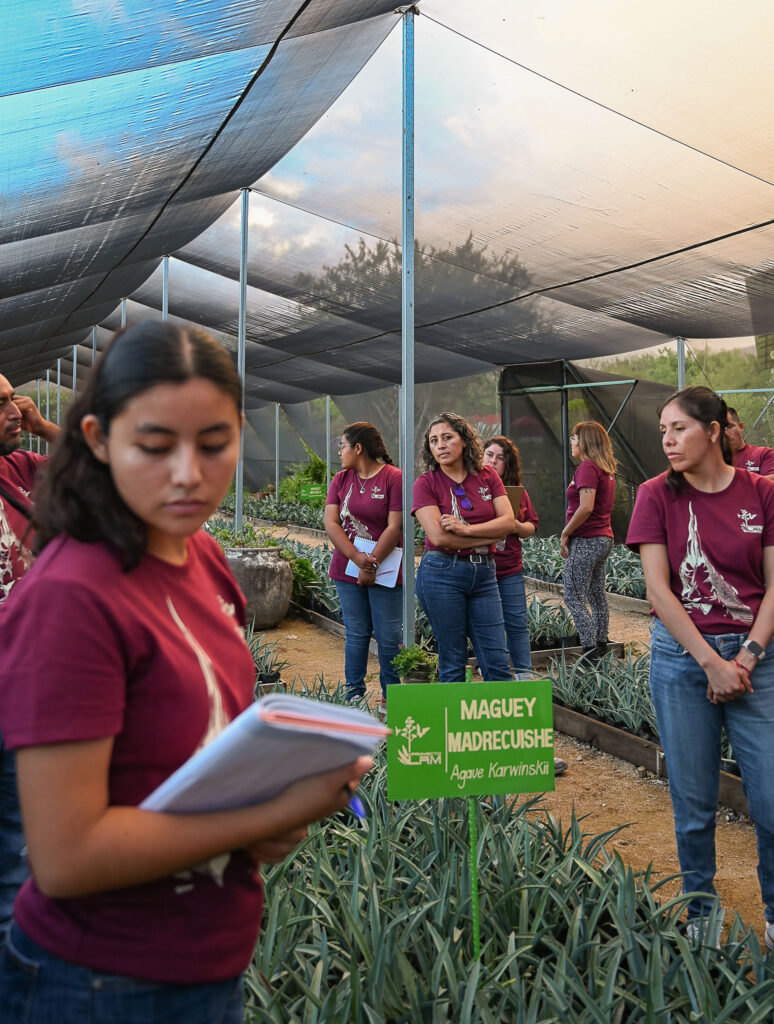
But to Graciela, education isn’t top down in our traditional conceptualization but rather horizontal, with knowledge being shared between farmers, producers, and academics. Real Minero and Proyecto LAM also facilitate mutual aid networks for agaveros and palenqueros.
She notes that some producers sell their mezcal to big companies. In those cases, she asks that the brands pay for the producers to consult. But it’s different in the case of other small-batch palenqueros.
“It is the ethos of Project LAM to share information we’ve gleaned with other producers, other producing families—and in those cases there isn’t a charge,” Graciela says. She views these meetings as opportunities for conversation and trading information.
“When it comes to education, it’s not just about having some expert come in and talk to us, it’s about us learning from like-minded people,” she tells me.
When she says like-minded people, two families spring to her mind: the Vieyras of Michoacán and the Partidas of Jalisco. She has known both Emilio Vieyra of Don Mateo de la Sierra Mezcal and Miguel Partida of Chacolo for about twenty years.
Chacolo and Real Minero have collaborated to gain recognition for producers, and they share a like-minded importer (Heavy Métl). But the connection goes deeper than that.
“Those are the projects that we have real similarities with–in terms of management of the agave, in terms of our perspective, in terms of our conservation, and in terms of being family-owned projects in a rural environment,” she says.
In 2018, I had the good fortune to witness these commonalities when I visited the vinata of Don Mateo de la Sierra, which is owned by the Vieyra family. Emilio met us in Morelia in his pickup. In his cowboy hat and crisp jeans, he had an air that was at once jovial and somehow simultaneously serious. We hopped into his truck and ascended into the mountains, the suburbs giving away to pine forests, the road turning to rutted dirt.
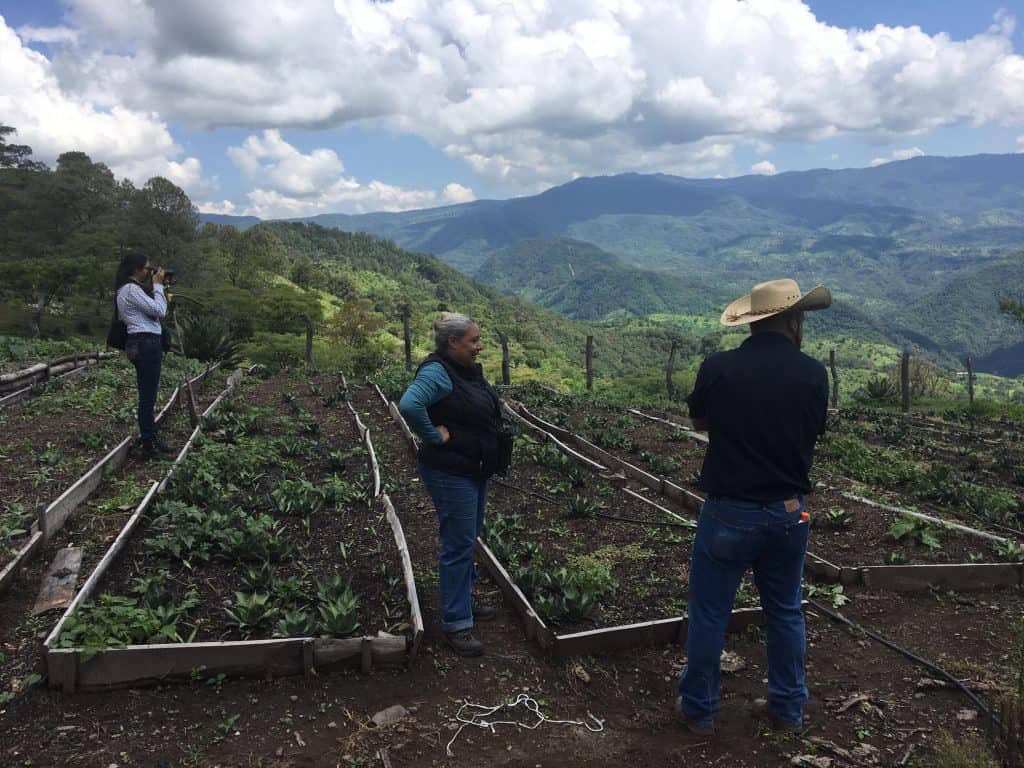
The large but picturesque vinata was perched on the red dirt hills overlooking the sonorous forest. It was my first time at a Michoacán vinata, and I would have been happy to just breathe the sweet, yeasty air while watching the crew feed the fires beneath the stills. But Emilio said he wanted to show us something really special–the family’s maguey fields higher up in the mountains.
I’m typically interested in seeing agave, but cramming back into the truck wasn’t appealing to me. I’d seen agave fields, after all, but I had never witnessed mezcal production in Michoacán. How far up into the mountains? I wondered. Emilio had a certain gleam in his eye.
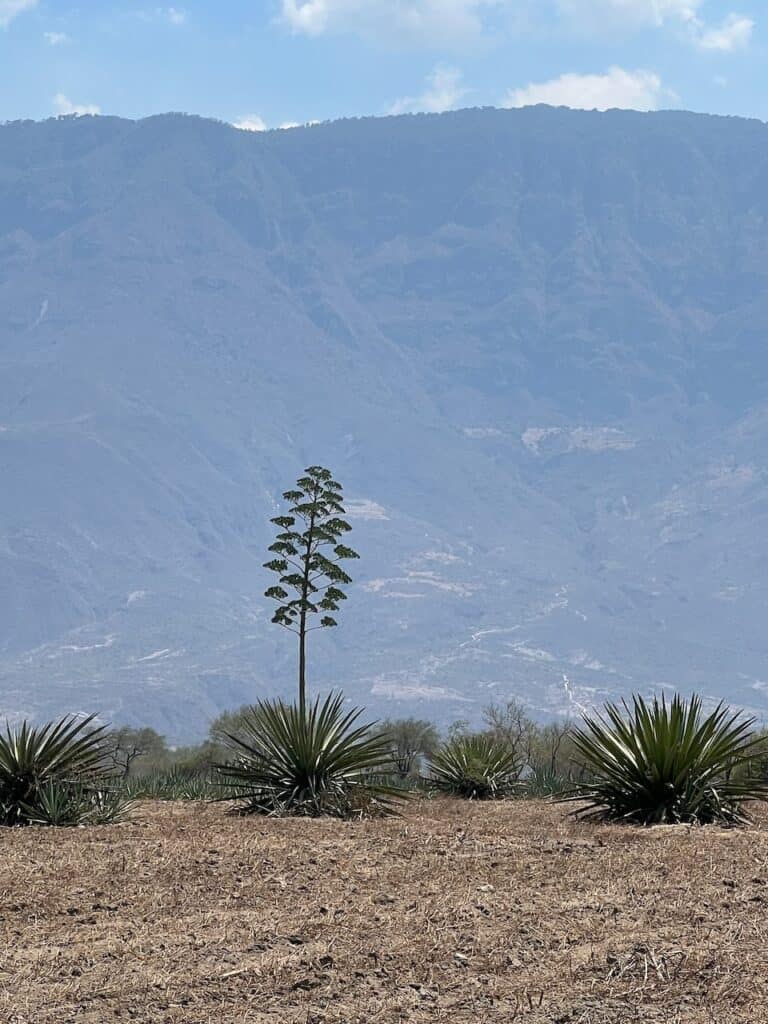
What seemed like an hour of rough road later, I could see why he thought it was so important. We were looking out across a rolling landscape of giant cupreata, which had a spiky, concentric beauty that reminded me of enormous sea anemones. Instead of rows, they grew in a seemingly wild pattern, interspersed with trees and nopal. Here and there, quiotes loomed up, flowering against the cloudy sky. With the dark, misted mountains encircling us, it felt like a land before time.
The beauty here was deeper than a pretty view. In addition to re-seeding semi-wild agave, the Vieyras have a nature reserve on their property and actively replant pine forests. As mentioned, this was in 2019, when mezcal sales were nearing their apex and the conversation about the deforestation of wild agaves was reaching a fever pitch. But these giant semi-wild cupreata were clearly a testament to forethought that was not a reaction to this concern, but rather preexisting values.
Emilio is a sixth generation mezcalero in a state that has still not yet become a focal point for mezcal production. Seeding semi-wild maguey on a large scale was not an initiative, a response to government mandate, or any type of “green-washing” for publicity. It is just a way of life. Later we went back to the vinata and he took us into his cellar, where a treasure trove of mezcal was resting in glass. He shared a few particularly special tragos with us–some of the best mezcal I’d ever tasted. We were delighted and he looked gratified, but unsurprised.
The Pollinator Partnership has recognized Emilio for his commitment to reforestation, for allowing at least 5% of his agave to go to seed, and for sharing his knowledge of sustainable agriculture with his peers. In 2019, Graciela brought the Real Minero team to the ranch to learn and share knowledge.
On that same trip they went to visit the Partida family ranch and taberna outside of Zapotitlán del Vadillo in southern Jalisco. Like Real Minero, the Partidas facilitate events where scientists, producers, other experts, and laypeople can exchange knowledge. This January they hosted their seventeenth annual “Saboreado Chacolo,” which featured presentations from Dr. Carlos Lucio and Alondra Flores on the Sello Verde project and the “Biological Corridor of Southern Jalisco” with other speakers including Paloma Rivera of Tianguis Mezcalero and agave educator and academic Clayton Szczech.
As is fitting at a taberna, the event included a dinner made with food grown on the farm, a walk through the agave fields with Miguel Angel Partida, and-naturally-a tasting of their delicious destilados, which are made outside of the Denominacion de Origin (DO) for mezcal and the nascent DO for raicilla.
By some botanists’ reckoning, Jalisco is second only to Oaxaca when it comes to diversity of agave. The Partidas grow 16 varieties of agave on their land, and are increasing the quantity they grow from seed. They are working with ecologists and a coalition of other small producers to defend, promote, and protect the rich biocultural heritage of the region.
The family are big believers in making the most of the local ecosystem. Instead of attempting to repel fauna, they’ve planted mesquite trees in their fields to attract birds and other animals that feed on the pests. Companion planting provides corn, squash, and chiles for the family to eat while simultaneously creating habitat for iguanas and rabbits that, along with rambling burros and cows, serve as natural weed control. This is all feasible, of course, because none of these animals are likely to nibble on the agave.
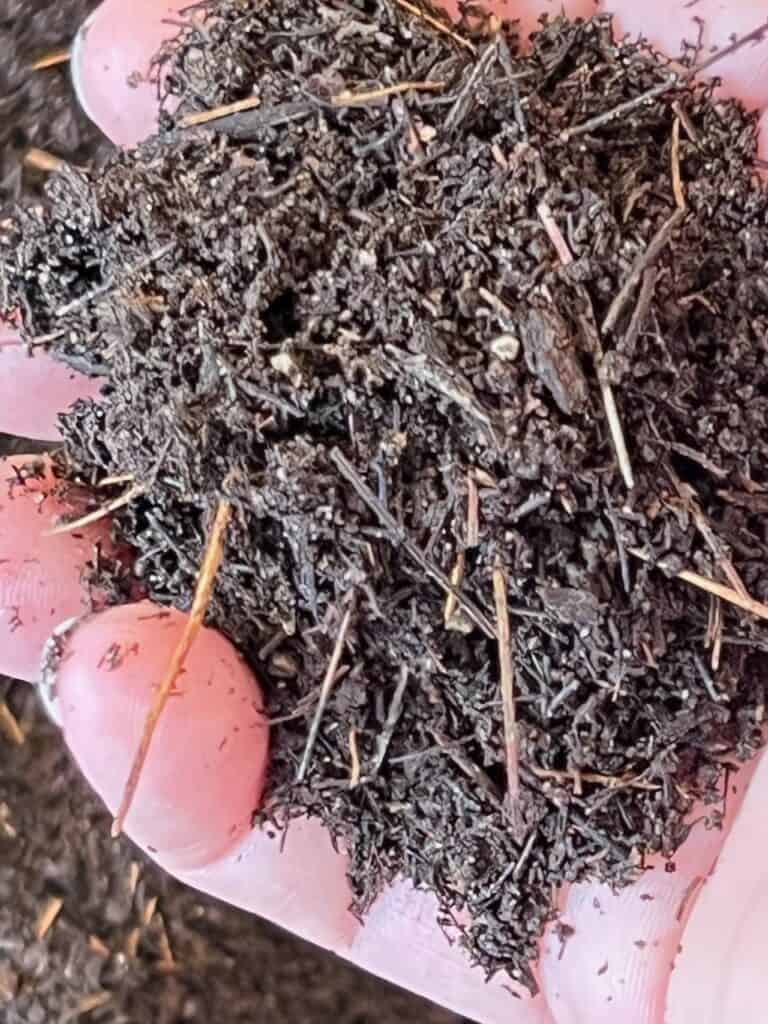
The ancient milpa system is a cornerstone of their agriculture, but Miguel Angel says they’re always open to learning. They consulted an agronomist on how to better grow agave from seed, and three years ago they implemented a process to transform vinazas, the acidic waste from the distillation process, into compost for growing more agave and corn. On the production front, they’ve created a closed circuit system for their stills to conserve water.
Fortunately, these three families are not alone when it comes to composting vinazas, growing agave from seed to promote biodiversity, creating organic pesticides, and practicing companion planting. It’s inspiring that these practices are regaining a significant foothold in an ever-changing industry–as is the commitment to sharing knowledge and creating community institutions that foster sustainability that extends beyond the fields. While some mezcaleros have never veered away from sustainable practices, and others are returning to the fold, countless others are experimenting with new methods of sustainability–like outfitting their distilleries with solar power or minimizing deforestation by experimenting with other heat sources for distillation.
To get an idea of what a larger entity is doing on the sustainability front, I spoke with Gabriel Bonfanti, the director of Sustainability & Responsibility for Del Maguey. From the get-go, he was on the same page about the meaning of sustainable.
“The hot topic in many cases is the environmental sustainability,” he says. “But we like to frame it from a social sustainability and also just the sustainability of the work itself, right? Carrying on traditions that happen in these villages and then the issues that come along with that,” he says.
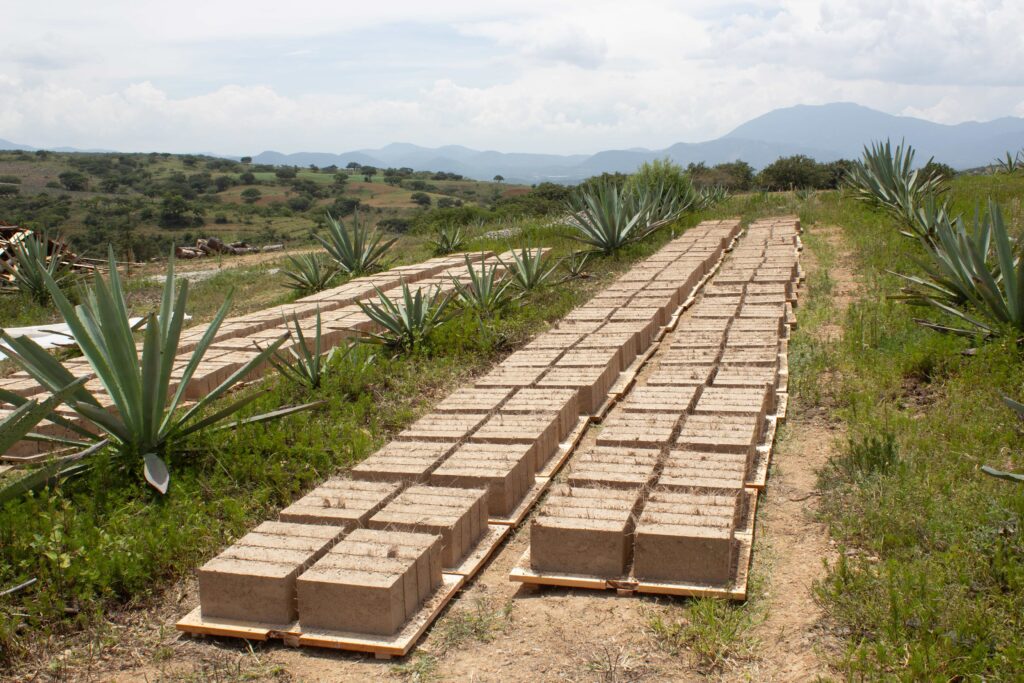
At Del Maguey, much of the focus is on helping improve standards of living in communities. This means installing solar panels at off-the-grid palenques or transforming bagazo and vinazas into bricks for building projects, including eco-friendly bathrooms and kitchen ovens that use less wood and reduce the impact of smoke on home cooks.
The brand was acquired by liquor giant Pernod-Ricard in 2017, so it’s surprising that so many of their projects seem small and personal–helping palenqueros establish beehives in Las Milpas or reinforcing cisterns for a family who has built their own water circulation system in Santa Catarina Minas. Gabe says this reflects a long-standing ethos.
“The business model of Del Maguey has always been to work in these eight or nine different villages.” He emphasizes that they are there by invite, adding, “And, at the same time, if there’s scaling, then how can we support the growth of their business? Because it’s their business model as well.”
Some of their most successful initiatives were spearheaded by the families they work with. While working on these tailored projects, they are investing in research that seems to be leading to sustainable innovations that could be applied on a larger scale (more on that in an upcoming article).
Agave reforestation is another pillar, Gabe says. In conjunction with the La Fundación Alfredo Harp Helú Oaxaca, they were able to grow a massive quantity of agave from seed.
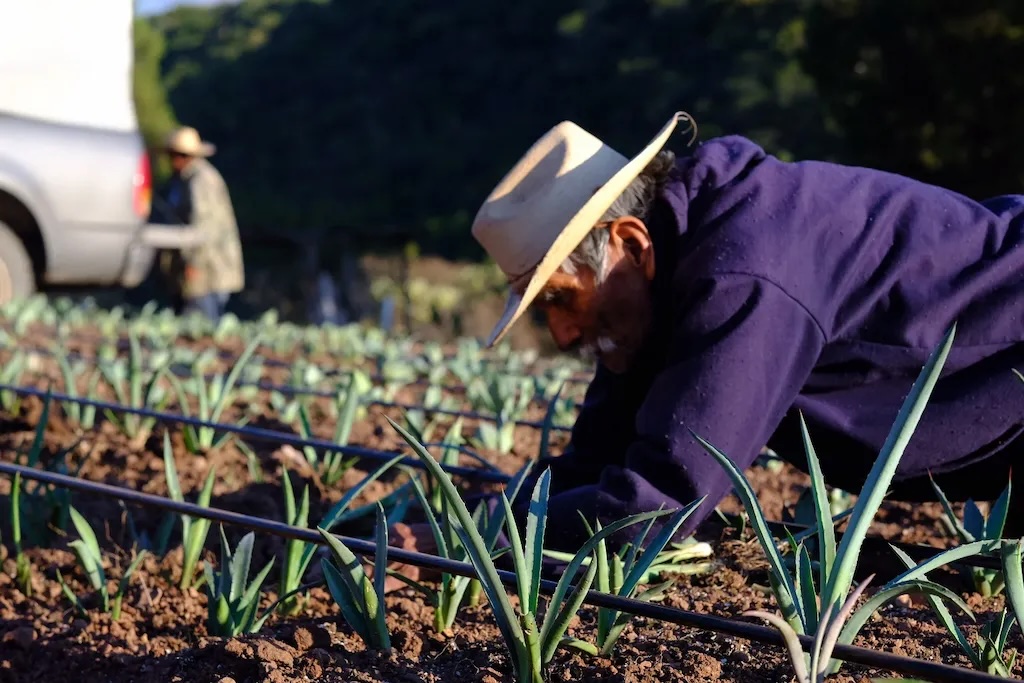
“Eventually that project turned into 100,000 plants that we donated directly to our producer family in Santa Maria Alvaradas, because they produce tobalá, tepaxtate, jabalí, and some cuiche for us,” Gabe says. “Some of the tobalá is already coming to maturity. In some cases, they’re leaving it to flower, while others can be used in production. The family donated about 10,000 of those plants to community members so they can grow their own tobalá and jabalí. So that’s been the most successful reforestation program that we have.”
But that, he says, is from a brand perspective. Because they are working with family producers and established communities, he stresses that Del Maguey doesn’t always have control of a project.
“Sometimes it’s building from scratch, but sometimes it’s building from what families are already aware that they need to be doing. Sometimes it’s returning to practices that existed in the past,” he says, seeming mindful of the age-old system of usos y costumbres, which Joahna Hernandez so beautifully outlined.
“Some projects require the entire community, which has their own uses and customs, to be voting on the type of projects they want on their land,” he explains.
When I ask Gabe for his take on the AP article, he looks first to the positive.
“We’ve tried to frame sustainability from a couple of different perspectives because it’s a broad topic. And then it became a hot topic.” he says. “But people have short memory spans, and they forget about it. And then when something like a new article comes out, and people are like, ‘Isn’t that old news?’ Well, it could be old news, but, because of the nature of agave spirits, these are ongoing issues, right, that aren’t going to be solved overnight.”
He says Del Maguey is working to mitigate monoculture through their own agronomy program, which allows them to encourage regenerative agriculture and avoid purchasing agave that displaced forest or food crops when it was planted.
“What this [AP] article did is brought back mostly the visual of monoculture in Oaxaca and what that’s doing to the hillsides,” he acknowledges.
He’s likely referring to the AP article’s image of a “big-agriculture” style espadín field emblazoned with the words “Mezcal production surges as popularity takes off.”
“It still looks like it did five or six years ago when it started to be an alert,” Gabe says of the current landscape which, as the article points out, has been drastically changed by the widespread monoculture .
Agave’s long growing cycle means that the landscape doesn’t change quickly. Even as demand has fallen and some producers are moving away from monoculture (thanks in part to the work of Proyecto LAM and similar organizations) the many fields planted during the height of the boom still present an alarming visual.
In a closer look at the AP article, the problem is actually more in the framing and the bombastic headline, which implies that the mezcal boom is still at its height and that the related environmental problems are breaking news. The article itself is more nuanced, outlining real environmental concerns, while simultaneously acknowledging that the growth in popularity of mezcal has created much-needed income sources in rural communities.
My re-read gets me thinking about how stories are framed by editors and publishers who are trying to attract traffic—something I have unfortunately experienced first-hand many times.
In 2018, I wrote my first long-form article on the mezcal boom’s threat to the environment. At the time, my publisher at The Breakthrough Journal was more focused on the problematic aspect of rare mezcal as a commodity than he was interested in what distillers, farmers, and scientists were doing to mitigate the problems. Much to my chagrin, my editor titled my article: Bad Liquor: How Marketing Primitivism Threatens Mexico’s Environment and Rural Communities.
While “Bad liquor” sounded catchy, and the rest of the title did relay part of the problem, to me it felt reductive. Yes–I did want to address how some producers were being exploited by outside buyers who were commodifying their rural traditions. But I didn’t want to cast producers–as a group–as victims who were lacking in agency or foresight.
I’m not sure I was able to thread that needle at the time, so I’m grateful to revisit the topic with a more nuanced understanding of how much of the industry’s move back toward sustainability is coming from producers who are retaining or reviving inherited practices while keeping an open mind to knowledge from other regions–and scientists.
I’m not looking at the mezcal world through rose-colored glasses. The problems outlined in the Associated Press article are real. Many people continue to cause great environmental and social harm in the name of profit. Some of them pretend to be “green” while doing very little. The exploitation of producers continues. But the picture is bigger than that, and it’s encouraging to look beyond headlines. When it comes to agave spirits, the mainstream press is typically twenty steps behind and missing salient points.
On a negative level, one salient point is that the declining US economy means that the market for high-end mezcal is dropping faster than the market for mid-grade mezcal. This means that the agaveros and palenqueros who are doing the most for biodiversity and community development are being hurt harder than the producers of the “cocktail mezcals” that are typically at fault for the large-scale monoculture. So the people at Chacolo, Real Minero, and Don Mateo are not exactly prospering from the fruits of their good deeds.
That said, they persevere. I acknowledge that this is a gallery of anecdotal evidence, but it represents a real movement. In these times of dissension and division, there’s something heartening about people that are working so hard to learn, to share information, and to forge a path forward–even when it’s not always profitable.
As Miguel Angel Partida reflects, “There’s no recipe for making mezcal. You learn it, you get involved–everything is empirical. It’s interesting that this is ancestral knowledge. We don’t want to lose that. We want this to go on.”








Wonderful article, thank you!
And in third paragraph please change to “susceptible to disease.”