Photojournalist Anna Bruce travels into a cartel hot zone on a quest to learn more about Guerrero mezcal. All photos by Anna Bruce.
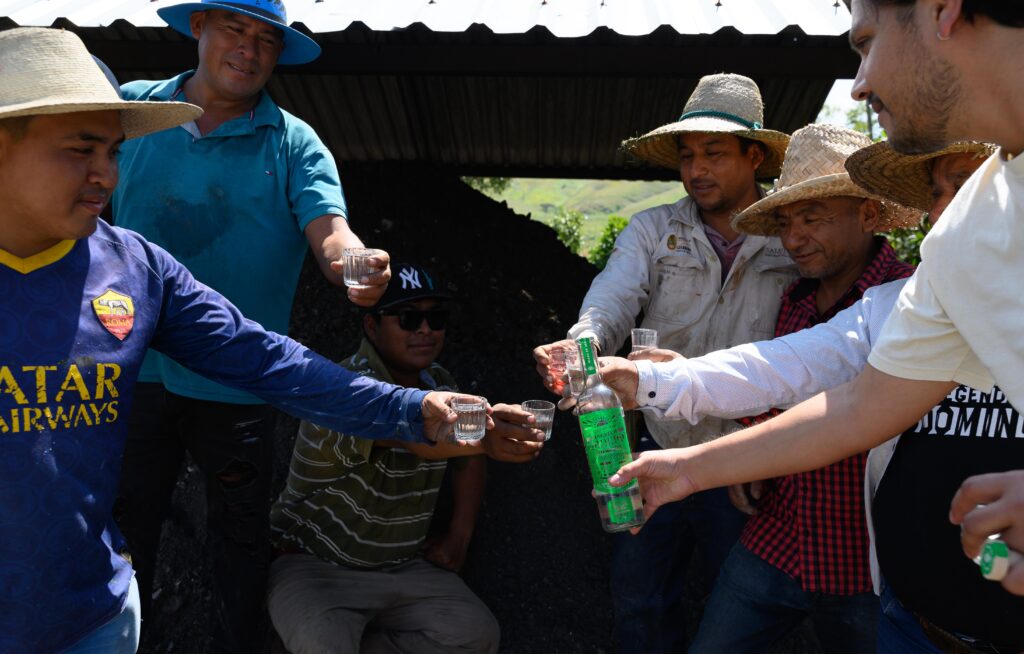
My 2026 began in true Oaxacan style, with a big fiesta to celebrate the wedding of Mezcalero Ismael Velasco. Brooks and I made the three-hour drive through the mountains to reach San Luis del Rio, a small town nestled in a narrow valley flanked by steep slopes covered in espadín.
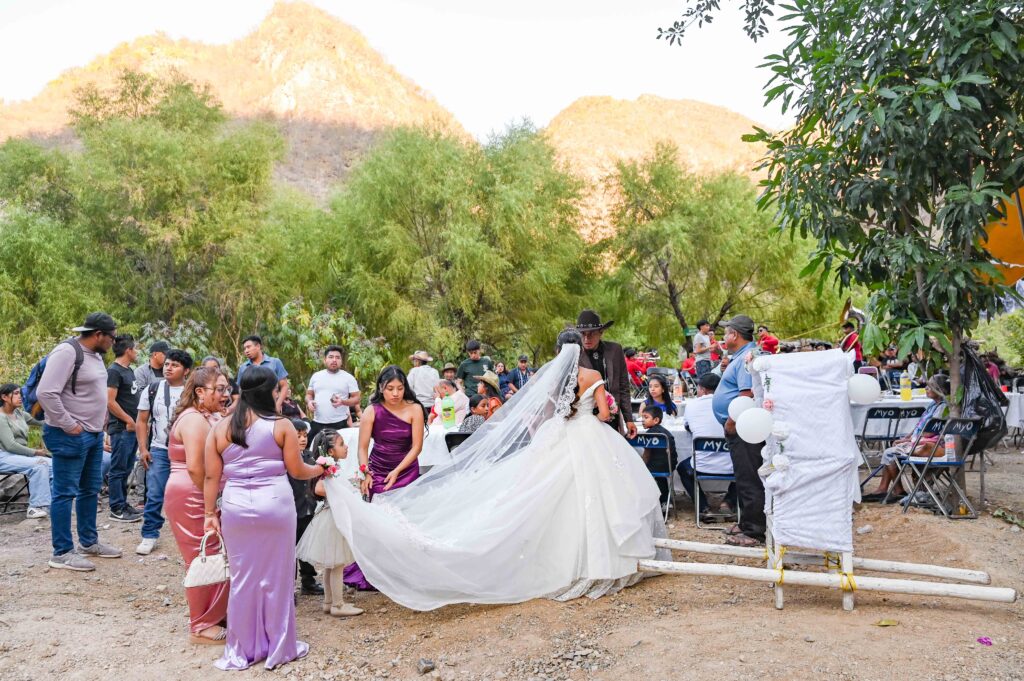
As we arrived, it was obvious the town was gearing up for a big celebration, with cars parked haphazardly off the winding streets. Leaving our vehicle, we made our way down toward the palenque, which sits on the banks of the Rio Hormiga Colorada, sheltered by tropical foliage. Music was blasting from the band, who peered at us through the cacophony as we stumbled into the party.
We were on the lookout for Julian Saenger, founder of mezcal Legendario Domingo. He works with Ismael’s father, Valente, who produces the Oaxaca expression for the brand.
The inception of Legendario Domingo Mezcal
In my earliest meetings with Julian, he came across serious and focused. He explains his motives in developing Legendario Domingo as stemming from: “A desire to start a business and create something of my own.” Over the years, and many mezcals, I have seen his passion for mezcal play out in the consistent growth of his brand. But I am happy that he has also shown us his jubilant side, dancing and drinking his favorite spirit.
After initially exploring agave spirits in his home of Guadalajara, Julian began to visit other states, delving into the world of mezcal. He began in Oaxaca in 2012, traveling to producers in remote parts of the state. He remembers, “The Regulatory Council (CRM) had shared a list of certified producers with me, and I’d been talking to them on the phone for weeks before my trip.”
A few false starts and wrong turns ended up being fortuitous because he was left stranded at the entrance to San Luis del Rio. It was in this beautiful town that Julian made the connection with Valente. He founded Legendario Domingo with Valente’s espadín at 48% ABV.
“As I learned more and understood the category, the opportunity to create and generate employment for the communities became even more important,” he says. He describes how, from the very beginning, he knew he had to do something different, “something that wouldn’t just talk about mezcal from Oaxaca, but about mezcal from all over Mexico. That’s why I decided to seek out producers and communities in Mexico’s mezcal-producing regions.”
In Oaxaca, he had been able to drive around looking out for producers. As he began to work in other states, he made contacts by going to regulatory council meetings.
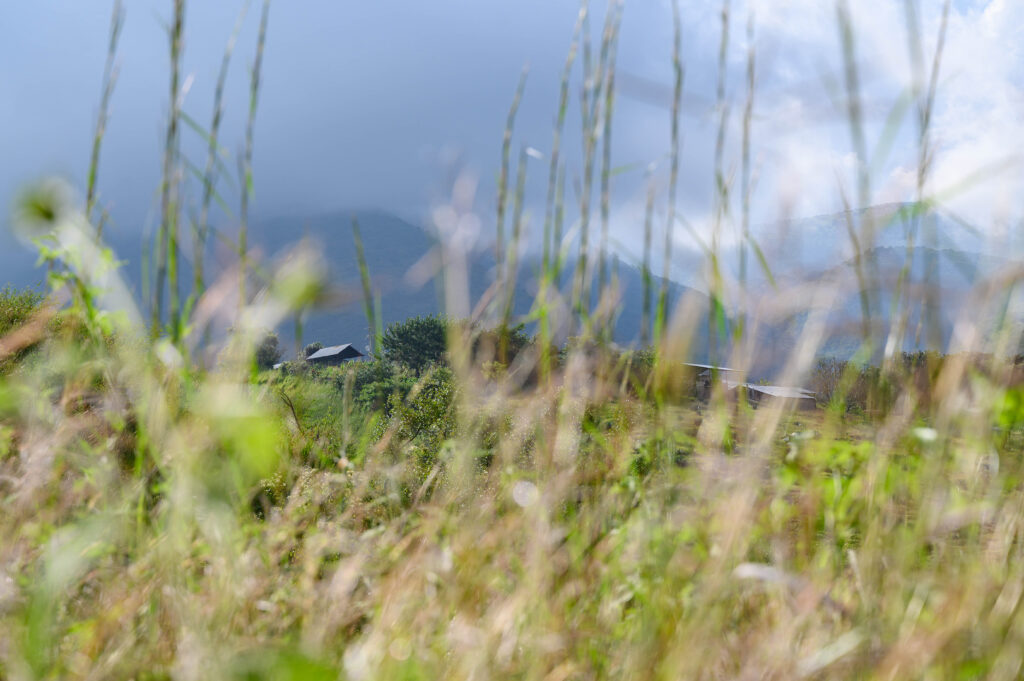
Julian recounts his first journey to Guerrero as an adventure. “The first time was in 2018. I had contacted the people at Sanzekan beforehand, and they told me not to go because it was very dangerous. But I still wanted to go, because I was eager to taste the mezcals directly from the producers. The road between the communities felt somewhat dangerous and desolate, with few people around. Wherever you went, people stared at you. You’re an outsider, and people know it, and you sense it.”
Fortunately, he was introduced to Don Rodolfo Obregon, who has opened the door to exploring the beauty of Guerrero.
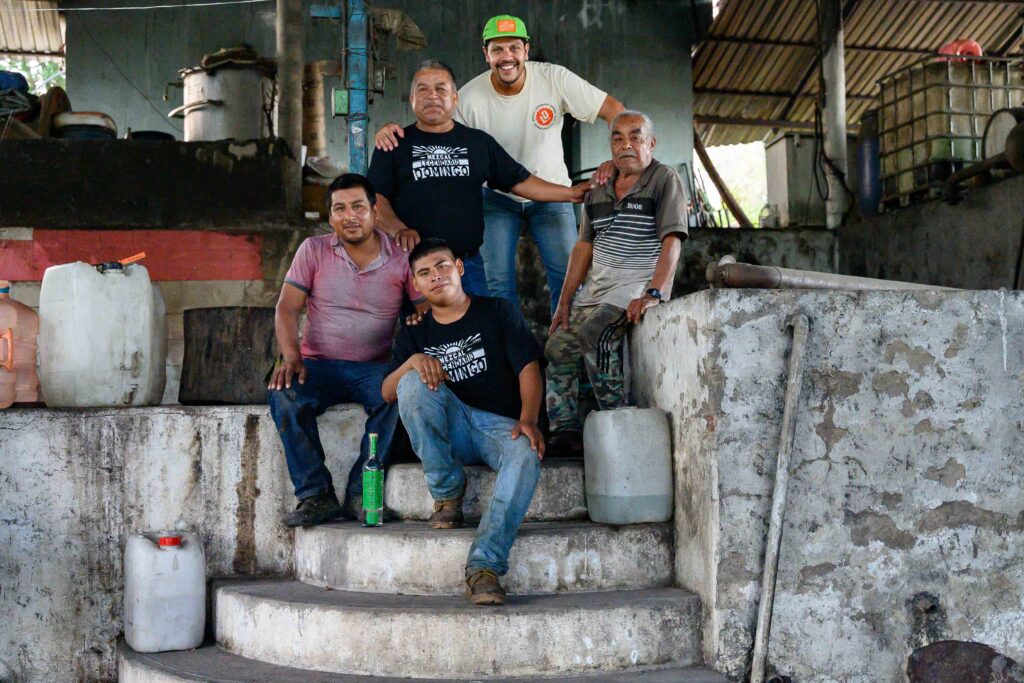
Now, through the range of Legendario Domingo, where each expression is made by a single family, Julian aims to highlight the diverse terroirs and production styles of different mezcal states: Oaxaca, Guerrero, Durango, Michoacan, and San Luis Potosí.
The origins of an iconic mezcal label
Legendario Domingo translates to “Legendary Sunday,” evoking the celebrations that are so often accompanied by mezcal. Sundays are a sacred time to eat, drink, and celebrate. Julian explains they are “Legendario” because these festivities always transcend and “become legendary”–like the San Luis wedding!
The labels for each expression are based on the papel picado used at fiestas. Julian wanted a fresh look. With the papel picado design, each bottle evokes the Mexican culture of fiesta; guitars with music, piñatas, and bottles of mezcal.
Papel picado (“pecked paper”) is a traditional Mexican craft made by cutting decorative scenes into sheets of tissue paper. Typically, they are strung up to adorn fiestas patrias, feast days, weddings, quinceañeras and baptisms, as well as Easter, Christmas, and the Day of the Dead. Each expression features a different color of papel picado, making the bottles easy to spot on the shelf.
I first met Julian almost a decade ago. It was fascinating to hear about his plans for Legendario Domingo. At the time, I had not spent much time outside of Oaxaca; so the idea of exploring other regions with this dynamic brand was exciting. Then the pandemic came along. We reconnected in 2024 when I was visiting San Luis del Rio with some friends. Julian linked us up with Valente, and we did our first shoot together, documenting production with Valente and his family.
Traveling into a “hot zone” on the hunt for mezcal
In October 2025, Julian asked me to join him on a visit to Maestro Mezcalero Rodolfo Obregon in Mazatlan, Guerrero. Although Guerrero mezcal isn’t as prevalent on the international market, the spirits can be rich, fresh and fragrant.
Although I have had the luxury of trying some delicious Guerrero mezcals in the past, this was my first time traveling to the heart of the state. Like many other potential visitors, I was previously deterred by safety concerns, especially over cartel violence. Guerrero has a Level 4 “Do Not Travel” advisory from the U.S. State Department as of August 2025.
For our trip, Julian was coming down from Guadalajara, and I from Oaxaca; we had to travel separately. Despite the echoes of people warning me against traveling alone, I relaxed as the coach made its way along the open road through lush vistas. My route took me up to Mexico City, then a six hour bus to our meeting point, the Holiday Inn in Chilpancingo, the capital of Guerrero. It was a long journey, but I felt secure getting there.
That evening, Julian and I visited a mezcal tasting room and gallery called El Calehual (local name for a quiote). The owner, José Luis Correa Catalán, has an incredible collection of Tecuanes masks. Hundreds in all shapes and sizes cover every inch of the walls. Jose invited Julian and me to a few mezcals and aguardiente that he had recently sought out from the Guerreroan coast.
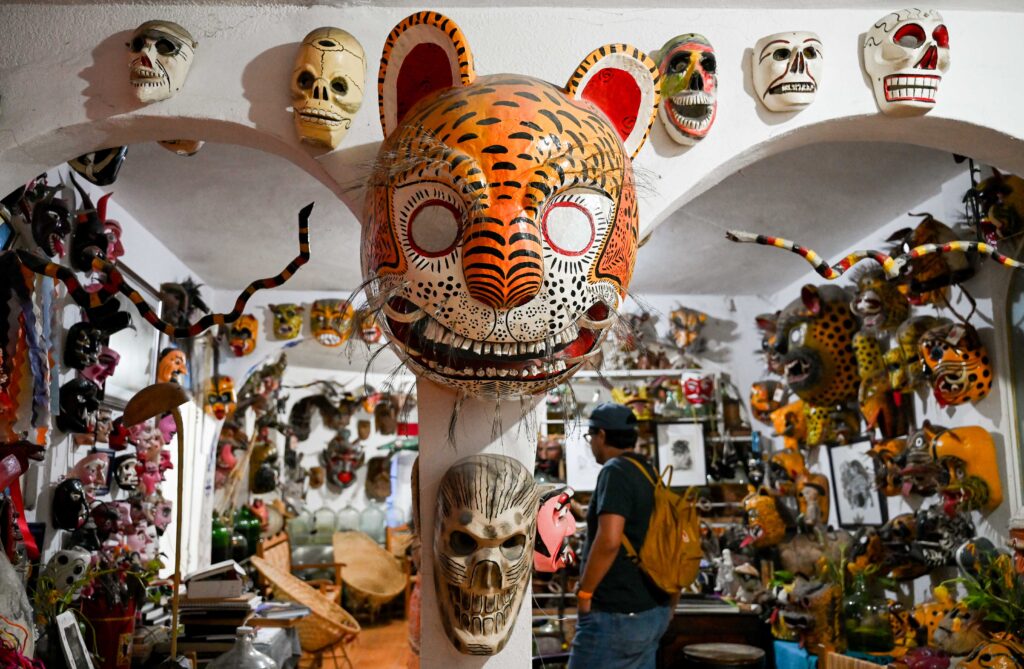
In the mezcaleria, Jose’s parents told us that shake-downs for protection money were common, and the situation often got violent. Later, getting tacos in the market, there was an ominous police presence–guns at the ready. I was relieved not to be spending too much time in the city, despite the wonderful selection at El Calehual.
Don Rodolfo sent a friend to collect us at 5 a.m. the following morning, in a fairly rickety old car. Fortunately, it was pitch black when we left, and we couldn’t see how patched-up it was, especially as we were thrown around some pretty serious hairpin bends on the way up to the fabrica (distillery), which is located just outside of the small town of Mazatlan, about an hour from Chilpancingo.
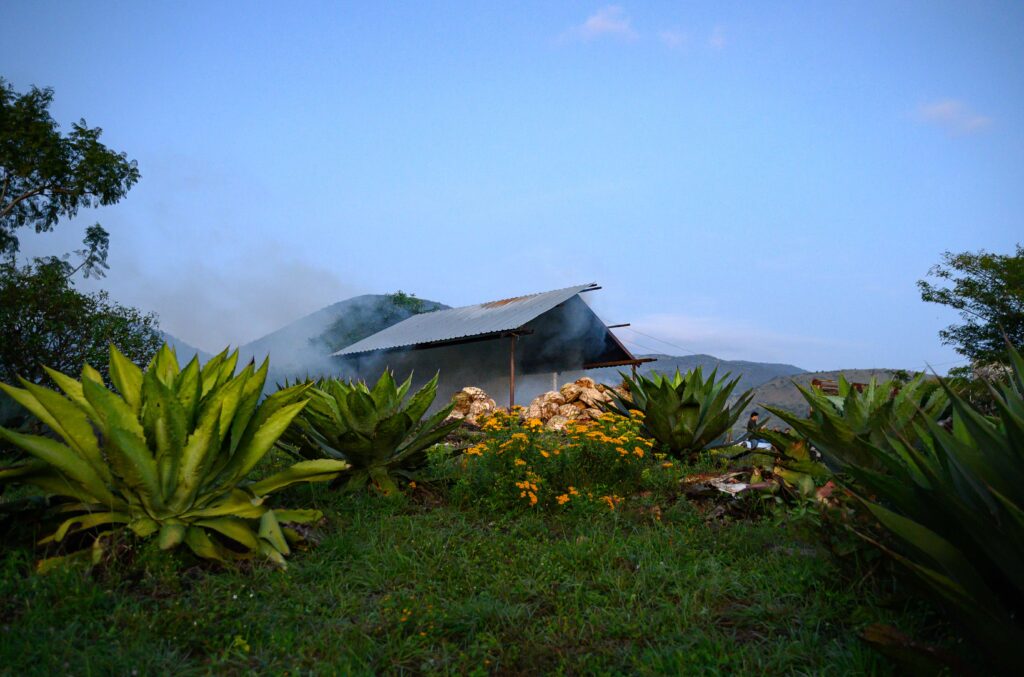
Rodolfo’s fabrica sits up amongst rolling hills, which were still lusciously green in October. We arrived as the sun was rising. A warm glow illuminating the dew, which shimmered on the leaves of huge agave that were dotted across the hillsides, like grazing dinosaurs. We were welcomed by a flock of squawking turkeys, who seemed equally prehistoric as they rattled their way around the agave.
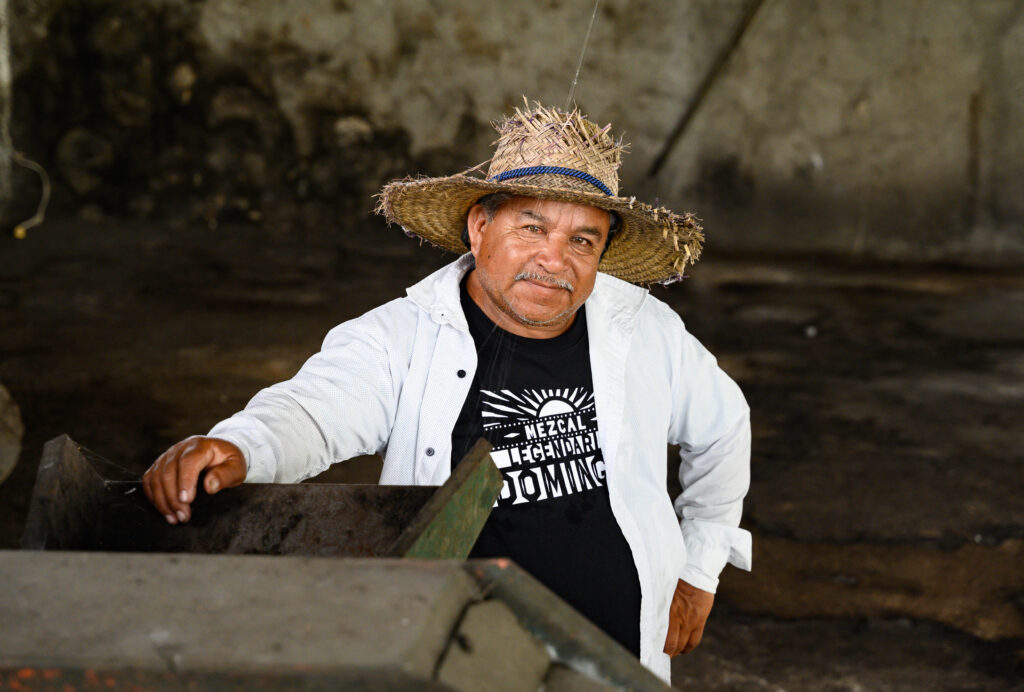
Rodolfo was waiting for us, leaning against his old truck, a bottle of mezcal perched on the hood. He has a kind face and a cheeky smile. He poured us a drink and introduced us to the team, including his father, son, and grandson.
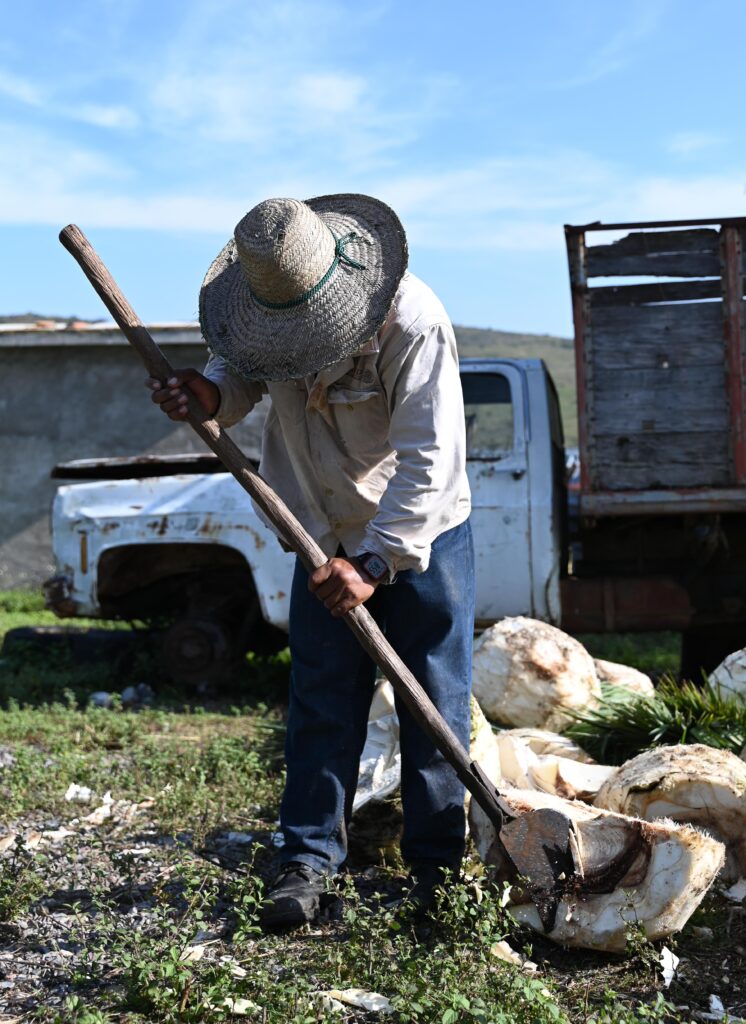
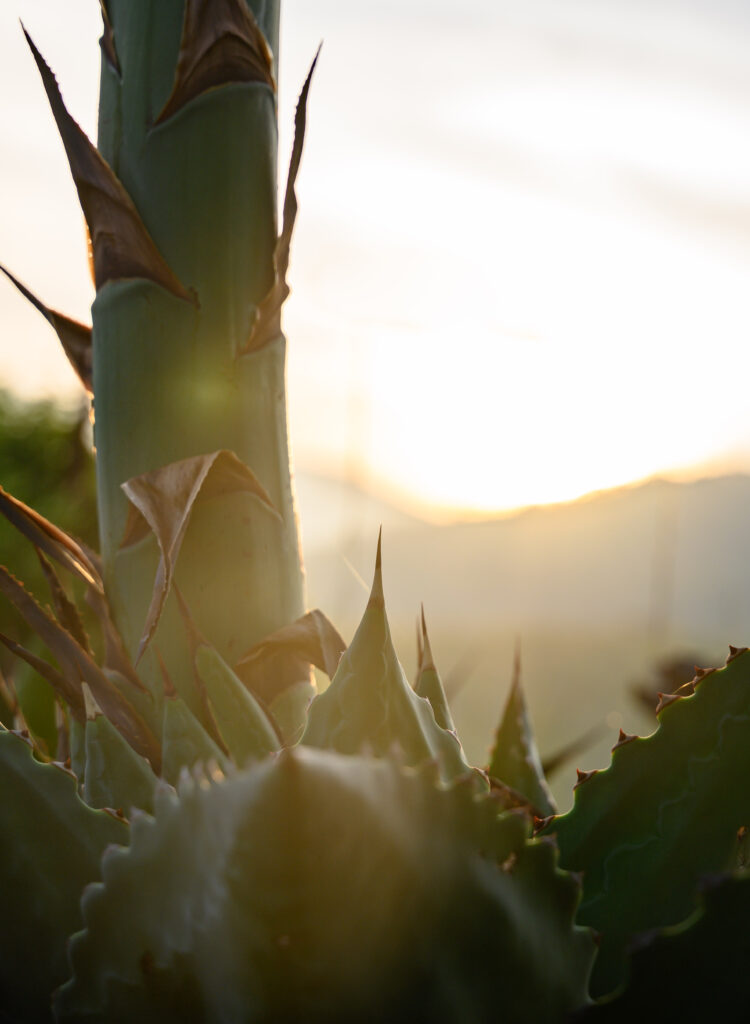
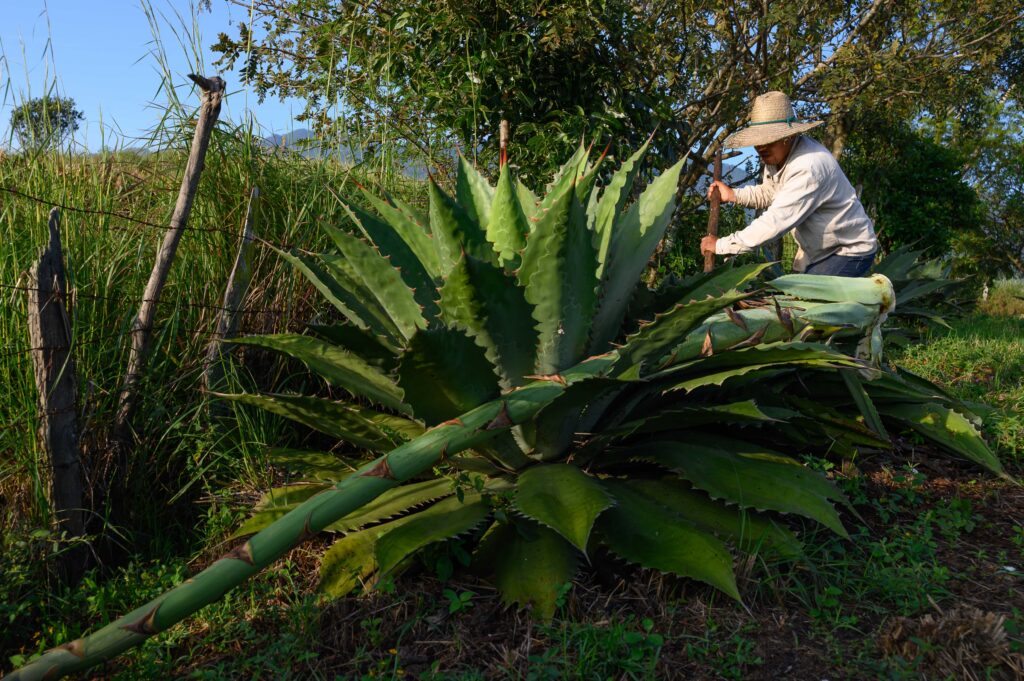
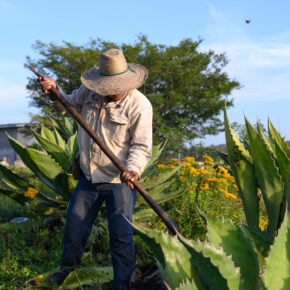
After the welcome mezcal and hot chocolate, Rodolfo’s son went to capon the mature cupreatas. He brought down the giant stalk before removing the leaves using a “tarecua.” This is (similar to a coa), but is cut in a way to help slice into the thick pencas.
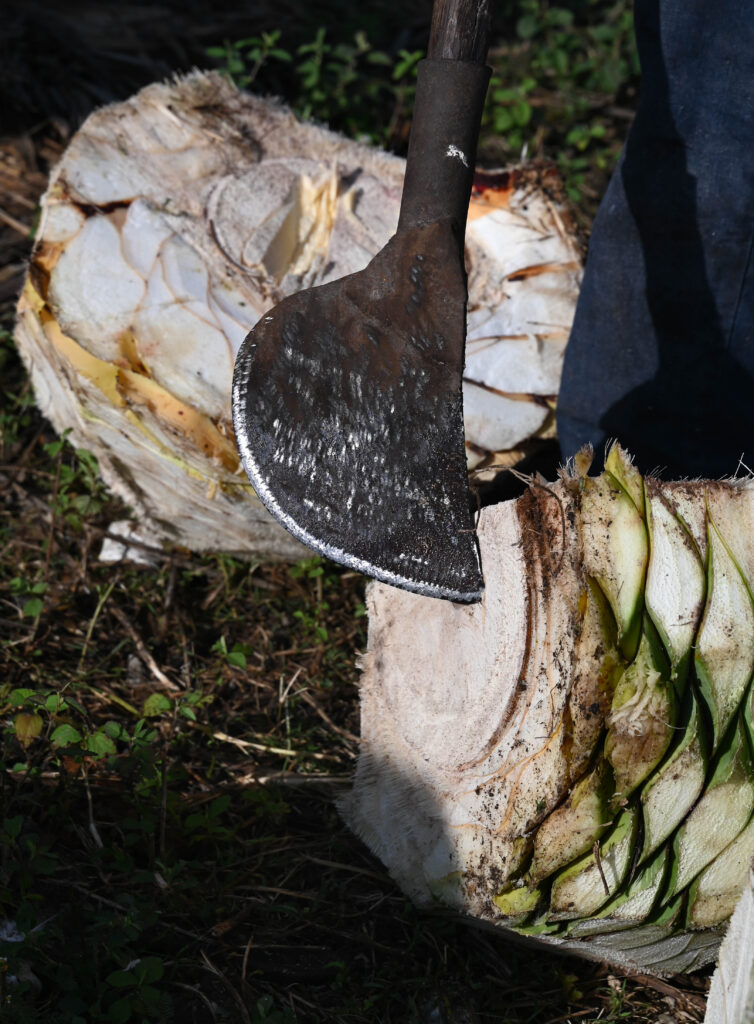
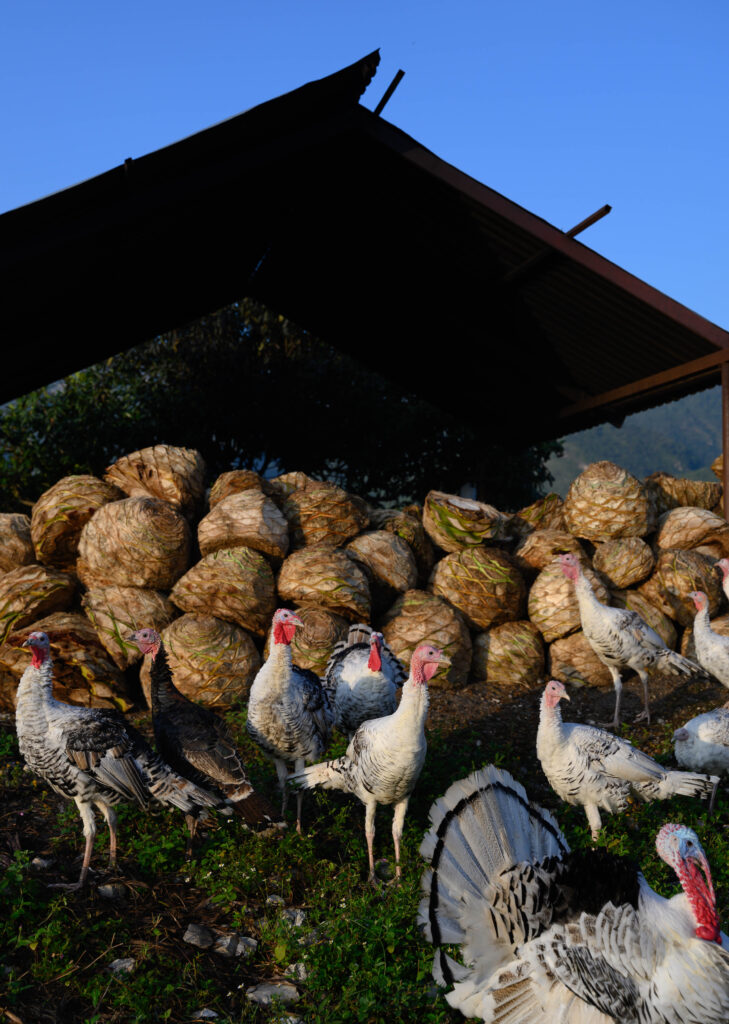
Agave cupreata is the signature plant for Guerrero mezcal. It can take up to fifteen years to mature, or as little as seven. Cupreata grows over a meter wide and almost as tall. Its quiote can reach up to six meters in length, with yellow flowers, and it reproduces by seed. Most cupreata is harvested wild. It looks a bit like a giant tobala with vivid green leaves and copper-colored spines. Cupreata is also known as gordito or papalotl. Papalotl means butterfly in Nahuatl.
A bit later, the team got going with the tapada. This included a group of hired hands, who regularly help out Rodolfo and his family with labor-intensive parts of the process. That being said, Rodolfo’s son, grandson, and father were all there. His father, who in his eighties, was digging the earth to make the final covering. One of the key differences to Oaxacan productions is the use of palm fronds to cover the upper part of the agave cook.
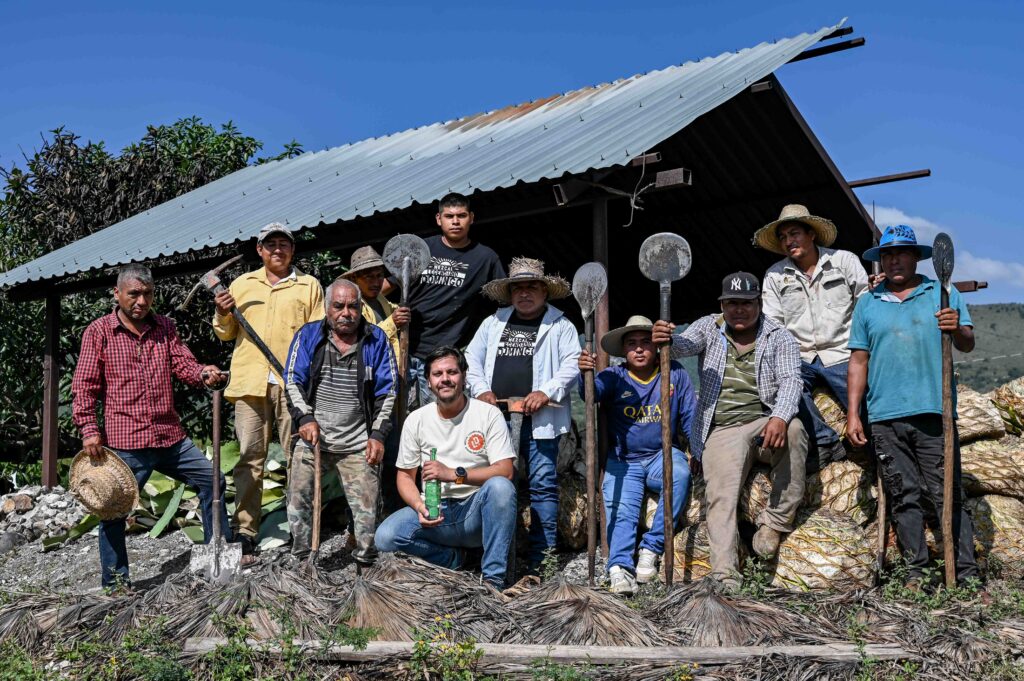
Once they were finished, we were invited for lunch in the fabrica. It was an honor to share food made by Rodolfo’s wife with four generations of his family. The family have been making mezcal since 1810. Rodolfo learned how to make agave spirits with his grandfather, and then began working with his father to make mezcal in earnest, learning about certification and regulations along the way. As well as producing for Legendario Domingo, they have their own family brand: Don Copio, named after Rodolfo’s father, Procopio.
Inside, there were similarities to Oaxacan palenques. The family uses a shredder to break down the cooked agave. Rodolfo explained, “Until recently we did not have the machines to grind the maguey, everything was done by hand with axes. We cut the maguey with the same things or tarecuas.”
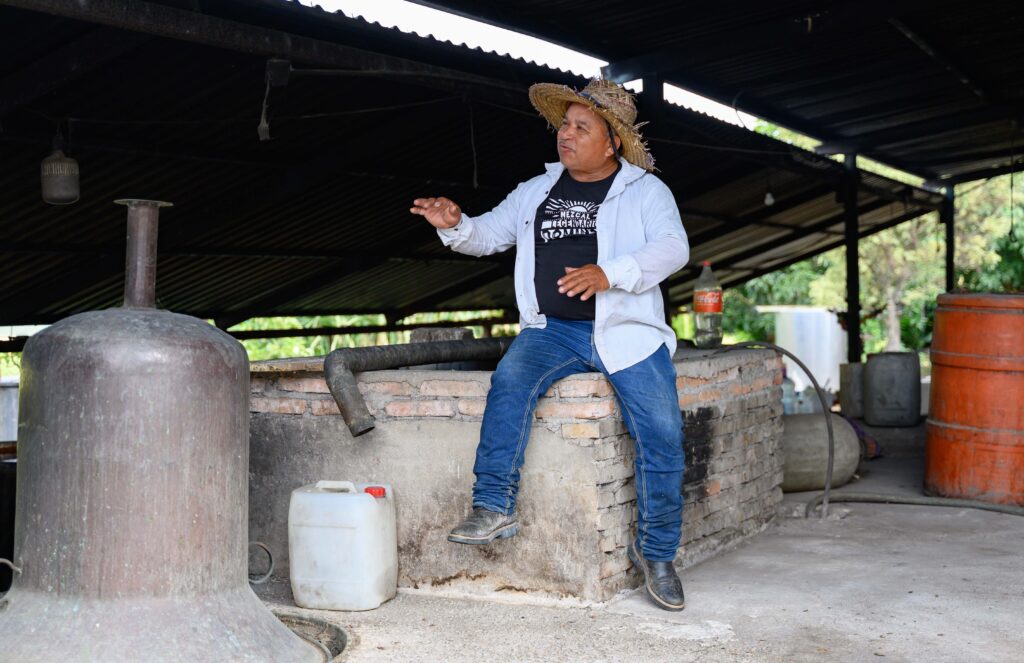
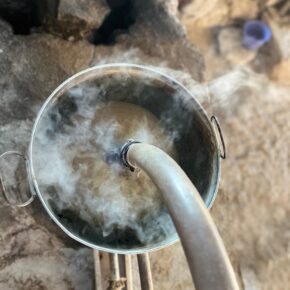
They ferment in wooden vats and distill in copper alembics. The stills are unusual–taller than the ones we are used to seeing in Oaxaca. Rodolfo made a trip to Michoacan to work with a master still maker, designing his own stills. He says they produce more efficiently.
Legendario Domingo bottles Don Rodolfo’s cupreata at 47% ABV. It’s a fresh, mineral mezcal, easy to drink, with herbaceous and floral notes with a hint of smoke. Julian says that he likes high-alcohol mezcals, and bottles them this way for two reasons: “The main one is that it’s how the producers like it and drink it in their place of origin, and the second is that it’s one of the best ways to enjoy the spirit–at a high alcohol content.”
After learning about production, and tasting copious mezcalitos, Rodolfo took Julian and I for a tipsy hike around the fields surrounding the fabrica. We ended up at a vantage point where we could see the structure, set against the rolling hills. We talked about love and life, challenges and achievements. It was a perfect way to wind up an amazing day.
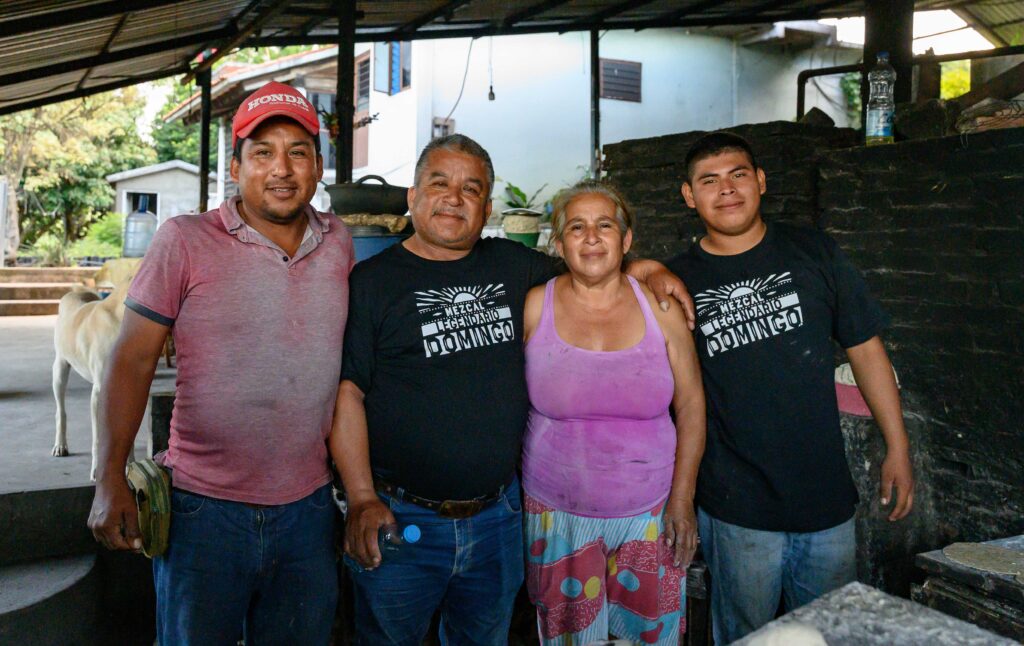
Although producers like Rodolfo have faced barriers in their work, particularly the unrest in the state, there is optimism here. Rodolfo has his son and grandson at his side, looking to the future, as more agave aficionados are getting to sample their bottles and develop their taste for this style of mezcal.
In January, Deputy Citlali Yaret Téllez Castillo proposed an initiative for the “Promotion, Production, Marketing and Protection of Maguey and Mezcal in the State.” She declared that Guerrero is Mexico’s second largest production region, which creates almost 2 million liters of artisanal mezcal per year. “It has taken many years for Guerrero mezcal to be recognized, but today we are at a historic juncture where the mezcal industry has taken a great interest in our products.”
On March 13, 2026, the governor of Guerrero, Evelyn Salgado Pineda, announced the 2026 Guerrero Mezcal Festival. This will take place within the framework of the 50th anniversary of the Tianguis Turístico de México, to be held in Acapulco at the end of April. People are hoping that the mezcal festival in Acapulco will be a positive step in the reputation of Guerrero’s mezcal.
Brands like Legendario Domingo offer a valuable platform for these less accessible producers. Julian says, “One of the main challenges was, and always has been, securing funding for the company. Lack of knowledge about the industry has also been a major challenge. But registering the trademark, and meeting the producers we work with have been moments of achievement, as well as the first export and seeing the product in bars and on shelves in other countries.”
As we are cruising out of Semana Santa, Mexico’s streets are still fluttering with vibrant papel picado. If the only papel picado you will be celebrating with anytime soon is on the bottle of a Legendario Domingo, you will be in good company. Their mezcal will not only start the party but fuel the fiesta from dawn til dusk. And as much as I love the Oaxacan expression, I highly recommend you reach for the green, and widen your horizons with the cupreata from Guerrero!





i enjoyed the article, it transported my imagination to the mountains and valleys where the fabricas of oaxaca and guerrero are, good work!