
Holly Devon gets into the (very interesting) specifics of why Cinco de Mayo became a rallying date for the original Californians and other Chicano communities.
Los Angeles is a city everyone loves to hate. When I tell people that’s where I’m from, I’ve grown accustomed to a grimace and a big show of surprise in response. What they were expecting they never say, but you’re supposed to find it flattering that you’re not whatever it is. Generally, the best method to remove the smirk from their faces is to remind them that the city is essentially Mexico, a place everyone loves to love. More Angelinos speak Spanish than any other language, and thanks to the city’s infamous sprawl, huge swathes of it are nearly indistinguishable from urban centers south of the border.
That L.A. spiritually remains a part of Mexico is an indelible truth that was imparted to me young. I grew up in the rolling foothills of East L.A., where the flatlands were almost entirely the domain of Mexican and Salvadorean communities. My elementary school was at the top of the hill, and though the school had a lot of Latino kids, it was a significantly richer and whiter zone than the lowlands. But every year when Cinco de Mayo rolled around, Mt. Washington Elementary unabashedly tipped the scales for Mexico.
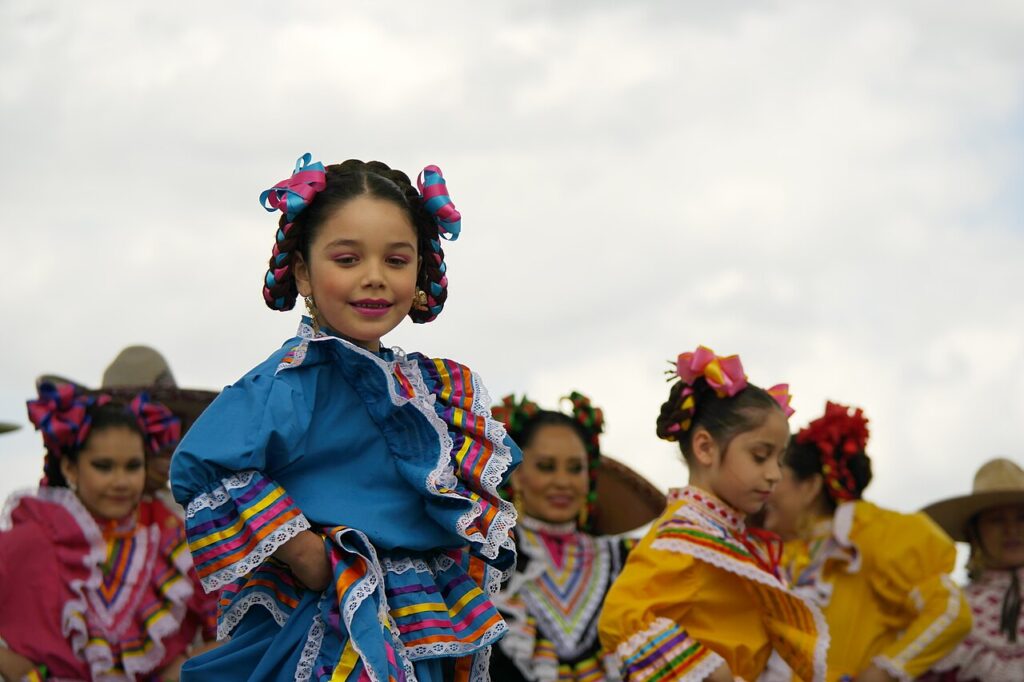
The central pillar of the celebration was the folklórico dances that every grade was tasked with learning. Each grade had its own dance, and they increased with difficulty until the sixth grade stick tossing dance, which required a level of coordination that seemed impossible to the very small. The process began months before the holiday, and learning that year’s dance was a rite of passage. The best part of Cinco de Mayo preparations was when my mother took my sister and me to Olvera Street, an old L.A. a tourist attraction that was also a functional marketplace. There, you could buy the many-layered lacy cotton folklórico dresses that you needed to do the dance properly. I loved mine so much I would have worn them year round.
On Cinco de Mayo itself, our school was covered in paper flowers, crafted classroom by classroom for the occasion, and lunch that day was a Mexican feast, complete with conchas and horchata. After lunch, class was dismissed, and the folklórico dancing began. It was everyone’s favorite day of the school year.
But when I reached adulthood, I was dismayed to learn how far national Cinco de Mayo celebrations had strayed from my childhood idyll. Everywhere, sloshed gringos in sombreros desecrated my memories with ignorant mass consumption and insulting slogans. In response, Mexican-Americans seemed so revolted as to abandon Cinco de Mayo altogether. Anyway, I heard it reasoned, what was the point of commemorating some seemingly insignificant battle in a war with the French that no one even remembered anymore? The holiday wasn’t even celebrated in Mexico, where Independence Day is a more logical vehicle for national pride. According to the cynics, Cinco de Mayo is an invention of companies such as Corona and Modelo, who since the late 80s have seized it as a plum advertising opportunity. I started to wonder if they were right.
For once, however, the cynics got it wrong. True, most of Mexico doesn’t consider Cinco de Mayo a major holiday. But this is because its roots lie with California’s Mexican American community, who had their own reasons to celebrate Mexico’s victory at the Battle of Puebla in 1862.
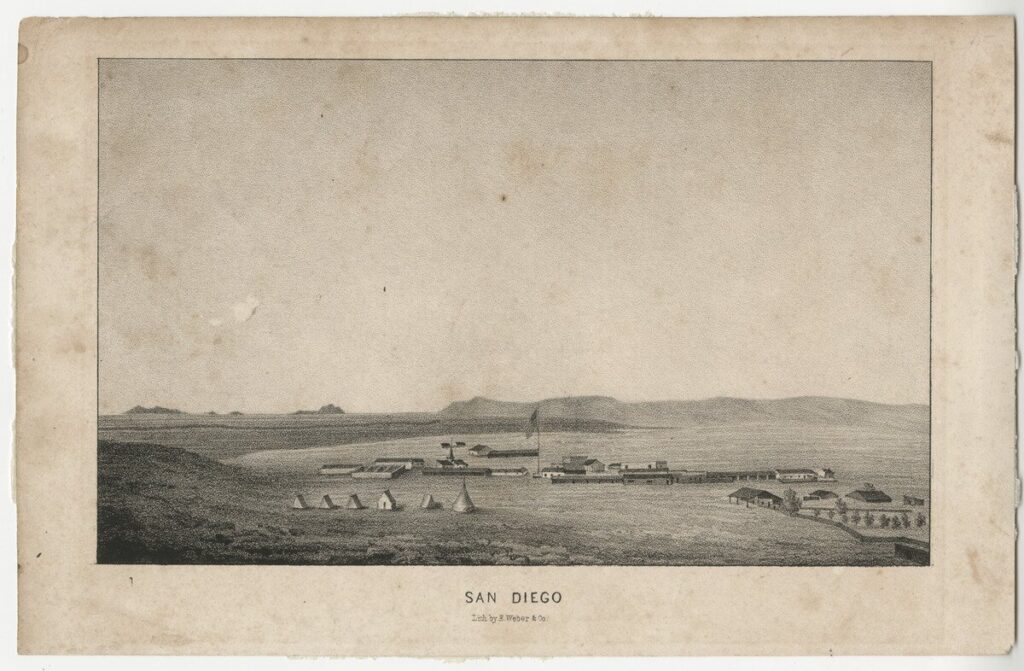
Before the 1848 Treaty of Guadalupe Hidalgo, the future state of California occupied Mexico’s northwest corner, a world which was largely unchanged since the days of the Spanish Empire. Alta California, as it was known then, was a ranching economy, dominated by a small number of wealthy landowners. Natives formed the majority of the labor force; agricultural labor supplemented their traditional patterns of hunting and gathering, a way of life they had managed to maintain despite Spanish incursions. Elsewhere in the Southwest, colonial forces were almost constantly at war with formidable military powers such as the Apache and the Comanche, who ultimately went undefeated by the Spanish. By contrast, California natives found a way to braid themselves into the colonial social fabric, largely on their own terms.
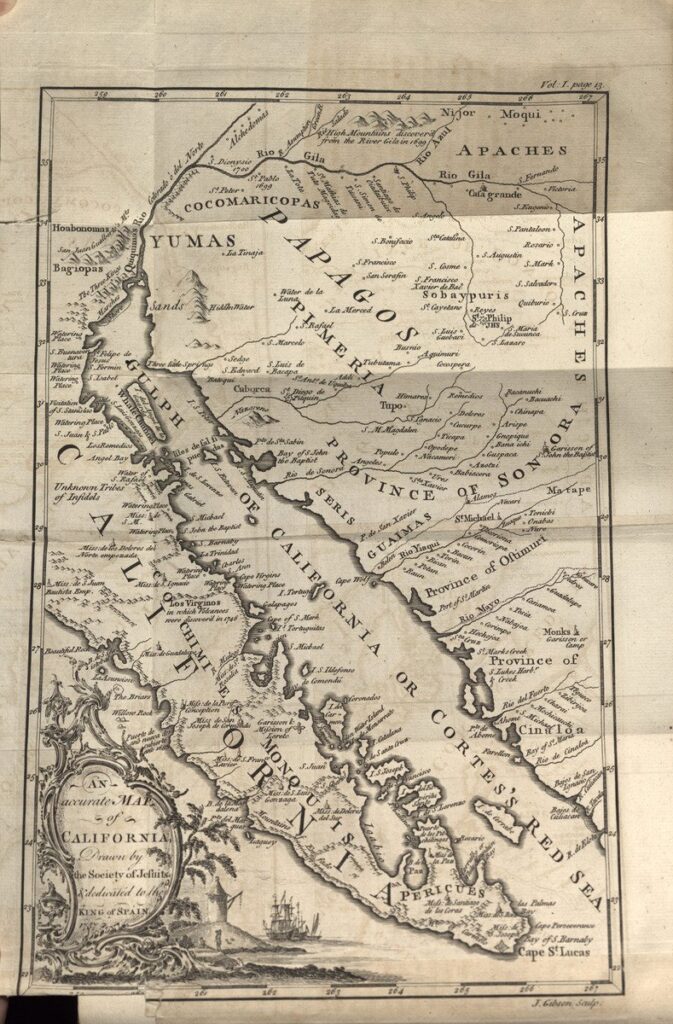
When Mexico declared independence from Spain, many of the new nation’s promised reforms never made it that far north—Alta California was a low priority for the burgeoning republic—but the reforms that were enacted mostly accelerated changes their society had been making on its own. The biggest development was the diminishing power of missions. For years, missions had struggled to attract and retain native laborers, who were generally unmoved by the padres’ religious zeal, and resented their assimilationist discipline. Outside the missions, natives found employers to be far less interested in what they did on their own time, so after the 1833 Secularization Act put mission land on the market, the liberal reforms served to ease social tensions and bring new economic opportunities to a world previously circumscribed by Spanish mercantilists.
But after the U.S.-Mexico war, peace among Alta Californios would be permanently disturbed by a series of shocks to the system. Not only did American citizenship come with a new language, government, and legal system, upon reaching fluency in English they were able to comprehend the Yankee racism of which they were now targets. As sociologist David Hayes-Bautista writes, “While the now U.S.-citizen Californios tried to adjust to their new national allegiance—participating in their first Fourth of July celebrations and trying out the new game of football—they were continuously shocked and outraged by the xenophobia of much of the incoming Euro-American population.”
To make matters exponentially worse, the 1849 California Gold Rush brought an invasion of prospectors from all over the world, leaving no aspect of the old social order untouched. Indigenous Californians were the targets of genocidal massacres carried out by settlers and the US government operatives, destroying a way of life that had survived conquistadors, smallpox, and Catholicism. Since California was admitted to the union in 1850, the original Californians had been watching their world slip away. The social fabric of Alta California was tightly interwoven, but it began to unravel with entry into the United States. Compadrazco, the paternalistic system of social reciprocity that had defined relations between classes, was completely eradicated. Not even the highest rungs of Alta California society were safe. After the 1851 Land Act, wealthy landowners were dispossessed of their vast holdings to make way for prospectors.
Meanwhile, Mexican nationals had troubles of their own. The French invasion came on the heels of the War of Reform, a protracted conflict between Liberals and Conservatives that left the country war ravaged and deeply divided. When the liberal Benito Juárez took office in 1861, he was hoping Mexico could put the years of strife behind them. But the Reform War had nearly bankrupted the national treasury. To heal the nation, Juárez would have to do some triage. He put a two-year moratorium on the repayment of foreign debt in order to take the time his country needed to get back on track. But characteristically, the European powers holding the loans were unconvinced by this logic. So in the summer of 1862, Spain, France, and the United Kingdom sent their gunboats to collect, taking advantage of the fact that the United States was too distracted by its own civil war to enforce the Monroe Doctrine.
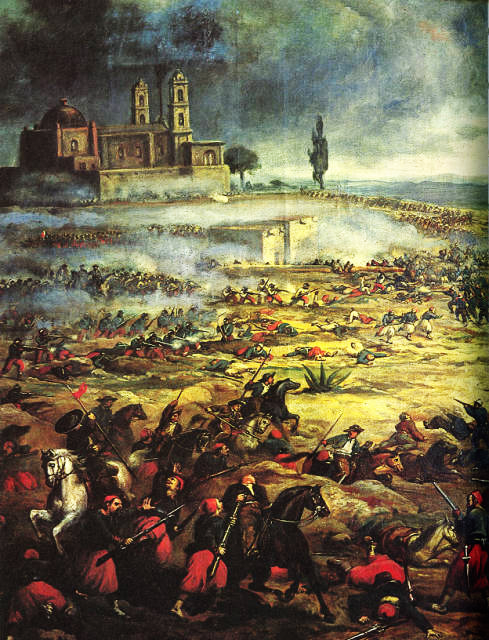
In short order, Spain and England struck a deal and withdrew, but the French navy stayed behind, revealing their true motivations—debt collection was a mere pretext for invasion. With their imperial sites set on Mexico, the French planned an attack on Puebla, having already taken Veracruz, from which they would quickly move on to Mexico City. But on May 5th, 1848, their dastardly plan was thwarted. Despite being outnumbered and poorly supplied, the Mexican army handily delivered a decisive victory against the invaders.
In Alta California, the arrival of the French navy must have felt like a portent of doom, with the violation of Mexican sovereignty mirroring their own experience. In the mid-19th century, white supremacist imperialists were aggressive and ascendant, taking what they wanted with impunity, and brutally subjugating anyone they considered to be lesser. Having lost so much themselves, Latino Californians must have worried that Mexico wasn’t far behind them. After the invasion of Veracruz, they would await the arrival of Spanish language newspapers each morning, fretting over the fates of their erstwhile countrymen.
While they might not have been expecting good news, when it came they were jubilant. At a moment when it must have seemed like the armed forces of Western imperialism just couldn’t lose, to see the French army laid low meant that maybe there was a glimmer of hope on the horizon after all. After the headlines declared Mexico’s victory at the Battle of Puebla, Alta Californios absolutely lost their minds. They burst into song and celebrated with “salvos of gunfire and parties.” Swelling with pride, Latinos from all over the state immediately offered their support to Mexico. As Hayes-Bautista writes, “La Voz de Méjico received a torrent of unsolicited contributions—over $1,200 within eight weeks—for a presentation sword to be bestowed upon [the victorious General] Zaragoza by the Latinos of Alta California. Clearly the victory of Cinco de Mayo had started something.”
But perhaps the first true Cinco de Mayo celebration occurred the following year, when a Mexican victory seemed much farther away. Puebla was under siege. J. López, a successful San Francisco businessman, organized a grand ball to commemorate the victory in hopes that it would repeat itself. Others followed suit. At a Cinco de Mayo assembly in Los Angeles, a speech by the Mexican-born Californian, Francisco Ramírez, captured the essence of Mexico’s fight against the white supremacist world order: “Fellow citizens!” he proclaimed. “Do not doubt it: the Mexican nation, which some believe is an immense tribe of savages, will emerge from this war with honor…Undeceive those who have been duped: let them recognize that Mexicans are not savages, are not barbarians.”
But after months under siege, Mexico lost the Second Battle of Puebla, and the French pressed on to occupy Mexico City, where, with the support of Mexican monarchists, they crowned an Austrian archduke as Emperor Maximilian I. When the next year’s anniversary of the Cinco de Mayo battle rolled around, spirits weren’t flying so high. Nevertheless, California Latinos rallied. In Los Angeles, writes Hayes-Bautista, “the celebration “illustrated the breadth of collective identity emerging in California’s Latino population at the time…a cosmopolitan Latino crowd composed of “Mexicans, native Californians, North Americans, and Spanish-Americans who represented nearly all the republics of America” gathered in an outdoor garden to hear an equally cosmopolitan set of speakers.” The Cinco de Mayo commemoration of Mexico’s struggle had become an important focal point for Panamerican solidarity.
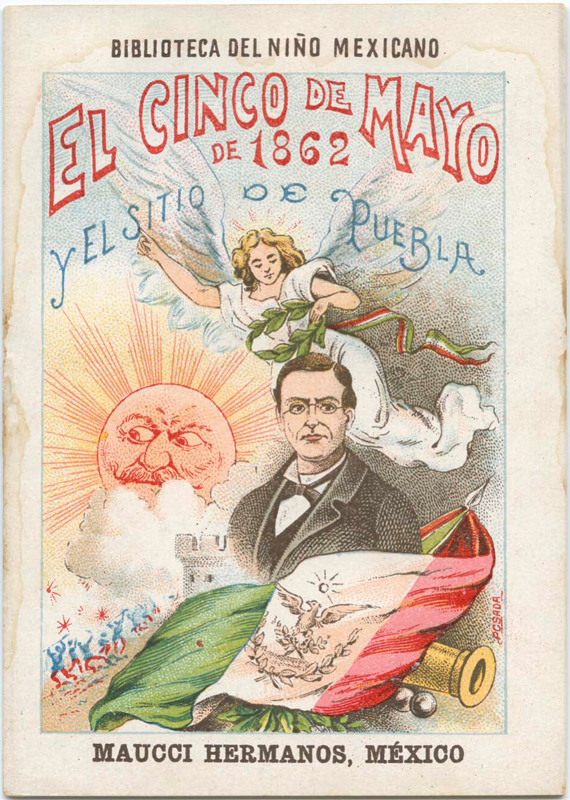
Each year, Cinco de Mayo celebrations continued to keep the flame of victory alive for Mexico’s supporters. The short-lived empire of Maximilian I ended in 1867, and Maximilian was put to the firing squad by the newly triumphant Mexican republic, led, once again, by President Benito Juárez. With the war now over, the juntas that had organized most of the Cinco de Mayo celebrations returned to hosting Mexican Independence day events in September.
But in the end, Cinco de Mayo celebrations proved more difficult to defeat than the French. After the war, the mantle was taken up by private citizens and business owners. In 1876, the director of a theater company organized a parade to the theater, where patriotic performances would follow. In 1884, the Jovenes Hispano-Americanos, a group of second-generation California Latinos, put on a grand ball, which remained one of the most popular forms of Cinco de Mayo celebration. In 1929, after Olvera Street had been rescued from demolition and preserved as a testament to old Los Angeles, its merchants organized an array of Cinco de Mayo activities.
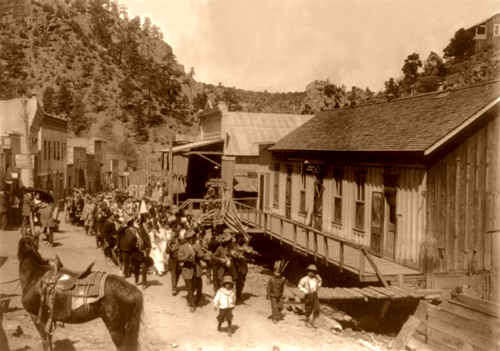
Though the celebratory fervor somewhat cooled after World War II, the Chicano pride movement in the 1960s revived it. As Latino Americans began to push back against assimilation, they looked to symbols of cultural unity. As scholar Laurie Kay Summers writes, “Movement leaders needed a culturally symbolic day to serve as a focal point for public display of the issues and cultural icons of the Movement.” When the 1968 Bilingual Education Act made funds available for multicultural programming in school, Cinco de Mayo was chosen by schools in part because of its timing. Whereas Mexican Independence Day comes at the beginning of the school year in September, the May date would allow schools plenty of time to include special units on Mexican history and culture.
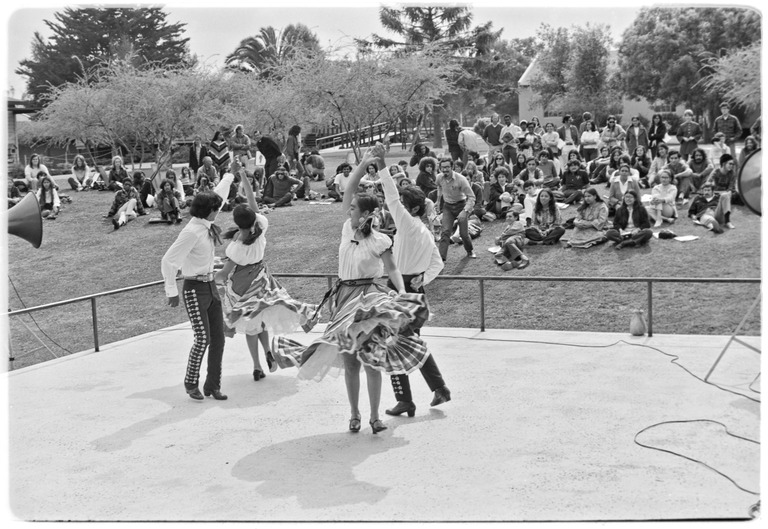
Cinco de Mayo also fit well with the global anti-imperialist consciousness that had been fostered by radical movements of the 1960s. Mexican Independence Day may be a perfect opportunity to express nationalist pride, but Cinco de Mayo tied in more to the internationalist political tradition. As Summers writes, “Historically, the Battle of Puebla is seen as a bold stand against outside intervention. Chicano leaders simply drew parallels between the colonizing intentions of the French and the internal colonial status of Chicanos at the hands of the latest dominant power, the United States.”
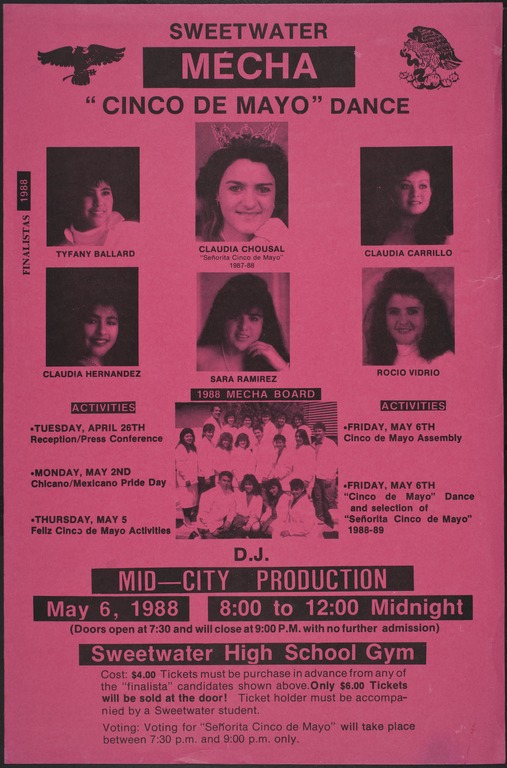
When Corona and Modelo first started their Cinco de Mayo advertising campaigns in 1989, the hope of the 60s lay buried in the rubble of domestic repression and a series of murderous and economically catastrophic U.S. interventions in Latin America. Like so many radical political expressions, the anti-interventionist zeitgeist animating Cinco de Mayo celebrations was co-opted by corporations determined to spread commercialism as a cheap substitute for collective culture. And if the hordes of drunken gringos that spend May 5th gorging themselves on tacos and margaritas are anything to go by, corporate culture can claim the victory.
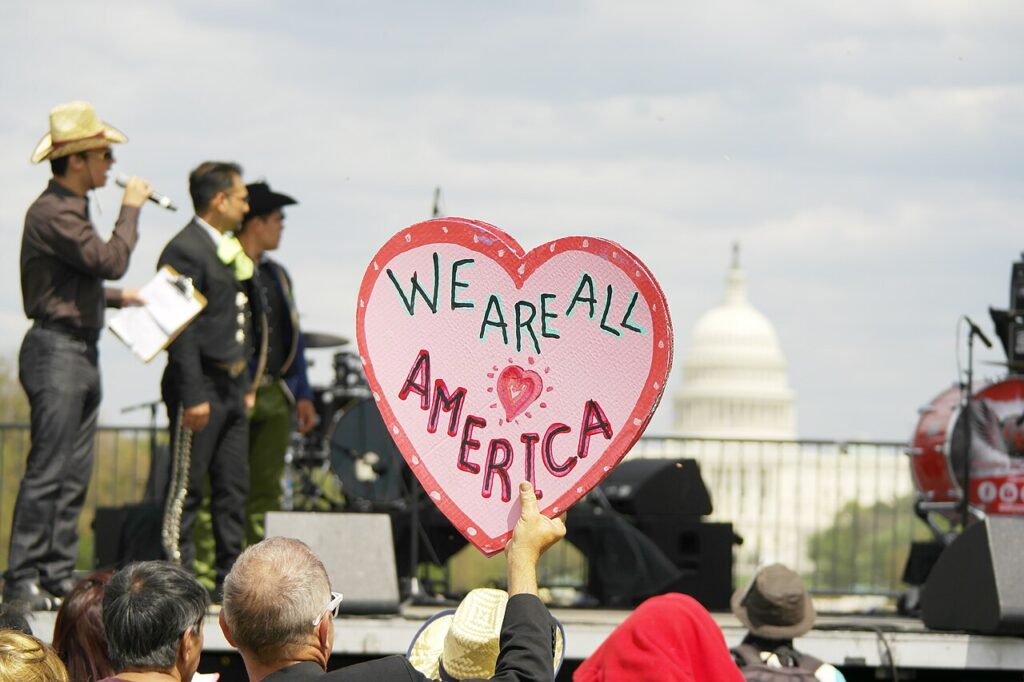
But as the holiday’s circuitous evolution goes to show, historical memory works in mysterious ways. Cinco de Mayo celebrations seem to possess their own will to live. Unlike the rather straightforward celebration of nationalism represented by Mexican Independence Day, Cinco de Mayo is more layered, an ever-shifting expression of anti-interventionist resistance and Pan American solidarity. At my elementary school, Cinco de Mayo was never overtly political. But such lavish displays of Mexican culture ultimately proved subversive. Despite the United States’ takeover of California being done and dusted 150 years before I learned my very first folklórico dance, Cinco de Mayo taught me and my classmates that every Californian can be proud to be a Mexican.





Leave a Comment