Contributor and resident photographer Anna Bruce takes us on a journey through the science and mythology of the moon’s role in making mezcal.
If one night you find yourself amongst agave, staring up at towering quiotes reaching toward a giant moon, you will feel the charge of this ancient connection.
The connection between agave and the moon is rooted in Mexican mythology, traditional agricultural practices, and empirical knowledge. Through exploring mythology and scientific research, we can begin to understand the nuanced relationship between the moon, agave and the powerful spirits we love to sip.
The last full moon of 2025 will be a supermoon. A supermoon happens when the full moon is at its closest point to Earth, making it appear bigger and brighter than usual. The December supermoon is known as “The Cold Moon,” or sometimes called the “Long Night Moon.”
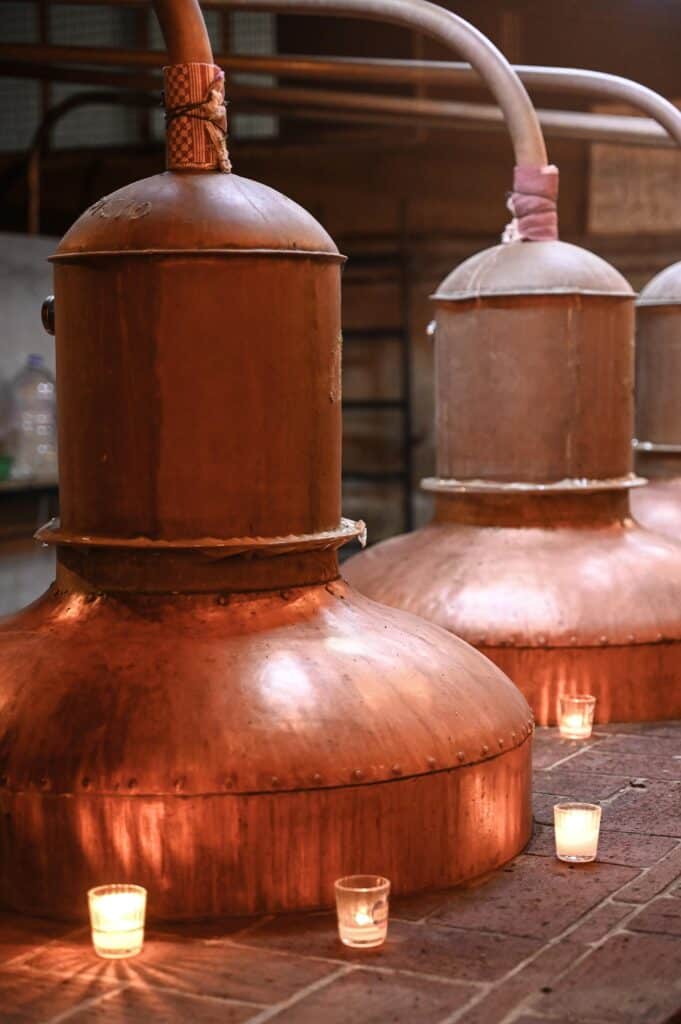
Each full moon, mezcal A Medios Chiles hosts their “Lunada” — a night where mezcal, food, music, and tradition come together at their palenque, Casa Ancestral, in San Pablo, Etla. This Lunada, to be hosted today, on December 6, will mark the 5th anniversary of this event.
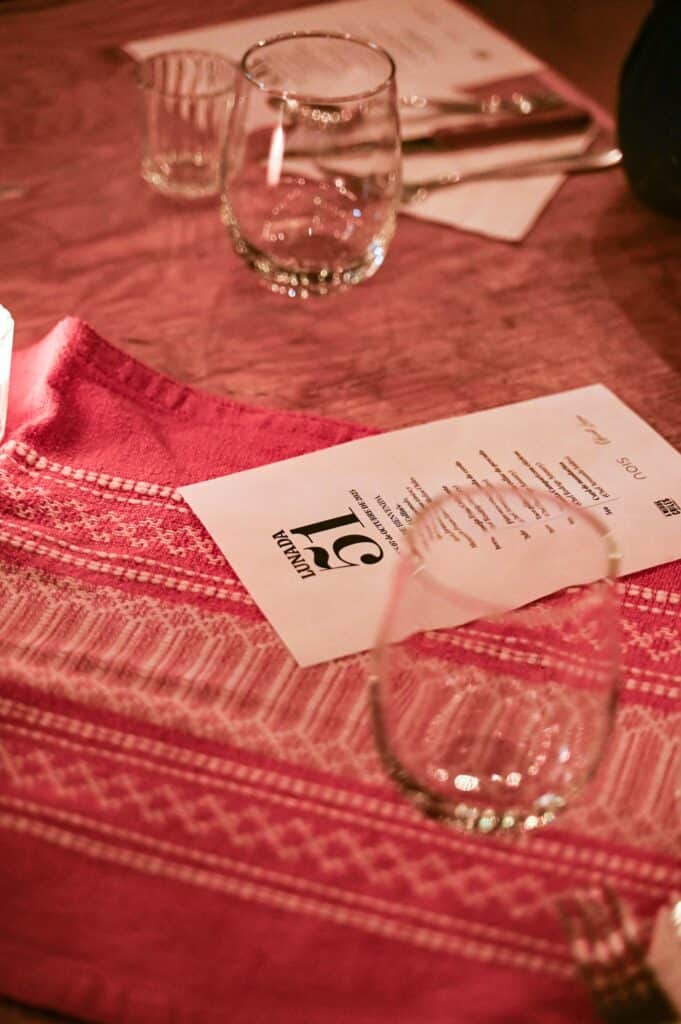
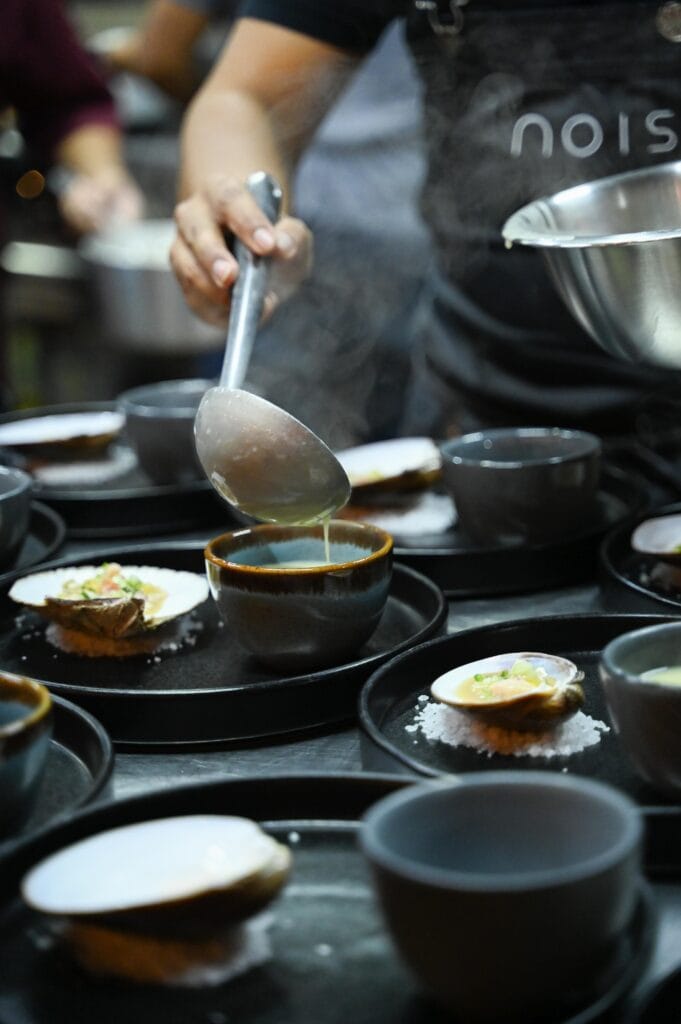
I have been lucky to attend several of these wonderful evenings. Usually, the founders begin the evening by presenting the chefs and musicians, before guests are invited to participate in an agave cook. The action takes place right next to the dining tables, the oven billowing smoke, illuminated by the restaurant lights… and the moon.
Once everyone has gathered around this glowing pit, the guest chef gets to throw the first agave into the oven. The smell of the agave hitting hot rock, mingles with enticing aromas, floating from the nearby kitchen. After a rather raucous loading of the oven, everyone is ready to get stuck into the feast.
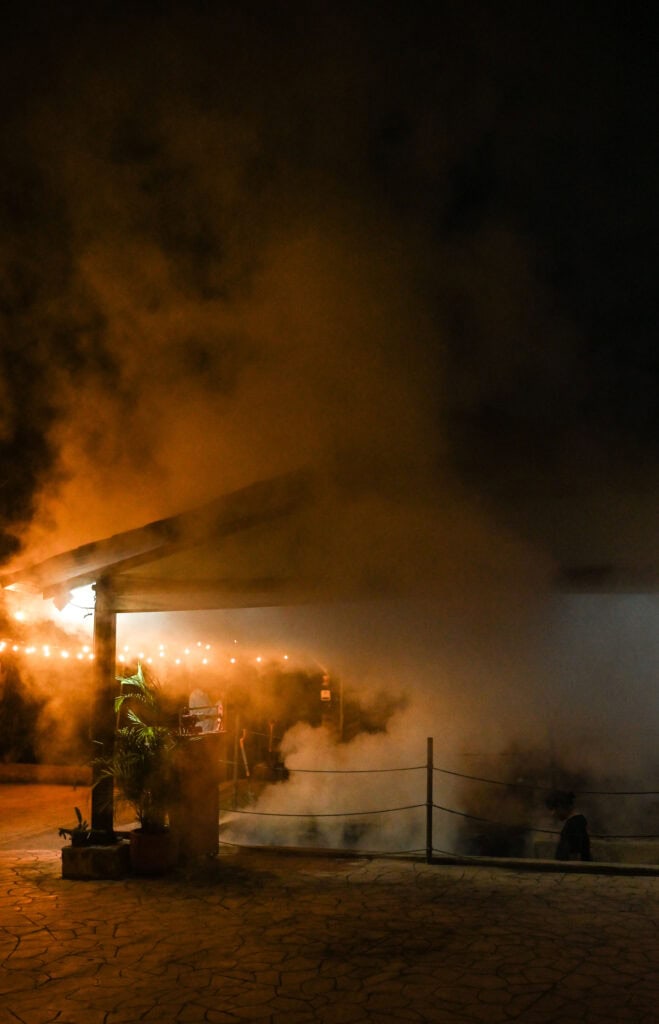
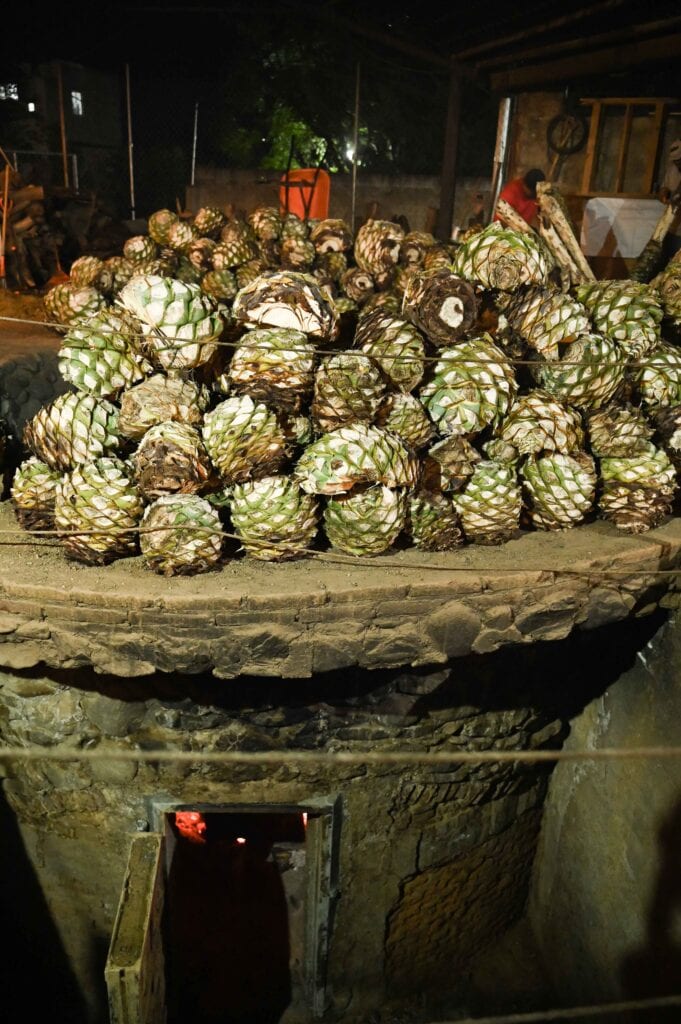
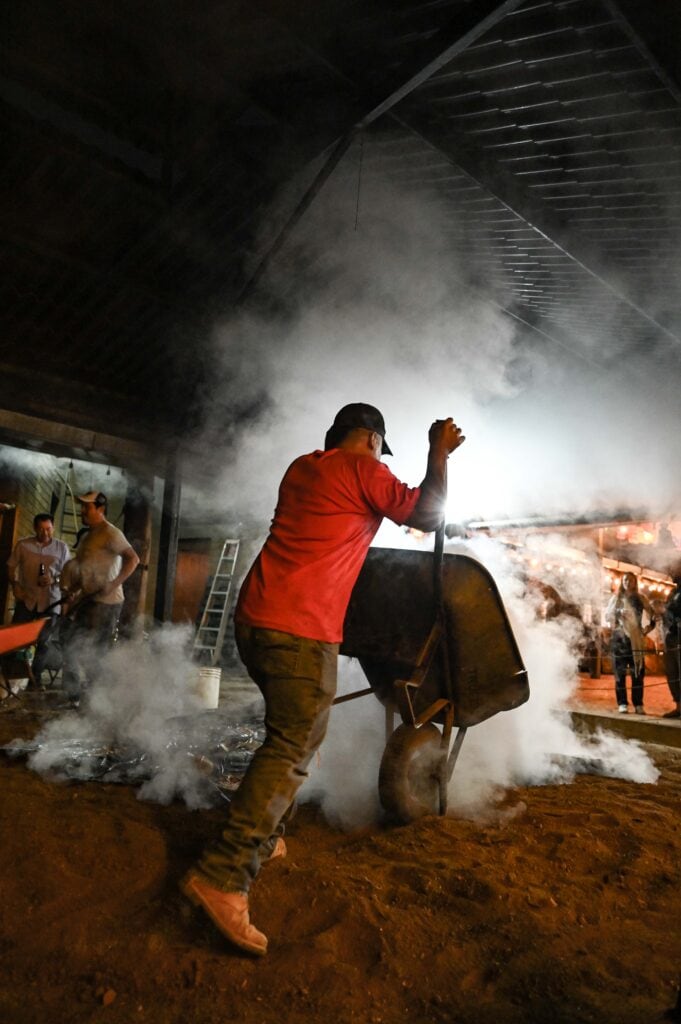
A Medios Chiles host this event during the luna llena (full moon) when the agave’s sugars concentrate in the piña (the core of the plant), creating richer flavor and optimal ripeness for harvesting. During the waning moon, sap movement is believed to slow down, which aids in concentrating the flavor of the agave.
For generations, mezcaleros have observed the relationship between the moon and the plant. A Medios Chiles mezcalero Armando Isidro explains that they draw on the knowledge of their ancestors, “who said that the different phases of the moon are a guide, such as for planting during the new or waxing moon, or harvesting during the full moon.”
It’s no coincidence that many mezcal brands use lunar iconography and product names. Key examples include: La Luna, Son de la Luna, Rosaluna, Beu Spirits, and Moonshift.
Chris Santiago, CEO of BEÚ Spirits explains that they chose their name (meaning moon in Zapotec) to symbolise the role of the small producers they work with–who depend heavily on natural cycles, like the rainy and dry seasons. “The moon seemed to us a very beautiful and very real symbol of that rhythm of the earth. Then we built the storytelling for each of our mezcals and which lunar phase best represented each product.”
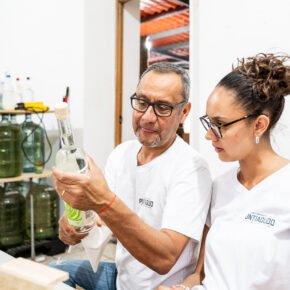
Israel Perez Santiago of Santiago Matatlan was the first mezcalero to to share with me how he aligns his work with the lunar cycle. “I have always been amazed by the lunar influence,” he says. He honors this dynamic in the name of his palenque and house brand “Son de La Luna.” Even his dog is named Luna. Fittingly, he is also the producer behind the new agave distillate, The Moon Shift.
The Moon Shift was co-founded by Gabriel (Lamoon) Gonzalez, Cathy Owen, and Dan Grocki. The brand honors the natural and human forces that converge by moonlight to bring mezcal into the world. According to brand ambassador Eric Willey, the name also reflects how mezcal is shared and celebrated at night: “Many of us at The Moon Shift come from the service industry. We’ve lived those late nights, long shifts, and moments where exhaustion turns into camaraderie.”
Dan Grocki describes Israel’s production process: “The agave is cooked in earthen pits, crushed under a 2,000-pound stone pulled by horse, malolactic fermentation in open-air wooden vats using local wild yeast, and distilled using alembic copper stills—producing small batches. The spirit is distilled in rhythm with the lunar cycle, reflecting the brand’s namesake and deep spiritual connection to nature.”
Eric explains that the moon represents the importance of timing and balance, with cycles of growth and rest. This also aligns with the life cycle of the agave plant and the patience required to produce artisanal agave spirits. “Good mezcal cannot be rushed. Just like the moon, it moves in phases.”
This view mirrors that of the producer, who performs rituals for the agave at night. “These are the rituals that every indigenous person has been taught,” Israel says. “Offerings to the moon, like cigarettes or a little copal. Sometimes the earth is moistened to create evaporation, transforming the earth along with the water.” He says that during these rituals he “asks the moon to take care of the agave, to keep them free of plague with more strength.”
For Israel, “Energy is more positive among the agaves, much more powerful. That is the meaning I give it in terms of the relationship of the agave with the moon.”
Israel’s thoughts on the moon are nuanced, and he believes that much of it’s impact is due to energy it channels through its journey to earth. “The moon has no positive or negative aspects, but rather the energy that travels from the moon to the earth,” he says. “Things happen on that journey; the moon is not good or bad, it’s meaningless and knows nothing of ethics. So, everything revolves around what happens on the journey from the moon to our earth, to our humanity.”
That said, not all moons are the same. Israel explains, “The spring moon is different from a winter moon. In winter, the nights are longer. There is a greater influence of the moon on the agave; the mysticism and the romantic part of the agave have a relationship with the night.”
Recently there have been what Israel describes as “complicated moons.” He says that “lately, there have been red moons, which are very delicate. We have to counterbalance them so they aren’t so violent. We put things that can bring us a little more peace and healing, then offer them so that they can counteract the strong energy.”
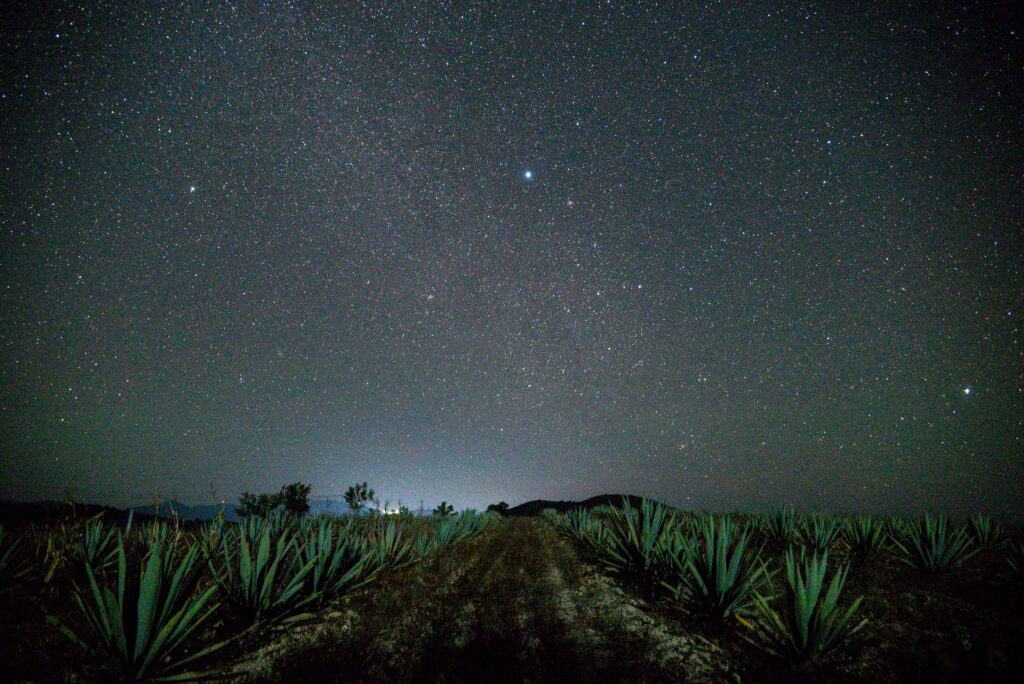
Fermentation is also believed to bear the influence of the moon. Israel explains that he waits for the full moon to source elements like the wood he uses to formalise the fermentation, because this is when the sap within the tree brand will be enriched with the moon’s power. Tlachiqueros who make pulque also put great stead in the lunar cycle. Fermentation is believed to be more stable during a full moon.
The goddess Mayahuel, sometimes referred to as the “mother of pulque” is often associated with the moon, along with agave and fertility. Mayahuel is often depicted wearing a facial ornament known as a yacametzli, a crescent moon with outward-curving edges. Academic Katarzyna Mikulska writes that “The yacameztli expresses the following lunar traits of the deities: dominion over death, periodic regeneration, fertility, and power over vegetation, especially maguey.”
It’s common to find rabbit imagery when we are in mezaclerias or pulquerias. In mythology, four hundred rabbits are said to have been birthed by Mayahuel and suckled on pulque. A short text taken from the Florentine Codex reads: “The gods, they say, were teasing the moon and flung a rabbit in its face. And the rabbit remained marked on the moon’s face.”
Speaking with Israel about agave, stories of the moon and fertility and Zapotec culture, he expressed, “These are not myths; they are realities. This relationship and energetic channelling between the moon and the earth is natural and scientifically proven. By the earth, I mean the agricultural activity of ancient cultures, which maintained an alignment with the Moon in terms of lunar phases.”
He says his grandparents told him that the sap is the essence of the agave, and this is more potent on a full moon. His studies have confirmed this. “When we have analysed the brix (sugar content) of the agaves on a full moon it is much greater than on a waning new moon,” he says, adding that fully mature espadin reaching 46 Brix during the full moon, whereas the typical number peaks around the mid-30s.
So how does this work?
The agave-lunar relationship fundamentally begins with the fact that agave is nocturnal. They can “breathe” at night. This refers to the plant’s ability to photosynthesise at night.
Most plants do the majority of their photosynthesis during the day, converting sunlight into energy. During this process they also take in carbon dioxide while releasing oxygen through the pores in their leaves. These pores are called stomata.
As a true survivor, agave performs its gas exchange at night. This adaptation allows the plant to thrive in hot, arid environments. During the day, agave preserves its moisture by keeping its stomata closed. At night, when temperatures are cooler and humidity is higher, the plant opens its stomata to take in carbon dioxide. The process is known as Crassulacean Acid Metabolism (CAM) photosynthesis.
Moonlight can evidently slightly alter the processes of photosynthesis and respiration in nocturnal plants like agave. This effect is considered especially relevant during full moon periods when there is greater light intensity. Researcher Alfredo Díaz from the National Institute of Forestry, Agricultural and Livestock Research (INIFAP), confirms: “Moonlight, even when faint, can slightly alter the processes of photosynthesis and respiration in plants such as agave.”
Studies from Oaxaca’s Autonomous University of Chapingo have also shown that certain plant species exhibit slight lunar phototropism (directional growth toward light).
During the new moon, the low amount of moonlight is thought to favor germination and rooting, making this phase ideal for planting seeds and transplanting seedlings. A waning crescent is considered a suitable phase for pruning and pest control because the decrease in moonlight is believed to favor the concentration of energy in the roots and reduce pest activity above ground.
Agave pollinators also do their best work at night. Many agave species have flowers that are adapted to be pollinated by nocturnal visitors, primarily bats and moths, by producing nectar and achieving peak stigma receptivity during the night. Bats are the most iconic pollinators of agave. Projecto LAM (an initiative founded and supported by Real Minero mezcal) is researching the impact of these animals on agave populations.
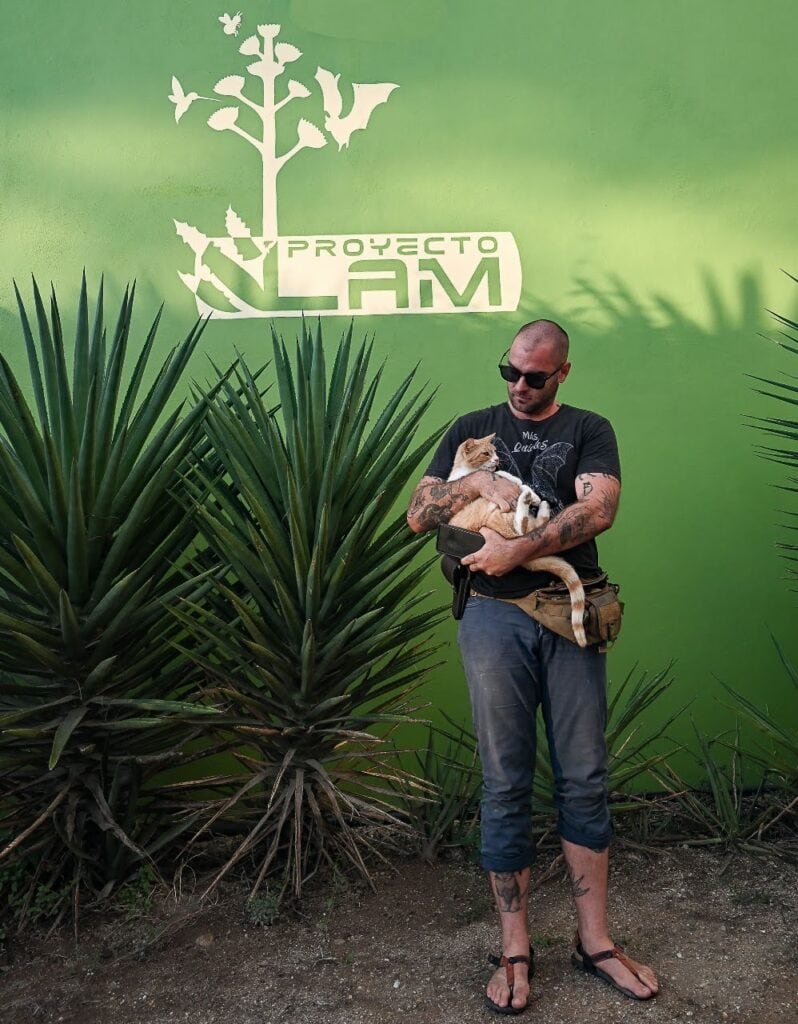
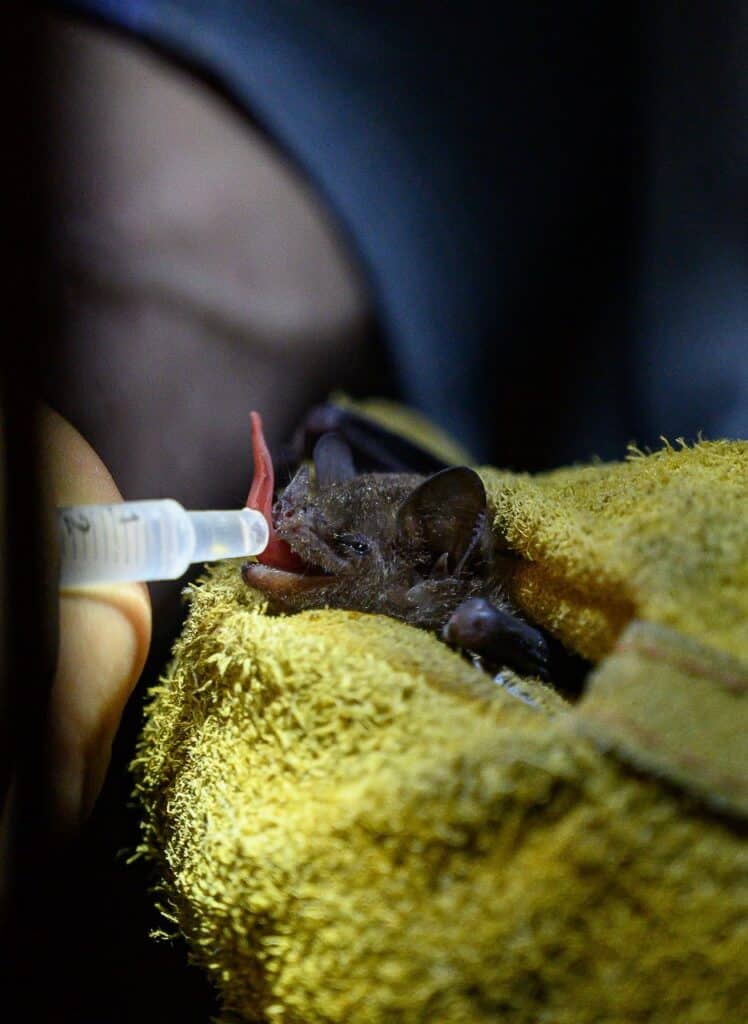
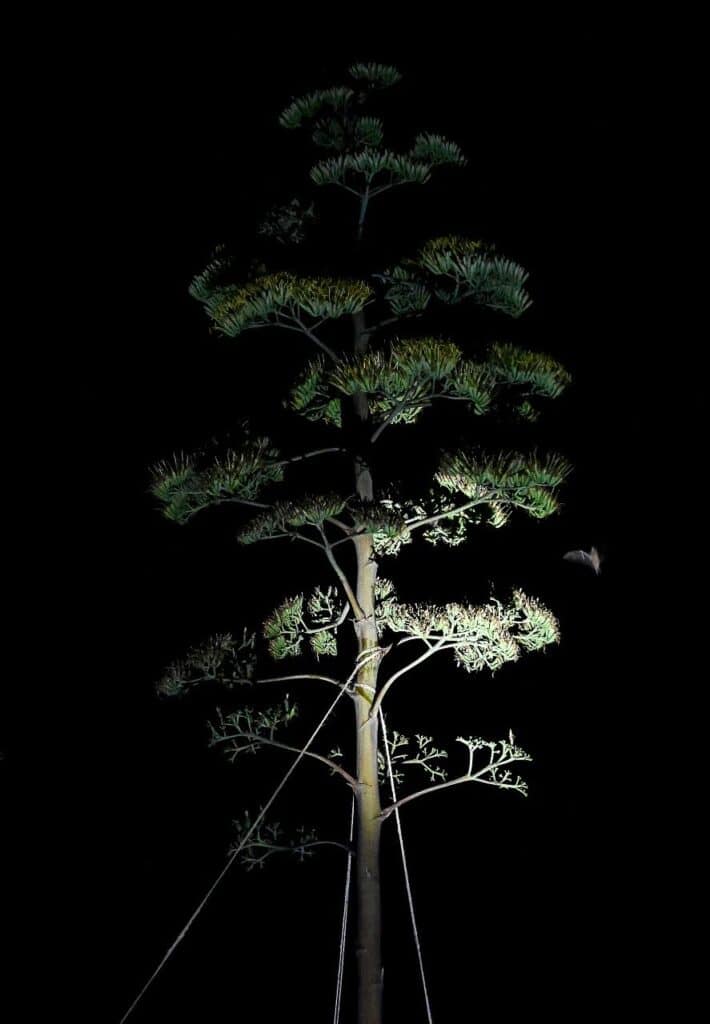
Speaking with bat specialist Gabriela Medina from Oaxaca’s polytechnic institute (CIIDIR), she explains that although this nocturnal relationship is profound, in this instance, the moon might create a challenge. “Evidence suggests that lunar cycles do influence bat activity patterns, particularly in fruit-eating and nectar-feeding bats that exhibit documented lunar phobia. It is believed that they reduce their activity on nights of a full moon because they are easier for predators to spot. ”
Manuel Isidro from A Medios Chiles says that this power reaches more than the agave. From “cutting wood food construction, to having a haircut, it is better to do this during the full moon, because it is an interaction with everything.” He explains that the full moon event at the palenque is an opportunity for guests to make this connection. This event has brought the Medios Chiles community closer together.
Wherever you are during these long winter nights, out in an agave field, leaving a bar, or having a peaceful night at home, raise a mezcal and toast the moon. These are days of remembrance, connection, celebration and storytelling. Through generations of producers’ wisdom, we have the luxury of this rich spirit, infused with the power of the moon.






Leave a Comment